
'We see every indicator': Hegseth vows to throw off pizza trackers
 3 Min Read
The US Secretary of War jokes about disrupting the pizza index pattern while acknowledging awareness of open-source tracking.
-
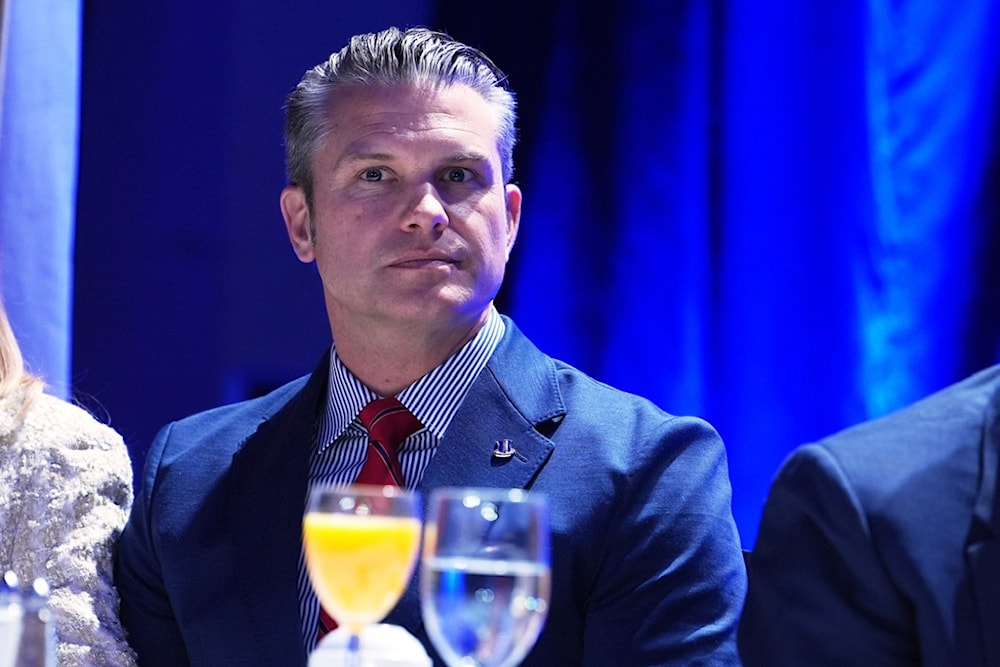
US War Secretary Pete Hegseth attends the National Prayer Breakfast on Thursday, Feb. 5, 2026, in Washington (AP)
US Secretary of War Pete Hegseth has publicly acknowledged an online effort that monitors pizza activity around the Pentagon as a possible indicator of looming military action, joking that he might intentionally disrupt the pattern.
Speaking on Fox News on Sunday, Hegseth said he was familiar with the X account known as the "Pentagon Pizza Report," which analyzes Google Maps traffic trends at nearby pizza restaurants to detect unusual spikes in late-night orders.
"I’ve thought of just ordering lots of pizza on random nights just to throw everybody off," Hegseth said. "Some Friday night when you see a bunch of Dominos orders, it might just be me on an app, throwing the whole system off so we keep everybody off balance. We look at every indicator."
Two of the closest pizzerias to the Pentagon are reporting above average traffic.
— Pentagon Pizza Report (@PenPizzaReport) February 23, 2026
As of 4:50pm ET pic.twitter.com/z0g1ZdakjW
'Pizza index'
The account, created in August 2024, relies on publicly available "popular times" data to track customer surges at pizzerias surrounding the Pentagon and other key US military facilities. The premise is that sudden increases in evening activity may signal that senior officials are working late during unfolding crises, possibly ahead of major decisions or operations.
Hours before "Israel" launched a major aggression on Iran on June 12, the account flagged unusual activity at four pizza outlets near the Pentagon. In a post at the time, it stated, "As of 6:59 p.m. ET nearly all pizza establishments nearby the Pentagon have experienced a HUGE surge in activity."
Although Washington said it did not directly participate in "Israel’s" initial strikes, the United States later entered the 12-day war. On June 22, US forces struck three Iranian nuclear facilities in an operation dubbed Midnight Hammer. The brief conflict ultimately ended in a rushed ceasefire, as Iran’s swift and forceful retaliation proved too costly to sustain the escalation.
Hegseth stressed that defense officials are conscious of how publicly accessible data can be used to monitor government movements.
"There’s a reason Midnight Hammer worked, because we understood open sourced, we understand classified ways in which the public and others are trying to watch movements and in sensitive ways, we control for a lot that," he said.
War foretold
The idea that pizza deliveries can foreshadow military action predates social media. Observers have noted similar patterns since at least the 1980s. In January 1991, Washington-area Domino’s franchise owner Frank Meeks recalled unusual demand ahead of a major geopolitical development.
"The news media doesn’t always know when something big is going to happen because they’re in bed, but our [pizza] deliverers are out there at 2 in the morning," Meeks told the Los Angeles Times.
He pointed to the night of Aug. 1, 1990, when the CIA placed what was then a record order of 21 pizzas, only hours before Iraqi forces invaded Kuwait, igniting the Gulf War.
While the so-called "pizza index" remains unofficial and often treated as a curiosity, its revival in the digital age illustrates how open-source data and online communities are increasingly used to interpret, and sometimes anticipate, geopolitical developments.
Read more: Pentagon rift grows as Hegseth ousts senior army aide


