
Abdi declares dissolution of SDF after merger with Syrian army
 5 Min Read
Mazloum Abdi declared the SDF's dissolution in Damascus, capping a year of integration talks, clashes and a US-brokered ceasefire with al-Sharaa's government.
-
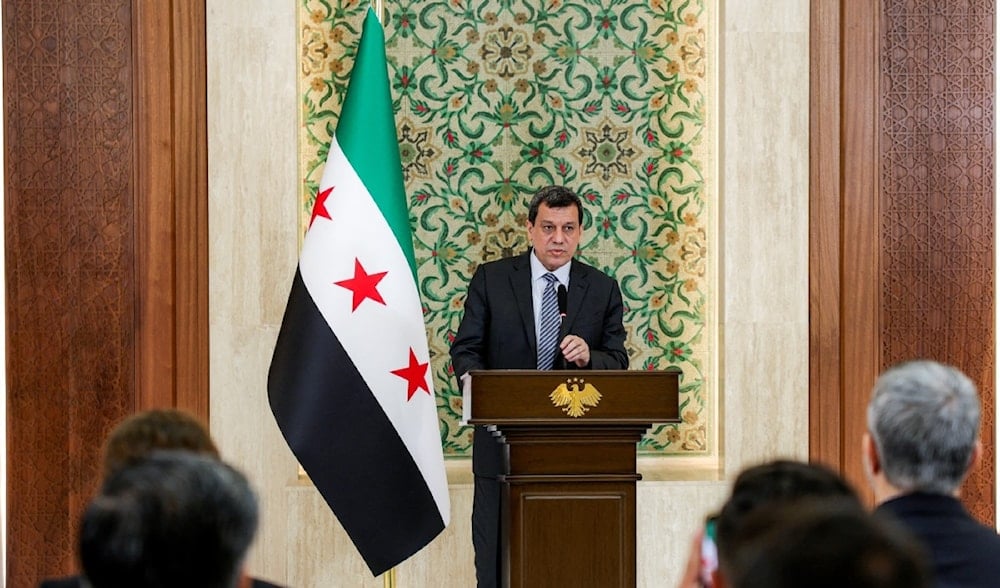
Mazloum Abdi, leader of the Kurdish-led Syrian Democratic Forces (SDF), speaks during a televised speech at the People's Palace in Damascus on August 25, 2026. (Photo by BAKR ALKASEM / AFP)
The US-backed Syrian Democratic Forces are no longer an independent military structure. SDF Commander Mazloum Abdi confirmed the group's dissolution on Tuesday at a news conference held at the presidential palace in Damascus, announcing that the Kurdish-led force had completed its merger with the Syrian army after nearly a decade of controlling territory across the country's northeast.
The announcement closes out a process that began with a Washington-brokered ceasefire in January and formally ends the SDF's run as a de facto autonomous power in Syria.
Mazloum Abdi, commander of the #Syrian Democratic Forces (#SDF), officially announces from #Damascus the dissolution of the SDF and its full integration into #Syrian state institutions, marking the end of the force as an independent military organization. #EndOfAnEra pic.twitter.com/DbdDCGz7r3
— Mohammed Alaa Ghanem محمد علاء غانم (@MhdAGhanem) August 25, 2026
Abdi frames the moment as a transition, not a defeat
In remarks delivered largely in Arabic, Abdi described the dissolution as the end of the SDF's mission and the start of a shift from armed struggle to reconstruction. He said the force was moving from the battlefield to nation-building, from a period defined by weapons to one defined by peace, and from defending Syria to building it.
Abdi paid tribute to SDF fighters killed over the years, saying they had fought not for war's sake but so that Syrians would eventually be spared the need to fight at all.
He also addressed Kurdish-language education, calling it one of the central demands Syrian Kurds have pursued for decades, and said Interim President Ahmad al-Sharaa had repeatedly pledged to protect that right. Abdi said the SDF would push to put a related decision into effect within the year.
Closing in Kurmanji, he called for a Syria built jointly by all its communities, including Arabs, Kurds, Syriacs, Assyrians and Turkmen, and described a vision of a state that guarantees equal rights and dignity for all its citizens.
How the SDF and Damascus got here
The dissolution caps a stop-and-start process stretching back to March 2025, when al-Sharaa and Abdi signed an eight-point agreement in Damascus. That deal recognized Kurds as full citizens of the Syrian state, set a nationwide ceasefire, and called for handing border crossings, an airport, and northeastern oil and gas fields to Damascus, with implementation loosely targeted for the end of the year.
Talks stalled through the rest of 2025. Damascus's decision to fold former Syrian National Army factions and other armed groups into the national military angered Kurdish officials, given those factions' record of clashing with Kurdish forces and abusing Kurdish civilians earlier in the war.
Sporadic fighting broke out along the boundary between government territory and SDF-run areas, and a ceasefire reached in October after clashes in Aleppo was repeatedly broken in the months that followed.
The breaking point came in January 2026. A disputed checkpoint incident near Dayr Hafir set off heavy shelling and a full government offensive that stripped the SDF of the oil-rich provinces of Raqqa and Deir ez-Zor, cutting the force's strength roughly in half as Arab fighters within its ranks defected.
Facing collapse and without the direct US military backing it had once received against ISIS, the SDF accepted a 14-point ceasefire brokered by US envoy Tom Barrack later that month, agreeing to integrate into the Syrian army and hand over its remaining territory, border crossings and oil fields outside al-Hasakah province.
Integration proceeded through the spring and summer, with several SDF brigades absorbed into army units, before Abdi described the process as essentially complete in a mid-August speech in Qamishli and then formalized it in Tuesday's announcement.
A US-built force Washington ultimately let go
The SDF was formed in 2015, organized around the Kurdish YPG, after it emerged as Washington's most reliable partner against ISIS.
Beyond battlefield cooperation, the SDF's hold over Deir Ezzor, al-Hasakah and Rumeilan gave the United States a grip on the bulk of Syria's oil wealth, a position that starved Damascus of revenue under Assad and gave Washington leverage that outlasted the anti-ISIS campaign itself.
The Pentagon backed the arrangement with hundreds of millions of dollars a year through the Counter-ISIS Train and Equip Fund.
That calculus shifted once Assad fell, and Washington moved to build ties with al-Sharaa's government instead. US Special Envoy Tom Barrack had said earlier this year that the SDF's original purpose as the leading anti-ISIS ground force had run its course, a framing that set the stage for the integration deal Damascus and the SDF ultimately followed through on this week.
Read more: Perpetual cycle of abandonment: Washington abandons SDF in Syria


