
Al-Kaabi: US influence key obstacle to Iraq’s sovereignty | Exclusive
 14 Min Read
In an Al Mayadeen Plus interview, al-Nujaba member Mahdi al-Kaabi addresses US withdrawal, Kurdish forces and Iraq’s political future, stressing Iraqi Resistance factions will not surrender their weapons while US influence remains.
-
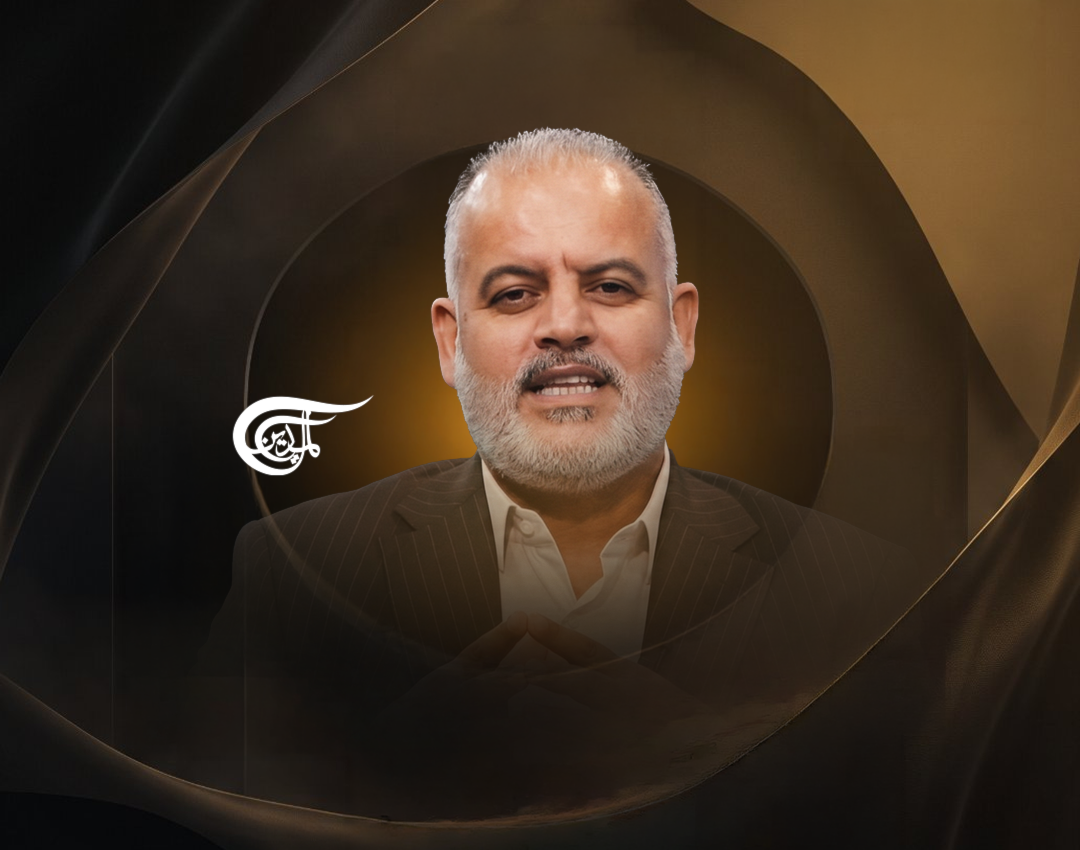
“Of course, there must be a Turkish withdrawal. There is a Turkish occupation, and the Turkish presence after the US [withdrawal] poses a threat to the Iraqi state.”
The political and security landscape in Iraq remains closely tied to regional and international developments, member of the al-Nujaba Movement Mahdi al-Kaabi said, arguing that US influence continues to affect political, economic, and legislative affairs in the country.
In an interview on Al Mayadeen Plus on Monday, September 7, al-Kaabi stressed that Iraq’s ability to establish full sovereignty and pursue an independent vision would give it significant geopolitical weight in the region. He argued that this prospect conflicts with the interests of the United States and those aligned with its regional agenda.
“We believe there is a US occupation and influence in Iraq that intervenes in every detail, whether in the political, economic, or even legislative scene,” he said.
Al-Kaabi stated that Washington does not want Iraq to become a strong and fully sovereign state capable of playing a leading regional role. He said Iraq could serve as a model in the region if it exercised full sovereignty and developed its own security, economic and political vision.
Post-2014 period brought greater stability
Regarding the evolution of Iraq’s political decision-making before and after 2014, al-Kaabi said the period following that year saw a degree of security, political and economic stability, particularly following the war.
He attributed part of this stability to the emergence of the Popular Mobilization Forces (PMF) as a force protecting the political process. Al-Kaabi said that the institution was established by Abu Mahdi al-Muhandis alongside Iran’s General Qassem Soleimani, with the support of the religious authority in Najaf to combat terrorism.
The PMF were subsequently organized and given a legal framework in 2016, which al-Kaabi said strengthened their political presence and contributed to political stability.
Looking further back, however, he maintained that US presence remained the main source of pressure on Iraq’s political process during both periods.
Al-Kaabi rejects claims of factions resisting arms control
Addressing claims that Resistance factions are refusing to cooperate with the Iraqi government over the issue of restricting weapons to state control, al-Kaabi dismissed such reports as misleading.
“This talk is biased and incorrect. On the contrary, we are part of the support for the Iraqi state and part of this state,” he said.
Al-Kaabi argued that the factions’ role within the state’s security structure should be distinguished from their position on confronting occupation. He said their presence within the PMF makes them part of Iraq’s security system, while Resistance against the US occupation is a separate matter.
“We believe in and respect this political system, we respect the political will, and we believe in the peaceful transfer of power,” he said. “We definitely believe that this decision is an international and regional decision,” he added, while stressing that al-Nujaba respects the position of Iraq’s religious authority in Najaf but disagrees with the timing and context in which the issue is being raised.
However, al-Kaabi maintained that the presence of US influence or weaknesses in Iraq’s security structure and its ability to confront US forces justified the continued existence of a Resistance emerging from Iraqi society and possessing legitimacy.
He linked the issue of the Resistance's arms in Iraq to a broader regional effort targeting Resistance movements. “The US project is an existing project abroad, in Lebanon, weakening Lebanon, dividing it, and disarming Hezbollah is part of the US's project,” he said, adding that the same approach was being pursued in Gaza through efforts to disarm Hamas and against the Resistance in Yemen.
Al-Kaabi further argued that the pressure extends to Iran, where he said efforts are aimed at stripping the country of its missile and nuclear capabilities.
Dialogue with Iraqi political leaders is ongoing
Turning to reports of intensive consultations between the Coordination Framework leadership and Iraqi Resistance factions, al-Kaabi confirmed that communication is taking place between the two sides, saying that relations are positive and normal.
Al-Kaabi rejected claims that the weapons of the Resistance constitute a threat to Iraq’s political process or are being used against political rivals. He stressed that the weapons are disciplined and that the Resistance leadership is responsible, arguing that the pressure surrounding the issue stems primarily from US intervention and efforts to complicate Iraq’s political scene.
He also rejected recent rhetoric suggesting that Iraqi Resistance factions could be deemed outside the law or designated as terrorist groups after September 30. Al-Kaabi said such language was categorically unacceptable and maintained that any discussion over the future of the weapons should take place through an Iraqi dialogue once US forces leave the country.
'Turkish presence threatens Iraqi sovereignty'
Al-Kaabi said the departure of US forces would not by itself resolve the security question, pointing to the presence of Turkish forces in Iraq as another issue requiring attention.
“Of course, there must be a Turkish withdrawal. There is a Turkish occupation, and the Turkish presence after the US [withdrawal] poses a threat to the Iraqi state,” he said.
He also pointed to developments in Syria, arguing that Turkey played a military and intelligence role in supporting armed groups during the change in the Syrian political system, which he linked to the wider involvement of the United States and the Israeli regime.
Al-Kaabi rejects claims of political deals over Resistance weapons
Al-Kaabi said meetings between al-Nujaba and figures from Iraq’s Coordination Framework began with Hadi al-Amiri and were followed by contacts involving Sheikh Qais al-Khazali, Mohammed Shia al-Sudani, Nouri al-Maliki and Ammar al-Hakim, among others. According to al-Kaabi, the purpose was to convey a message from the Islamic Resistance, particularly al-Nujaba, that it considers itself part of the broader Iraqi political and social fabric rather than an adversary of political forces.
He dismissed reports that ministerial or security positions had been offered to the movement in exchange for arrangements concerning its weapons, stressing that al-Nujaba sees itself as part of efforts to preserve stability in Iraq.
Al-Kaabi reiterated that the movement’s position on its weapons remains unchanged, saying they are a source of strength and a means of protecting Iraq and its people. He argued that surrendering the weapons while US influence remains in the country would be premature, particularly amid the broader regional tensions and the unresolved confrontation between Iran and the United States.
'US withdrawal must be genuine'
Responding to claims that US-led coalition forces have already withdrawn from several Iraqi bases, including reports concerning Victoria and Ain al-Asad, al-Kaabi said the question of the Resistance’s weapons could be reconsidered only after a genuine US withdrawal is achieved.
He said the same principle would apply to foreign forces, including French and British personnel, arguing that once foreign military forces actually leave Iraq, there would be no objection to a national Iraqi dialogue involving the Coordination Framework and other political forces.
Such a process, al-Kaabi maintained, could include discussions over organizing weapons, supporting the state and strengthening Iraq’s security institutions. He stressed that the Resistance would consider such measures positive if they took place under conditions of genuine Iraqi sovereignty.
The central issue, however, remains the continued US presence, which al-Kaabi said prevents trust in Washington and raises concerns that a withdrawal could amount to “leaving through the door and entering through the window.” He nevertheless said the Iraqi government could negotiate with the United States, provided the question of sovereignty remained central.
Positive relations with prime minister
Asked directly about al-Nujaba's relationship with the prime minister, al-Kaabi described it as positive and said the movement's support for the government was linked to its positions on Iraqi sovereignty and the withdrawal of US forces.
Al-Kaabi said the movement considers the current government to be a product of Iraq's political process and agreements among political actors, including the Coordination Framework, that led to the nomination of the prime minister.
He said that the formation of the government is a political matter and maintained that al-Nujaba supports the Iraqi state in efforts aimed at strengthening the country's sovereignty.
Al-Kaabi urges Iraq to use economic leverage against US pressure
On reports that Iraq could face economic sanctions or financial restrictions if the issue of the Resistance's weapons is not resolved, al-Kaabi acknowledged that Iraqi political forces are under considerable pressure.
He argued, however, that Iraq also possesses economic leverage that could be used in its dealings with Washington. He pointed to US companies and investments operating in Iraq, particularly in the country's south, as well as the strategic importance of Iraq and its oil resources.
He said the Iraqi government should use these interests as a source of leverage rather than allowing Washington to maintain exclusive influence over Iraq's economic and political affairs.
Al-Kaabi also called for Baghdad to diversify its international partnerships and expand economic relations with other countries, arguing that Iraq should not depend exclusively on US companies and investment.
He said the government should seek greater engagement with European and other international partners to create a balance in its foreign economic relations, despite US pressure against closer cooperation with Russia and China.
Al-Nujaba's military role complements political forces
On al-Nujaba's participation in governmental elections, al-Kaabi said the movement does not consider political participation inherently problematic but argued that its current role as part of the Resistance serves a different purpose.
He said political forces are responsible for confronting external pressure through political and diplomatic means, while al-Nujaba's military role supports the broader effort to defend Iraq and strengthen the state.
“It is not necessary for us to move toward politics or toward militarizing society,” he said, adding that cooperation between different Iraqi forces allows political and military roles to complement one another.
According to al-Kaabi, the overriding objective should be to place the interests of Iraq and its people above political divisions.
Conditions for Iraq's relations with neighboring states
On Iraq's relations with Syria, Turkey, the Gulf states and Kuwait, al-Kaabi said al-Nujaba supports Baghdad's openness toward neighboring countries provided that they respect Iraq's sovereignty and do not contribute to destabilizing the country.
He said relations should be based on mutual respect for political systems, national sovereignty, and religious and political symbols, stressing that Iraq should reciprocate such respect.
However, al-Kaabi said al-Nujaba would not trust countries it believes engage in sectarian policies or conspire against Iraq's political project and political process.
As for security developments in Syria, al-Kaabi said armed groups operating there continue to pose a threat to Iraqi national security. He referred to the deployment of the a military division near the Iraqi-Syrian border and cited rhetoric including the phrase "We are coming to Karbala" as evidence of an ongoing threat.
Al-Kaabi also accused the government in Syria of maintaining sectarian policies toward minority communities and argued that the current government does not represent the will of the Syrian people.
He said that the current Syrian leadership came to power as part of a US and Turkish-backed regional project aimed at pressuring Iran, Lebanon and Iraq, as well as the broader Axis of Resistance.
Referring to Syrian President Ahmad al-Sharaa, al-Kaabi said his past involvement with al-Qaeda and Takfiri groups in Iraq remained a source of concern.
"Some people want to polish his image. That is their business," he said. "But when someone has been part of the al-Qaeda project and the Takfiri project in Iraq, we have to keep a question mark over him."
'Kurdish region groups remain outside Baghdad's control'
Discussing the Iraqi-Iranian security agreement and the presence of Iranian separatist groups in the Kurdistan Region of Iraq, al-Kaabi rejected the suggestion that Baghdad or the Kurdistan Regional Government exercise complete control over all such groups.
He argued that some of these organizations serve as pressure cards used by the US in the region and accused Washington of using them to threaten the Islamic Republic of Iran.
Al-Kaabi said that when Iran carries out strikes targeting locations inside Iraq, the presence of armed organizations along the Iraqi-Iranian border must be considered in context.
He stated that these groups possess weapons, equipment, manpower, and training while operating outside the authority of the Iraqi government.
According to al-Kaabi, the Iraqi Army has not entered or been deployed throughout the Kurdistan Region since 1991, stating that Baghdad's limited military presence has affected its ability to exercise full control over the border areas.
Al-Kaabi rejects claims over attacks on oil fields in Kurdistan Region
Addressing claims that Iraqi Resistance factions have struck oil fields in the Kurdistan Region, al-Kaabi said the movement's record of publicly claiming its operations makes such allegations difficult to sustain without evidence.
He argued that when the Resistance carries out an operation, its leadership openly takes responsibility for it, pointing to its declared support for Iran during the war and its backing of the Palestinian and Lebanese fronts.
“Our positions are clear, and we are brave. If we had actually attacked these sites, we would have claimed responsibility for them,” al-Kaabi stated.
He called for evidence and formal investigations before assigning responsibility for strikes in the region, saying that any such incidents should be examined by investigative committees formed by the federal government or the prime minister.
Iraqi Resistance remains allied with Iran
Reaffirming the Resistance factions' alliance with Tehran, al-Kaabi stated that Iraqi Resistance groups would participate in any future war should hostilities against Iran resume.
“We are allies of the Islamic Republic,” he said.
Al-Kaabi stressed that Iraqi Resistance factions remain part of the Axis of Resistance and would defend themselves and their allies in Iraq and across the region.
He reiterated that the weapons held by the Resistance are intended to defend Iraq and its people and would not be used against political forces or Iraqi citizens.
“We will not be a substitute for the security forces, the Iraqi Army, or the Iraqi state,” he said. “We are genuine Iraqi citizens defending ourselves and our sovereignty.”
Al-Kaabi maintained that resistance to occupation, foreign influence and pressure, as well as efforts to defend Iraq's sovereignty, resources and people, remains legitimate.


