
Al-Sudani, Barrack, discuss Syria, regional security
 2 Min Read
Iraqi PM Al-Sudani meets with U.S. envoy Thomas Barrack to discuss Syria, regional stability, and counterterrorism efforts.
-
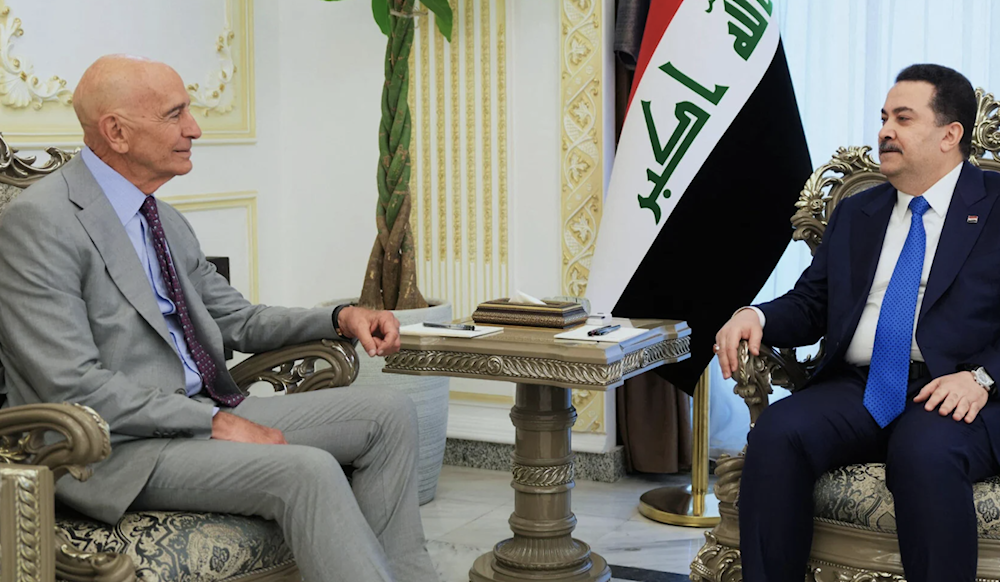
Iraqi Prime Minister Mohammed Shia al-Sudani (right), meets with the US envoy Tom Barrack, in Baghdad on November 30, 2025. (AFP)
Iraqi Prime Minister Mohammed Shia al-Sudani met with U.S. President Donald Trump’s Special Envoy to Syria, Thomas Barrack, to discuss regional developments and the ongoing situation in Syria.
During the meeting in Baghdad, Al-Sudani underscored the importance of Syrian stability for both Iraq and the wider region, emphasizing the need for cooperation to ensure Syria’s territorial integrity and long-term peace.
The Iraqi leader also highlighted the strategic partnership between Baghdad and Washington, particularly in the fight against terrorism, as well as efforts to build a foundation for sustainable economic development and regional prosperity.
U.S. praises Iraq’s role in anti-terror operations
Barrack reportedly conveyed President Trump’s appreciation for Iraq’s continued efforts to support regional stability. He described Iraq’s leadership within the international coalition against ISIS as “indispensable” and praised its role in combating terrorism and promoting peace in Syria and beyond.
Barrack also commended Iraq’s openness to foreign investment, calling it a vital factor for fostering long-term economic interdependence and security.
In a related statement, U.S. Secretary of State Marco Rubio welcomed Iraq’s decision to detain captured ISIS militants in secure facilities inside the country. He noted that foreign fighters would remain in Iraq temporarily, as part of a broader strategy to manage regional security threats.
On Wednesday, the Popular Mobilization Forces (PMF) in Iraq announced the arrest of a high-rankinghttps://english.almayadeen.net/news/politics/iraq-captures-top-isis-leader-in-major-pmf-operation ISIS leader, described as one of the group’s most dangerous and prominent field commanders. The arrest took place during what authorities described as a "highly important qualitative operation."
According to the PMF statement, the detainee had been overseeing the planning and execution of ISIS terrorist operations, in addition to organizing sleeper cells in the Mosul desert and across the Syrian territories.
The captured leader reportedly infiltrated from Syria into Mosul and held direct responsibility for coordinating ISIS detachments in both northern Iraq and eastern Syria. His arrest marks a significant development in the ongoing efforts to dismantle the group's operational network in the region.


