
Arab, Muslim voters show Democrats they can't be ignored: The Guardian
 4 Min Read
Once dismissed by Democratic leaders, the uncommitted movement's Arab and Muslim organizers are now winning primaries across the US.
-
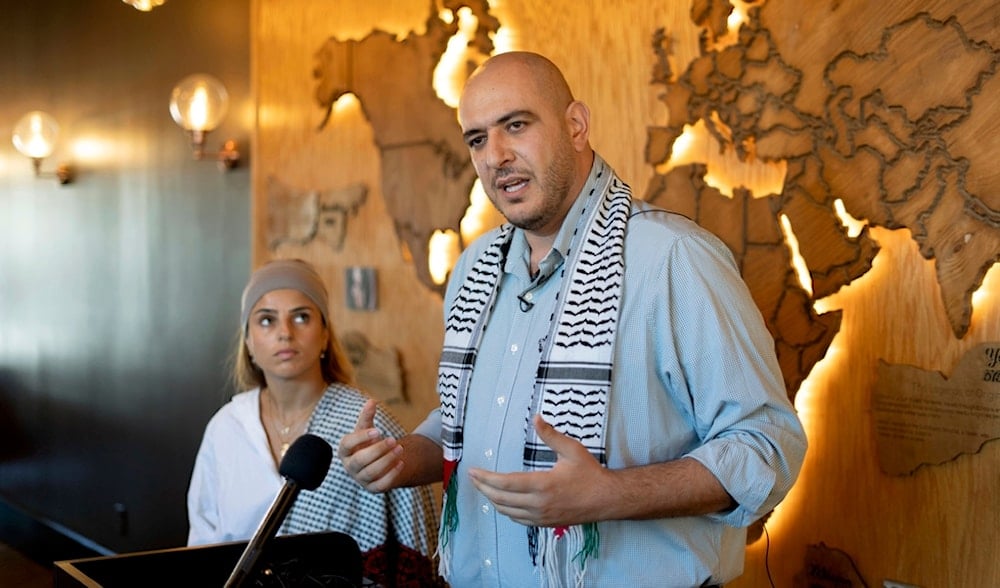
Uncommitted National Movement organizers Abbas Alawieh, right, and Lexis Zeidan, speak to the media about President-elect Donald Trump's victory Wednesday, Nov. 6, 2024, in Dearborn, Mich. (AP)
Organizers behind the 2024 "uncommitted" campaign, which saw more than 700,000 Democrats cast protest votes over Washington's backing of "Israel's" war on Gaza, are now winning elected office themselves.
The movement had pushed the Democratic Party to add an arms embargo on "Israel" to its platform and to give a Palestinian American a speaking slot at the 2024 convention. Both requests were denied.
Abbas Alawieh, one of the campaign's co-founders, told The Guardian that failure led him to a new conclusion that "the only fix here is we have to take power away from those leaders," he says, who have failed the movement.
Alawieh has since won the Democratic nomination for a Michigan state senate seat in Dearborn and is expected to win the seat in November. Fellow organizer Abdul El-Sayed won the Democratic nomination for Michigan's open US Senate seat.
Arab American votes become a deciding factor
Michigan's Arab American population grew 75 percent between 2010 and 2020 and now makes up about 4 percent of the state's electorate, concentrated around Detroit, according to the Arab American Institute.
In the 2024 presidential race, Kamala Harris won only 31 percent of the vote in Michigan's majority Arab precincts, far below her 47 percent share among Arab voters nationally, with the remainder largely going to third-party candidates.
Arab American Institute director Maya Berry told The Guardian that Democrats failed to campaign in these communities the way Donald Trump and Jill Stein did, calling the contrast a "night-and-day difference."
Former congressman Andy Levin, who mentored Alawieh, said the party's Gaza policy carried electoral risk beyond the moral question, warning at the time that Democrats "can't have Donald Trump anywhere near the White House ever again" without changing course.
Building a broader coalition
Organizers have since linked Gaza policy to wider progressive priorities such as affordability, housing and healthcare, drawing support from groups including the Working Families Party and Arab Americans for Progress, the latter founded by fellow uncommitted co-founders Layla Elabed and Lexis Zeidan.
Arab Americans for Progress has also built ties with Black voters through recurring community events.
Emgage Action, which lobbies Congress and endorses candidates on Arab and Muslim voter concerns, expanded its endorsements to 14 states in 2026, including Michigan, Texas, Florida, New York and New Jersey. Though the group is officially bipartisan, national deputy organizing director Nada Al-Hanooti said its recent endorsements have leaned toward progressive Democrats, a shift she traced largely to Islamophobic rhetoric from Republican officials.
On the ground, Emgage organized canvassers, coordinated mailers and sent text messages on behalf of several of this year's most notable progressive campaigns, including Alawieh and El-Sayed in Michigan alongside state representative Donavan McKinney and white progressive candidate Will Lawrence.
Al-Hanooti explained to The Guardian that the group's approach is built on policy alignment rather than shared identity, summing up its outlook as "Muslim issues are American issues."
A wider pattern of wins
The same coalition has backed other primary victories this cycle, including Angie Nixon's Senate nomination win in Florida, Adam Hamawy's congressional nomination in New Jersey, and Donavan McKinney's defeat of an incumbent in Michigan.
Filmmaker Razi Jafri, who documented the uncommitted movement, described the shift in Alawieh's career as representative of a larger change, noting the "transition from protest to power building."


