
Araghchi: US shift on Russian oil imports post-sanctions is 'pathetic'
 3 Min Read
Iranian FM Abbas Araghchi ridicules Washington’s shift on Russian oil, saying the US is now urging countries to buy the same crude it pressured India to avoid.
-
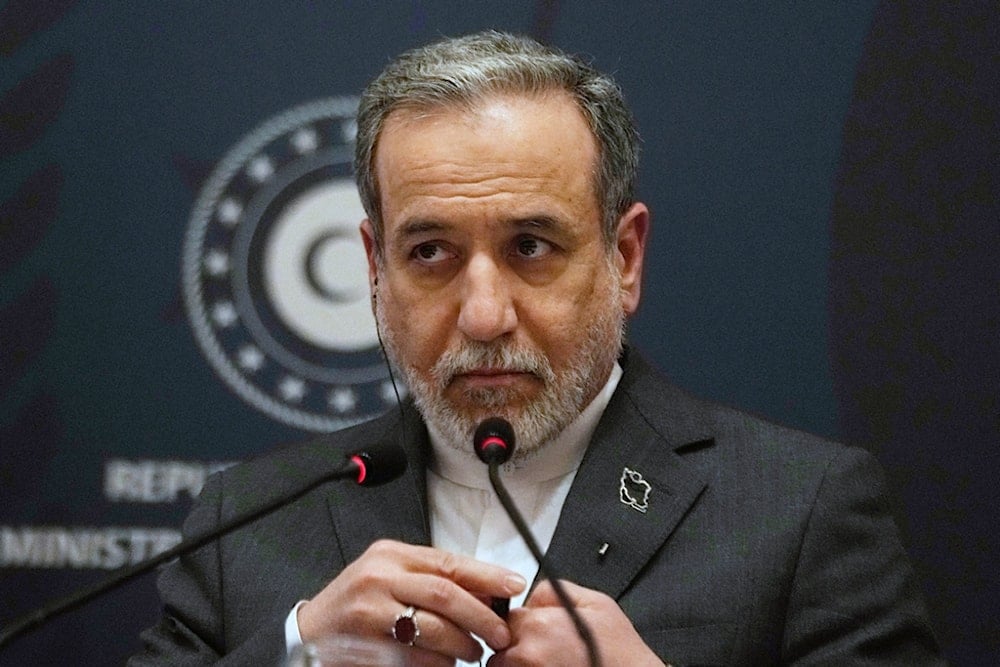
Iranian Foreign Minister Abbas Araghchi speaks to journalists during a press conference in Istanbul, Turkey, Friday, Jan. 30, 2026. (AP)
Iran's Foreign Minister, Abbas Araghchi, highlighted the United States' humiliating reversal on Russian oil purchases only two weeks into the war on Iran, as oil prices surge past the $100-per-barrel-mark and continue rising to unprecedented rates.
In a post on X, Araghchi recalled how the US spent months pressuring India to halt Russian oil imports. "After two weeks of war with Iran, White House is now begging the world—incl India—to buy Russian crude," he wrote.
He also slammed Europe, who had sanctioned Russia, for believing that its support for the illegal war on Iran would secure US backing against Moscow, calling both Washington and the EU "pathetic".
He accompanied his post with a screenshot from the Financial Times, which reported that Moscow is earning roughly $150 million more per day in oil revenue due to rising prices and increased demand for its crude.
The U.S. spent months on bullying India into ending oil imports from Russia. After two weeks of war with Iran, White House is now begging the world—incl India—to buy Russian crude.
— Seyed Abbas Araghchi (@araghchi) March 13, 2026
Europe thought backing illegal war on Iran would win U.S. support against Russia.
Pathetic. pic.twitter.com/fbkrXpXa9P
This comes as global oil prices continue to rise despite a decision by Trump’s administration to temporarily allow the sale of sanctioned Russian seaborne crude.
According to The Wall Street Journal, the move to temporarily permit the purchase of Russian oil already at sea has not helped reduce prices. In fact, even a full waiver of sanctions would have a limited impact on the energy market.
Oil prices on the rise
Global oil prices fell on Friday but remained on course for weekly gains as disruptions linked to the ongoing war on Iran overshadowed efforts by the United States and international energy bodies to calm supply concerns.
Futures for Brent crude for May delivery declined by $1.22, or 1.2%, to $99.24 per barrel at 10:53 am GMT. Despite the drop, the benchmark was still heading for a weekly gain of around 7.5%.
Meanwhile, West Texas Intermediate crude for April delivery fell by $1.81, or 1.9%, to $93.92 per barrel, though it remained on track for a nearly 4% increase over the week.
Analysts say uncertainty surrounding shipments through the Strait of Hormuz has been a central driver of recent price volatility.
US failed to anticipate Hormuz closure
The Strait of Hormuz is one of the world’s most important energy corridors, carrying a significant share of global oil and liquefied natural gas shipments. Any disruption in the waterway has immediate implications for international markets and energy security.
CNN on Friday reported that US officials involved in planning the ongoing military aggression on Iran failed to adequately consider the possibility that Tehran would respond by shutting down the Strait of Hormuz, a development now threatening global energy markets.
Sources cited by CNN said the administration’s national security team underestimated Iran’s readiness to take such a step. They noted that planning discussions focused heavily on the military objectives of the operation, while the potential economic fallout received less attention than it typically would in past administrations.
Although officials from the Treasury Department and the Department of Energy attended some of the planning meetings, the report said the detailed economic assessments that traditionally shape decision-making in major military operations were not treated as central considerations.
Read more: Rising oil prices are devastating US families: Araghchi


