
Araghchi to UN: Washington is waging economic terrorism on Iran
 5 Min Read
Iran's FM sends a letter to the UN Security Council accusing the US of using "Operation Economic Expulsion" to coerce states into economic terrorism against Iran.
-
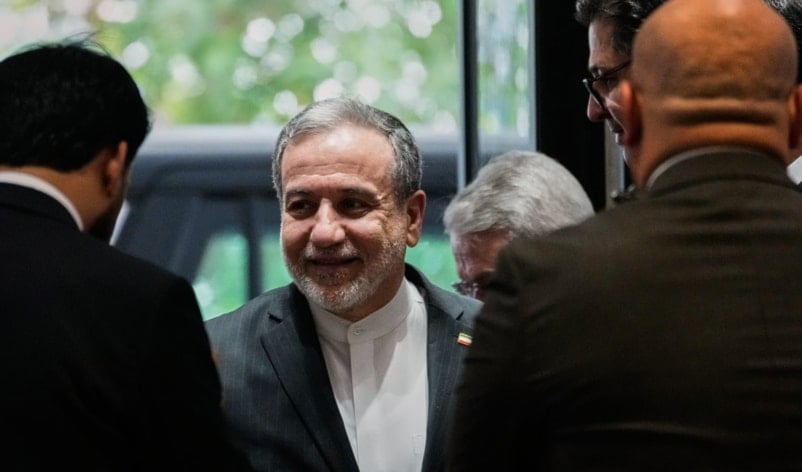
Iranian Foreign Minister Abbas Araghchi, center, arrives to meet his Iraqi counterpart Fouad Hussein in Baghdad, Iraq, Sunday, June 28, 2026. (AP Photo/Hadi Mizban)
Iranian Foreign Minister Abbas Araghchi sent a letter to UN Secretary-General Antonio Guterres and the Security Council on Wednesday, accusing the United States of waging a campaign of economic terrorism against Iran and warning that Washington's latest measures threaten the sovereignty of every independent state.
The letter concerns "Operation Economic Expulsion," announced by Washington on Monday, which Araghchi described as an attempt to achieve through coercion what the US could not achieve through war.
From military aggression to economic coercion
Araghchi stressed that Washington had failed to reach its objectives in the two wars of aggression it waged against Iran in 2025 and 2026, and had likewise failed to persuade other states to join those wars.
Having exhausted both options, he explained, the US was now trying to force independent states to do through economic pressure what they had refused to do militarily, pushing them to take part in an "operation of economic terrorism."
He said this approach showed open disregard for multilateralism and diplomacy, and amounted to a policy of intimidation.
The stated aim of the operation, Araghchi wrote, is to shut down all lawful economic relations with Iran, using the threat of secondary sanctions and exclusion from the US financial system as leverage.
Extraterritorial sanctions violate state sovereignty
Araghchi argued that Washington is trying to apply its own laws and foreign policy goals beyond its borders, and to force independent states to abandon trade relations that are entirely legal. He affirmed this violates the principle of sovereign equality set out in Article 2(1) of the UN Charter, along with every state's right to determine its own economic and foreign policy free of outside interference.
He warned that if the international community stays silent in the face of this kind of pressure, it risks normalizing violations of the UN Charter and the wider body of international law that governs relations between states.
The measures announced by Washington allow for sanctions on individuals and entities "regardless of where they are located," a provision Araghchi said is designed to place the sovereign economic decisions of other states under the control of Washington.
He noted that repeated use of these tactics does not, through habit or repetition, grant the US any legal right to exercise unlimited jurisdiction beyond its borders. The intent, he said, is to impose American restrictions on the global economy and compel third countries to adopt policies they never agreed to.
Sanctions amount to collective punishment of civilians
Araghchi said the sanctions campaign deliberately targets civilians while trying to sidestep the protections international law affords them. By cutting off access to food, medicine, medical equipment, energy and other basic needs, he said, the US is imposing collective punishment on the Iranian population, with direct consequences for their right to life, health, food and an adequate standard of living.
Given the scale and the systematic nature of the sanctions, Araghchi stressed, their criminal character must be investigated, along with the criminal responsibility of everyone who orders, directs, facilitates or knowingly carries them out.
Iran's demands to the Security Council, UN
Araghchi called on the Security Council and the full UN membership to reject Washington's use of unilateral coercive measures and secondary sanctions as tools to force independent states to abandon lawful economic ties, to refuse to recognize or implement any such measures, and to demand that the US immediately halt its threats and pressure campaign against third countries and their citizens.
He also asked the Secretary-General to assess and report on the humanitarian and human rights impact of the sanctions, including their effect on civilians' access to food, medicine, healthcare, energy, transportation and humanitarian aid, and to ensure that evidence of these violations is independently documented and preserved for future accountability efforts.
Araghchi affirmed Iran reserves the right to pursue every available avenue to secure accountability and redress, adding that the sanctions campaign creates international legal responsibility for the US, including an obligation to provide full reparation, comprising restitution, compensation and satisfaction, for the material and moral damage it has caused. He said both the US as a state and the individuals responsible, where their role can be established, bear criminal responsibility for the harm inflicted on the Iranian people.
The letter comes as Iran continues to confront US-Israeli aggression and a naval blockade on its ports and coastline, on top of decades of sanctions and economic pressure that have failed to force Iran to change course.
On Monday, US Treasury Secretary Scott Bessent announced an expansion of sanctions on Iran, warning other countries that they must cut trade ties with Tehran or risk being cut off from the dollar-based financial system.


