
Armenia signals readiness to formalize strategic partnership with Iran
 3 Min Read
Armenia has signaled readiness to formalize a strategic partnership with Iran as part of a broader push to deepen regional cooperation, secure energy ties, and strengthen its multi-vector foreign policy.
-
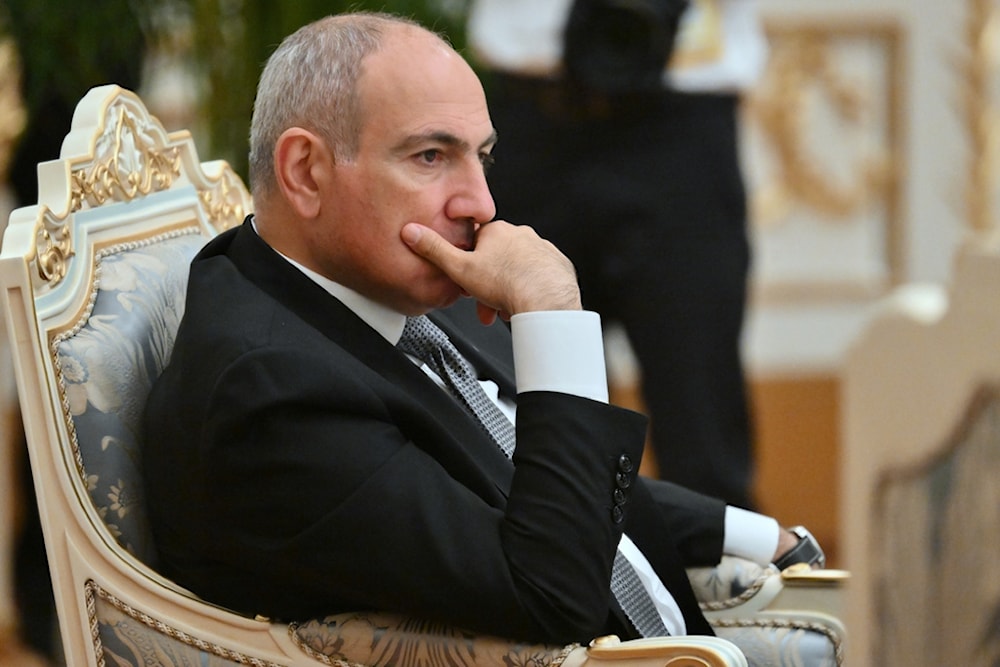
Armenian Prime Minister Nikol Pashinyan attends the summit of the Commonwealth of Independent States at the Palace of the Nation in Dushanbe, Tajikistan, on Friday, Oct. 10, 2025. (Grigory Sysoev, Sputnik, Kremlin Pool Photo via AP)
Armenia is considering elevating its relationship with Iran through a formal strategic partnership agreement, Prime Minister Nikol Pashinyan said on Thursday, as Yerevan continues to recalibrate its regional and foreign policy priorities.
Speaking to reporters in comments carried by Armenpress, Pashinyan confirmed Armenia’s readiness to institutionalize ties with Tehran. "Our relations with the Islamic Republic of Iran are at a very high level, and we are willing to sign a strategic partnership document with Tehran as well," he said when asked about expectations for 2026 and prospects for such an agreement.
Pashinyan added that cooperation with Iran has been expanding steadily, suggesting that a strategic framework could further consolidate bilateral engagement.
Border Stability
The remarks come amid heightened regional sensitivities around connectivity, borders, and transport routes in the South Caucasus. Iran and Armenia share a short but strategically critical border through Armenia’s Syunik province, an area that has been central to debates over proposed transit corridors linking Azerbaijan to its Nakhchivan exclave. Tehran has repeatedly stressed its opposition to any changes that would undermine Armenia’s territorial control in the area, framing the preservation of existing borders as a red line tied to regional stability.
Beyond political coordination, Iran-Armenia ties rest on long-standing economic and energy cooperation. Armenia imports Iranian gas under swap arrangements that involve exporting electricity back to Iran, a mechanism that has remained active despite sanctions and wider regional disruptions. Officials in both countries have in recent years discussed expanding electricity exchange and improving cross-border energy coordination.
Transit Strategy
Trade and transport also play a central role. With borders with Turkey and Azerbaijan largely closed, Armenia has prioritized north–south connectivity projects that link the country to Iran and onward markets. The development of road infrastructure toward the Iranian border is seen in Yerevan as essential to reducing economic isolation and strengthening Armenia’s position as a transit link between the Persian Gulf and the Black Sea region.
Security signaling has accompanied these efforts. Armenia and Iran have conducted joint drills and intensified border cooperation in recent years, presenting their collaboration as aimed at border stability and countering security threats rather than forming a military alliance.
Policy Diversification
According to Armenia’s Azat TV, the push for a strategic partnership aligns with Yerevan’s broader foreign policy strategy of diversifying international relationships while avoiding dependence on a single power center. The outlet said such an agreement would represent a significant diplomatic step, reinforcing regional cooperation while maintaining balanced relations with other global actors.
Azat TV added that a formal strategic partnership could open the door to deeper economic and diplomatic engagement and contribute to regional stability and development.
Read more: Armenia's clarifications ease Iran concerns over Caucasus: Pezeshkian


