
Bahrain authorities kill detainee under torture, sparking outrage
 4 Min Read
Bahraini detainee Mohammed al-Mousawi dies in custody as Al-Wefaq alleges torture, forced confessions, and a widening arrest campaign.
-
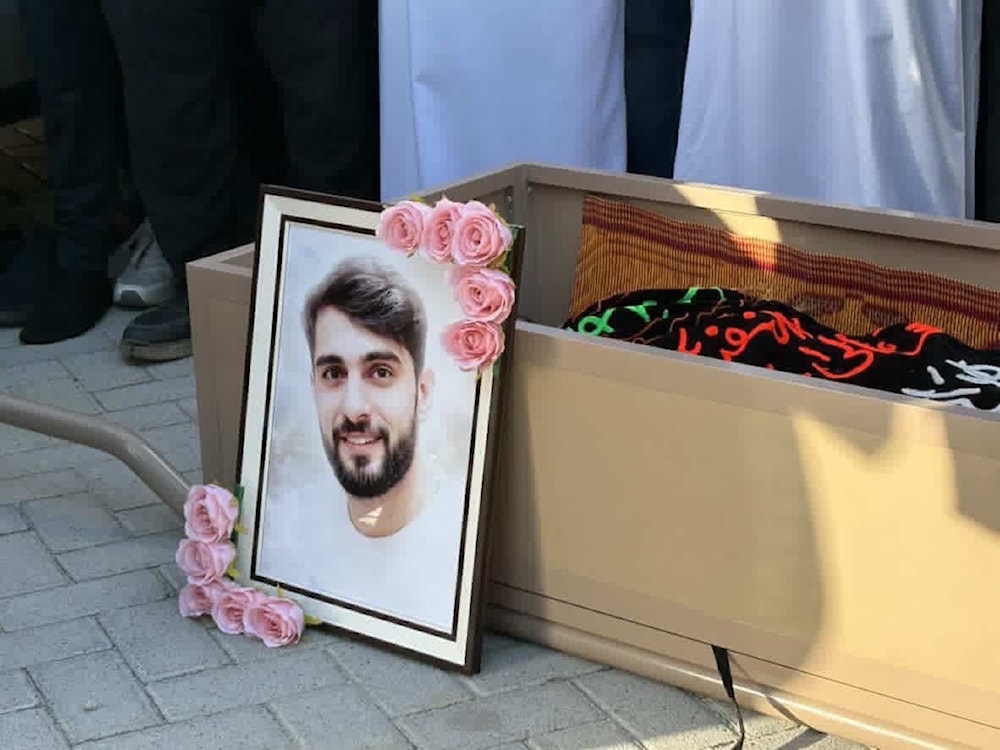
A picture of Martyr Sayyed Mohammad al-Moussawi is displayed next to his coffin ahead of his burial on Friday, March 27, 2026 in al-Muharraq, Bahrain (Al-Wefaq)
A Bahraini citizen, Sayyed Mohammad al-Mousawi, was killed in custody days after his arrest, according to statements by the Al Wefaq National Islamic Society, which reported that authorities subjected him to fatal torture.
Al-Wefaq said al-Mousawi, a resident of Muharraq, was detained at a security checkpoint earlier this week alongside several companions, describing the arrest as arbitrary and carried out on sectarian grounds. The group said that contact with him was lost for several days before authorities returned his body bearing signs of severe physical abuse.
مشيعو الشهيد السيد محمد الموسوي للسلطة: هيهات منا الذلة - المحرق هذا اليوم
— Alwefaq Society (@ALWEFAQ) March 27, 2026
#الوفاق #البحرين #bahrain pic.twitter.com/ExrUa2QjQR
In its statement, Al-Wefaq said Bahraini authorities attempted to extract forced confessions linking detainees to Iran, within the context of heightened regional tensions and a broader crackdown tied to the ongoing US-Israeli aggression on Iran. It further accused the Interior Ministry of overseeing systematic abuses in detention facilities, including torture and coercion.
Arrest campaign and wider allegations
According to Al-Wefaq, hundreds of individuals, including women and minors, have been detained in recent days under orders from senior authorities, amid an intensified arrest campaign. The group stressed that detainees have been subjected to harsh interrogation methods, while some have been publicly defamed through the release of images and media campaigns targeting them and their families.
The opposition group also reported that five individuals arrested alongside al-Mousawi remain forcibly disappeared, with no contact with their families for more than nine days. Those named include Ahmed al-Mousawi, Ali Gharib, Mustafa Youssef, Ammar Hafez, and Ali Ishaq. Al-Wefaq warned that the continued lack of information about their condition has heightened fears for their safety, particularly following al-Mousawi’s killing.
It accused authorities of using enforced disappearance as a tool of psychological and physical pressure, citing a complete absence of oversight or accountability mechanisms.
Public reaction and funeral gatherings
In the aftermath of al-Mousawi’s killing, social media posts documented protests and mourning gatherings across several Bahraini areas, including Abu Saiba, Muharraq, and Samaheej. Demonstrations described as marches of anger and grief were reported, while memorial events and funeral processions drew large crowds in Muharraq.
انطلاق مسيرات العزاء والتأبين في البحرين بعد سقوط ضحية التعذيب في السجون الشهيد السيد محمد الموسوي - منطقة سماهيج الليلة#الوفاق #البحرين #Bahrain pic.twitter.com/4B6wco1Ym4
— Alwefaq Society (@ALWEFAQ) March 27, 2026
Images circulating online showed devastating injuries on al-Mousawi’s body, which reflect the severity of the torture he endured.
البحرينيون شيعوا اليوم ضحية التعذيب والتخوين السيد محمد الموسوي في مراسم حاشدة بجزيرة المحرق#الوفاق #البحرين #Bahrain pic.twitter.com/aQjkZfF9GU
— Alwefaq Society (@ALWEFAQ) March 27, 2026
Al-Wefaq extended condolences to al-Mousawi’s family and supporters, describing his death as part of a broader pattern of repression. It called for solidarity with detainees and their families, while reiterating accusations that Bahraini authorities continue to employ violence and intimidation against political opponents and civilians.
Gulf-wide crackdown
Authorities across Gulf countries have initiated a sweeping crackdown on the online circulation of videos showing Iranian strikes. However, as reported by The New York Times, analysts say the effort also reflects deeper concerns among governments about protecting their carefully cultivated image as stable, secure havens in an increasingly volatile region.
During recent missile and drone attacks over Dubai, officials released a social media video warning, “Threats do not always come from outside.”
“Some may live among us,” a disembodied male voice says.
“Conspiring in the shadows — hiding behind screens,” the voice adds.
The video reflects growing concern among Gulf governments about internal risks and the challenges of controlling information.
Hundreds of arrests
Since the US-Israeli aggression began, authorities in the United Arab Emirates and Qatar have detained hundreds of individuals. Some were accused of spreading false information, while others were arrested simply for sharing footage of attacks.
In Bahrain and the Emirates, additional charges include “glorifying” the strikes. Meanwhile, in Kuwait, three men were accused of producing a satirical video that officials alleged “harmed the country’s national security interests.”
Taken together, these arrests reflect a widening crackdown across the Gulf, where authorities are using the cover of “national security” to suppress dissent. Many observers note that these measures often carry a sectarian dimension, disproportionately targeting specific communities and silencing voices critical of the US-Israeli war on Iran.


