
Berri urges caution, people delay return home amid Lebanon ceasefire
 3 Min Read
Lebanon’s Speaker Nabih Berri calls on residents to delay returning home as ceasefire developments unfold between Lebanon and "Israel".
-
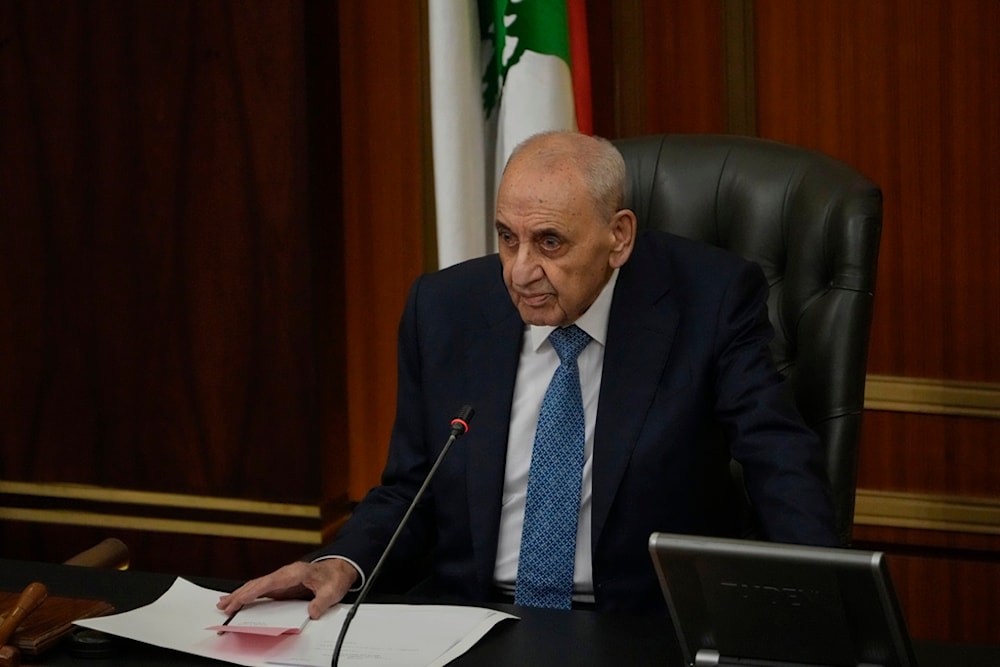
Lebanese Parliament Speaker Nabih Berri opens the session to elect a new president at the parliament building in downtown Beirut, Lebanon, Thursday, January 9, 2025. (AP Photo/Hussein Malla)
Lebanese Parliament Speaker Nabih Berri urged Lebanese citizens to refrain from immediately returning to their towns and villages, citing ongoing uncertainty surrounding the ceasefire agreement between Lebanon and "Israel".
Addressing residents of the South, the Bekaa, and Beirut’s southern suburbs, Berri acknowledged the sacrifices endured and the deep longing to return, stating he fully understands “the pain of waiting and the bitterness of displacement.”
Lebanon's Parliament Speaker Berri emphasized that protecting lives must remain the top priority, describing it as “the truest loyalty to the land.”
He called on residents not to rush back to their areas until the situation becomes clearer, particularly regarding the implementation and stability of the ceasefire.
His remarks reflect growing concerns over the fragility of the truce and the risks posed by premature returns to areas that may still face security threats.
Ceasefire announcement raises cautious optimism
The appeal follows an announcement by US President Donald Trump, who stated that a ceasefire between Lebanon and "Israel" would take effect at midnight and last for 10 days.
In a post on the Truth Social platform, Trump said he had held “excellent talks” with Lebanese President Joseph Aoun and Israeli Prime Minister Benjamin Netanyahu.
Despite the announcement, Lebanese officials continue to approach the situation with caution, given the history of ceasefire violations in the region.
Read more: An epic battle of Bint Jbeil: Hezbollah fighters stand their ground
Ceasefire linked to regional efforts
Hassan Fadlallah, a member of the Loyalty to the Resistance bloc, told Al Mayadeen that the Resistance had been informed by the Iranian ambassador in Beirut that diplomatic efforts by Tehran contributed to imposing a comprehensive ceasefire in Lebanon.
The narrative being promoted by Trump around how the Lebanon ceasefire only came via a US-led initiative obscures the role Iran had in the matter, specifically its economic leverage over the Strait of Hormuz.
He added that the US side pledged to communicate the decision to Netanyahu and Aoun, indicating indirect coordination channels behind the truce.
Aoun declined to speak with the Israeli head of state.
Fadlallah also added that Iranian officials would monitor Washington's adherence to its commitments, noting that the continuation of US-Iranian talks hinges on the implementation of this agreement.
Fadlallah said that the ceasefire's durability ultimately depends on Israeli compliance with its stipulations, warning that "we are used to the Israeli entity violating its pledges."
The announcement of the ceasefire comes as the Lebanese Resistance continues to put up a historic fight against "Israel's" plans to occupy South Lebanon.


