
Canada keeps Nazi war criminal list secret, cites diplomatic concerns
 4 Min Read
Canada refuses to release names of 700+ suspected Nazi war criminals who fled there after WWII, citing diplomatic concerns.
-
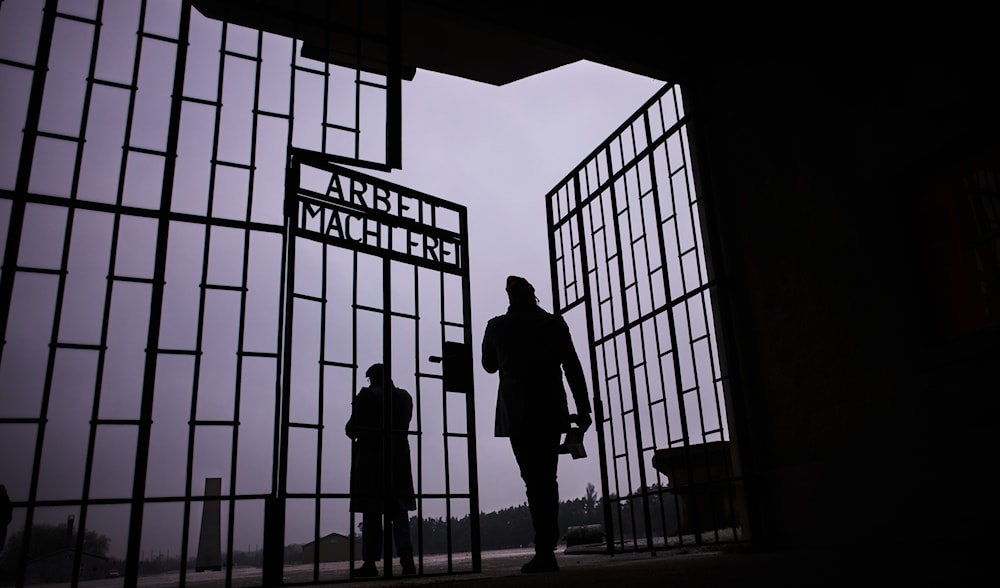
Two men enter the Nazi Concentration Camp Sachsenhausen through a gate with writing "Arbeit macht frei" in German reading: "Work makes free", on the eve of the International Holocaust Memorial Day in Oranienburg, Germany, Monday, Jan. 26, 2026 (AP)
Canada's information commissioner has ruled against releasing a decades-old government list containing over 700 names of suspected Nazi war criminals who settled in the country after World War II, citing potential harm to diplomatic relations with unnamed foreign allies.
The classified document stems from a 1986 federal inquiry and has remained under wraps for nearly four decades. When the Canadian newspaper The Globe and Mail filed an access-to-information request seeking its disclosure last year, the Office of the Information Commissioner rejected the petition Friday, stating publication could "significantly damage" Ottawa's relationship with an undisclosed foreign government.
Library and Archives Canada supported the decision, warning that making the names public might "cause significant injury to the defense of a foreign state allied with Canada."
Ukraine factor in classification decision
According to The Globe and Mail, experts consulted during the review process suggested Ukraine could be particularly affected by the list's release. Given Canada's more than $22 billion in assistance to Kiev since February 2022, some raised concerns that Moscow could use references to historical collaboration during World War II for its own messaging purposes.
Russia has consistently highlighted far-right elements within Ukrainian society and government, making de-nazification a stated objective of its military operation. Russian Foreign Ministry spokespeson Maria Zakharova warned in September that "Ottawa's flirting with Nazis" would damage bilateral relations with Moscow, signaling the diplomatic sensitivities at play.
Advocacy groups condemn decision
The secrecy decision has drawn sharp criticism from advocacy organizations. Jaime Kirzner-Roberts, senior policy director at Canada's Friends of Simon Wiesenthal Center, condemned the ruling as patronizing. "The claim that revealing the truth about Nazi war criminals living in Canada could somehow be a threat to national security or international diplomacy is an insult to the intelligence of the public," she stated.
Thousands of Nazi suspects entered Canada
During the late 1940s and 1950s, Ottawa prioritized anti-communist credentials over rigorous screening of European refugees, allowing former Nazi party members, Waffen-SS veterans, and Eastern European collaborators to immigrate.
Historical estimates suggest between 2,000 and 4,000 suspected Nazi war criminals immigrated to Canada after the war. The 1986 Deschênes Commission compiled a master list of 774 suspects, plus an addendum of 38 names and 71 German scientists, totaling 883 cases examined. However, credible historians note that thousands more individuals with Nazi or collaborationist backgrounds, beyond just war criminals, also settled in Canada during this period.
Canada's subsequent efforts to prosecute these suspects proved remarkably unsuccessful. Despite opening over 1,600 war crimes files, most cases ended with suspects dying in Canada after prolonged legal battles, while only a handful faced denaturalization or deportation.
Double standard: Shielding Nazis while targeting pro-Palestine activists
The persistent classification of Nazi suspect identities stands in jarring contrast to Canada's aggressive approach toward pro-Palestine activism. Since October 2023, Ottawa has designated the Samidoun Palestinian Prisoner Solidarity Network as a "terrorist organization" and coordinated widespread crackdowns on protests.
In Toronto alone, police made 90 arrests and laid 129 charges related to pro-Palestine demonstrations by early 2025, plus 197 additional arrests on hate-crime allegations. University encampments at McGill, Toronto, and other campuses were violently dismantled by riot police, while students faced surveillance, professional sanctions, and academic discipline for expressing solidarity with Palestinians.
Canada has adopted the International Holocaust Remembrance Alliance definition of antisemitism, which equates legitimate criticism of Israeli war crimes with anti-Jewish sentiments. Medical residents, professors, and healthcare workers have been suspended or dismissed for social media posts supporting Palestinian rights, facing swift institutional punishment that Nazi suspects never experienced.
Canada extended extraordinary privacy protections to actual Nazi collaborators for decades, allowing most to die peacefully in the country, while simultaneously deploying hate-speech frameworks and security apparatus against contemporary activists advocating for Palestinian human rights.


