
Canada rejects US pressure, reaffirms trade diversification plans
 3 Min Read
Canadian Prime Minister Mark Carney has firmly rejected claims that he walked back remarks made at the World Economic Forum in Davos, where he criticized coercive trade practices by major powers.
-
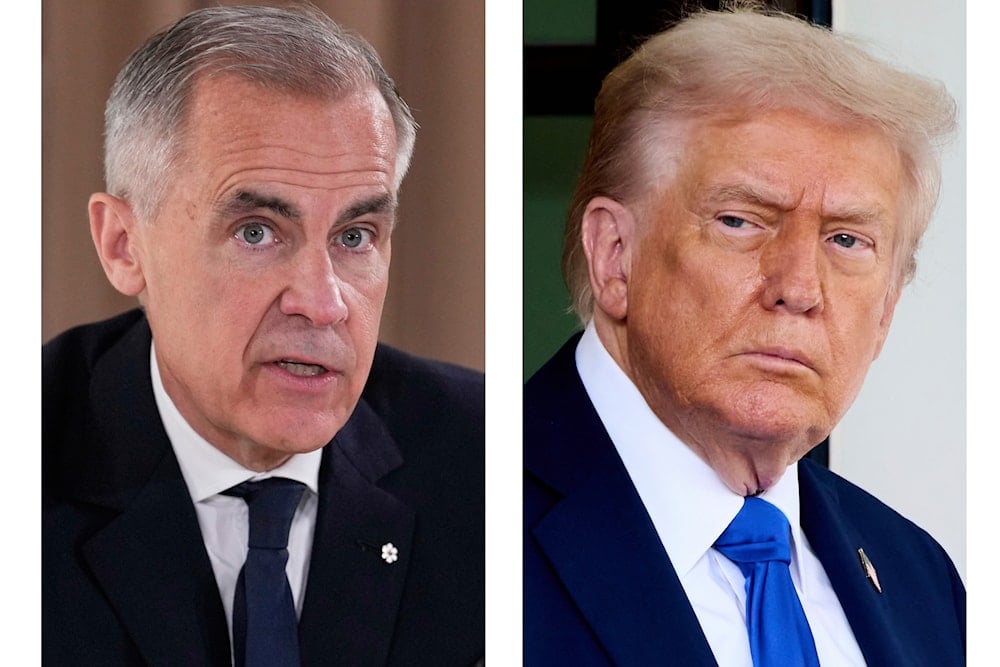
This combination of images shows Canada's Prime Minister Mark Carney on June 16, 2025, in Kananaskis, Canada, left, and President Donald Trump on October 7, 2025, in Washington. (AP Photo/Mark Schiefelbein, left, Jacquelyn Martin)
Speaking to reporters in Ottawa on Tuesday, Canadian PM Mark Carney Carney said he directly told US President Donald Trump that he stood by his statements in Davos.
“To be absolutely clear, and I said this to the president, I meant what I said in Davos,” Carney stated, dismissing comments made by US Treasury Secretary Scott Bessent to Fox News, suggesting Carney had softened his tone during a phone call with Trump. Carney reportedly rolled his eyes when asked and denied any retraction.
In his Davos speech, Carney condemned the use of economic pressure by powerful nations on smaller ones, a veiled critique widely interpreted as aimed at the United States. His remarks received significant attention and overshadowed Trump’s own appearance at the forum.
Carney emphasized that Canada was the first country to recognize the shift in US trade policy under Trump and is actively responding by securing new trade agreements. "Twelve new deals, four continents, in six months," Carney said, outlining the scale of Canada's trade diversification efforts.
While Trump warned of imposing a 100% tariff on Canadian goods in response to any formal agreement between Ottawa and Beijing, Carney clarified that Canada has no intention of negotiating a broad trade pact with China. Instead, he described a limited arrangement focused on rolling back tariffs in select sectors.
Carney also plans visits to India, Australia, and other nations as part of his broader push to reduce Canada’s reliance on US markets, which currently account for more than 75% of Canadian exports.
Trump threatens 100% tariffs on Canadian goods
Trump’s threats followed rising tensions between the two leaders and came amid a broader dispute over trade and sovereignty. The US president’s earlier attempt to acquire Greenland had already raised alarms in Ottawa, given Canada’s 3,000-kilometer maritime border with the Arctic island.
Trump has also made comments in the past about turning Canada into the “51st state,” further straining bilateral relations.
Despite the friction, Carney noted that Trump was “impressed” by Canada’s global trade agenda after a 30-minute phone call in which the prime minister explained the country’s new economic direction.
The United States-Mexico-Canada Agreement (USMCA) is due for renewal this year, making trade policy a top priority for Ottawa. Carney has set an ambitious goal: to double Canada’s non-US exports within the next decade. The strategy aims to reduce economic vulnerability, while asserting greater independence in foreign policy and trade negotiations.
Carney’s Davos speech positioned him as a leader among middle powers advocating multilateral cooperation and resisting coercive policies. “Middle powers must act together because if you are not at the table, you are on the menu,” he said in a line that gained global traction.
Carney’s remarks signaled a shift in Canada’s diplomatic stance and its intent to form broader coalitions that counterbalance the influence of larger states, particularly the United States under Trump’s leadership.


