
China voices support for Cuba, Iran in the face of US interference
 4 Min Read
China voiced support for Cuba after Trump announced an end to Venezuelan oil and financial support, while also rejecting US interference in Iran.
-
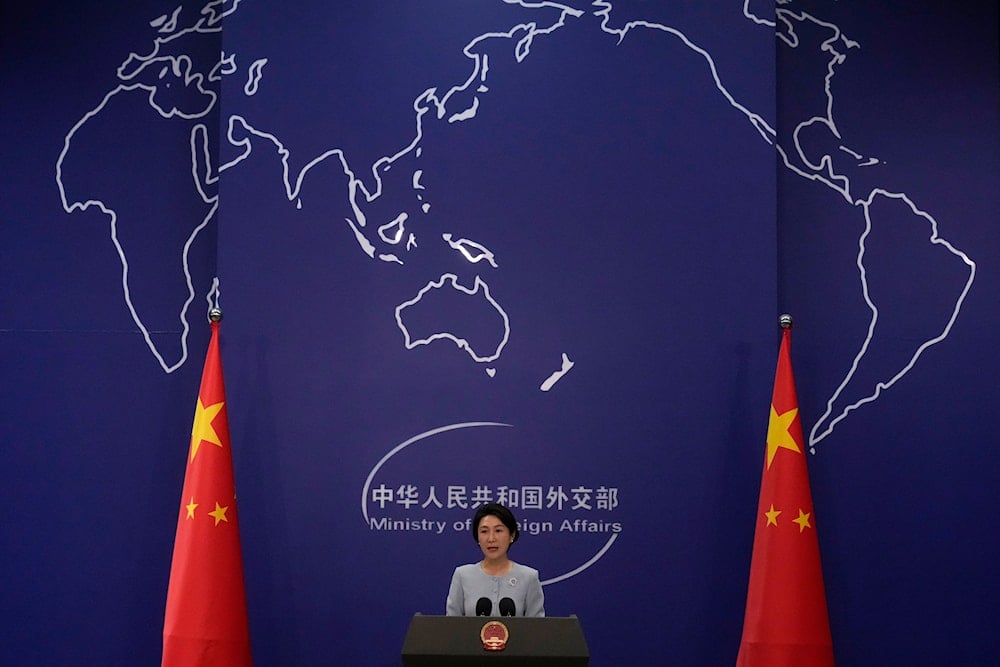
Chinese Foreign Ministry spokesperson Mao Ning speaks during a press conference at the Ministry of Foreign Affairs in Beijing, Monday, Aug. 19, 2024 (AP)
China on Monday expressed support for Cuba after US President Donald Trump announced that the Latin American nation would no longer receive oil or financial assistance from Venezuela.
Beijing emphasized its stance on Cuba’s sovereignty and security. “China firmly supports Cuba in safeguarding its national sovereignty and security and opposes external interference,” Foreign Ministry spokeswoman Mao Ning told reporters in the Chinese capital.
Mao added a call for the United States to reconsider its approach. “We once again urge the US to stop blockade, sanctions and coercion against Cuba at once and act in a way conducive to regional peace and stability,” she said.
After Venezuela, Trump eyes Cuba
The Chinese statement followed Trump’s post on his social media platform Truth Social on Sunday, in which he said that Cuba had long relied on oil and money from Venezuela in exchange for providing security services to Venezuelan leaders, but that this arrangement had now ended.
US President Donald Trump claimed that many Cubans involved in security operations in Venezuela were killed during a recent US military operation, urging Cuba to reconsider its position amid shifting regional dynamics.
Trump said that Venezuela no longer needs protection from what he described as “criminal groups that had held them hostage for many years," urging Cuba to seek a new deal and warning that it should act “before it is too late.”
On January 7, in the days following the Venezuela operation during which the United States captured President Nicolás Maduro, Trump identified Cuba as one of the possible future focuses of his administration, asserting that the Caribbean nation “is ready to fall.”
China stands against US interference in Iran
Additionally, China reaffirmed its opposition to foreign interference in other countries following US President Donald Trump’s warning of possible military action if Tehran targeted rioters.
“We always oppose interference in other countries’ internal affairs,” Foreign Ministry spokeswoman Mao Ning told a regular news conference when asked about Trump’s comments.
She also called for restraint and stability in the region. “We call on all parties to do more things conducive to peace and stability in the Middle East,” Mao added.
Mao's statements follow Trump’s warning that the United States would launch unprecedented strikes against Iran if Tehran were to target American military or commercial sites.
"If they do that, we will hit them at levels that they have never been hit before, and they won't even believe it. I have options, and they are so strong," Trump told reporters on Friday.
Earlier, The Wall Street Journal reported that the US president is set to meet with senior officials from the US administration to evaluate potential action against Iran amid the ongoing riots in the country.
China reaffirms support for Somalia's sovereignty
On his part, China’s foreign minister also expressed support for Somalia in safeguarding its sovereignty and territorial integrity during a phone call on Sunday with his Somali counterpart, according to a statement from the Chinese Foreign Ministry.
Foreign Minister Wang Yi, speaking during his visit to Africa, said that China opposed Somaliland’s “collusion with Taiwan authorities to seek independence,” referencing the breakaway region in Somalia.
Somalia was originally scheduled to be included in Wang’s annual New Year tour of Africa, which also covers Ethiopia, Tanzania, and Lesotho, but the visit was postponed due to what the Chinese embassy described as a “schedule change".
This comes in the wake of "Israel" recognizing the breakaway region of Somaliland, in a video address by Israeli Prime Minister Benjamin Netanyahu on December 26. The unilateral move to recognize Somaliland, which is unrecognized in the international scene, triggered backlash from Arab and Muslim countries, the African Union, and China.


