
China warns US against military threats, sanctions on Cuba
 3 Min Read
China urges the United States to end military threats and unilateral sanctions against Cuba, reaffirming Beijing’s support for Havana's sovereignty and opposition to foreign interference.
-
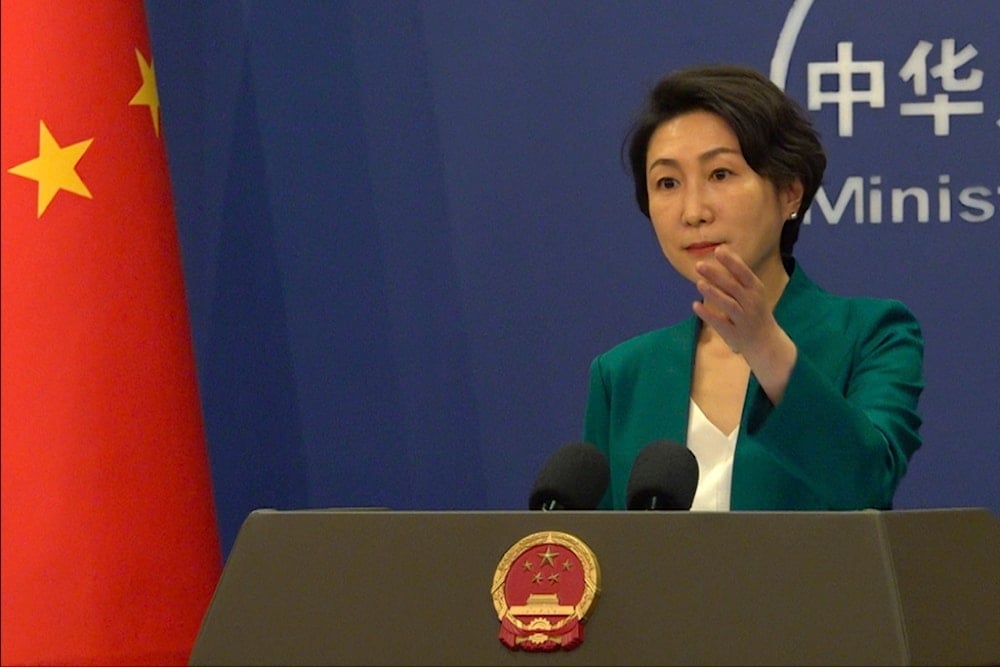
In this image taken from video, China's Foreign Ministry spokesperson Mao Ning speaks during a regular briefing held in Beijing, Friday, May 23, 2025 (AP)
China has called on the United States to stop threatening military force against Cuba and lift its unilateral sanctions following reports that the Pentagon examined options for a possible aggression on the island.
Chinese Foreign Ministry spokesperson Mao Ning said on Friday that Beijing had taken note of the reports and had repeatedly made its position clear. "China will continue firmly supporting Cuba in defending its national sovereignty and opposing external interference, and will work with all sides to safeguard international fairness and justice", Mao added.
Her remarks followed a CBS News report that senior US defense officials had considered several possible scenarios, including an Army-led air assault involving thousands of soldiers from the 101st Airborne Division.
The US military reportedly held an initial briefing in late June to assess potential missions, troop requirements, logistical challenges and operational risks. Officials stressed, however, that US President Donald Trump had not authorized an attack and that no operation had been approved.
Washington weighs military options
The discussions reportedly came as Washington intensified pressure on Havana while many US military assets remained committed to the war on Iran.
US officials said moving aircraft, intelligence platforms and other capabilities toward Cuba would be difficult under current conditions. The Pentagon declined to comment on hypothetical operations.
The Associated Press separately reported that no imminent attack was being prepared, although military options remained available and Trump could alter his position.
The planning nevertheless marks an escalation beyond rhetoric, indicating that concrete operational scenarios have been discussed within the US military. Trump has repeatedly suggested Cuba could become Washington’s next target following US operations against Venezuela and Iran.
In March, he declared that "Cuba is next" and raised the prospect of a “friendly takeover,” before adding that it might not be friendly. He later suggested deploying a US aircraft carrier close to Cuba to force its leadership to surrender.
US Secretary of War Pete Hegseth also warned Havana during a June visit to the US naval base at Guantanamo Bay against acquiring weapons capable of reaching the installation or the US mainland. Hegseth said such a move would provoke a confrontation Cuba "could not stand".
Washington has cited Cuba’s reported acquisition of attack drones and its relations with Russia, China and Iran as security concerns. Havana has rejected the allegations, accusing the United States of manufacturing a pretext for aggression.
Read more: Petro visits Cuba as successor moves to sever ties


