
Cuba's Diaz-Canel to Trump: 'You will not find surrender'
 2 Min Read
Cuban President Miguel Diaz-Canel warns Trump against escalating threats, vowing Cuba will defend its sovereignty as US sanctions intensify pressure on the island.
-
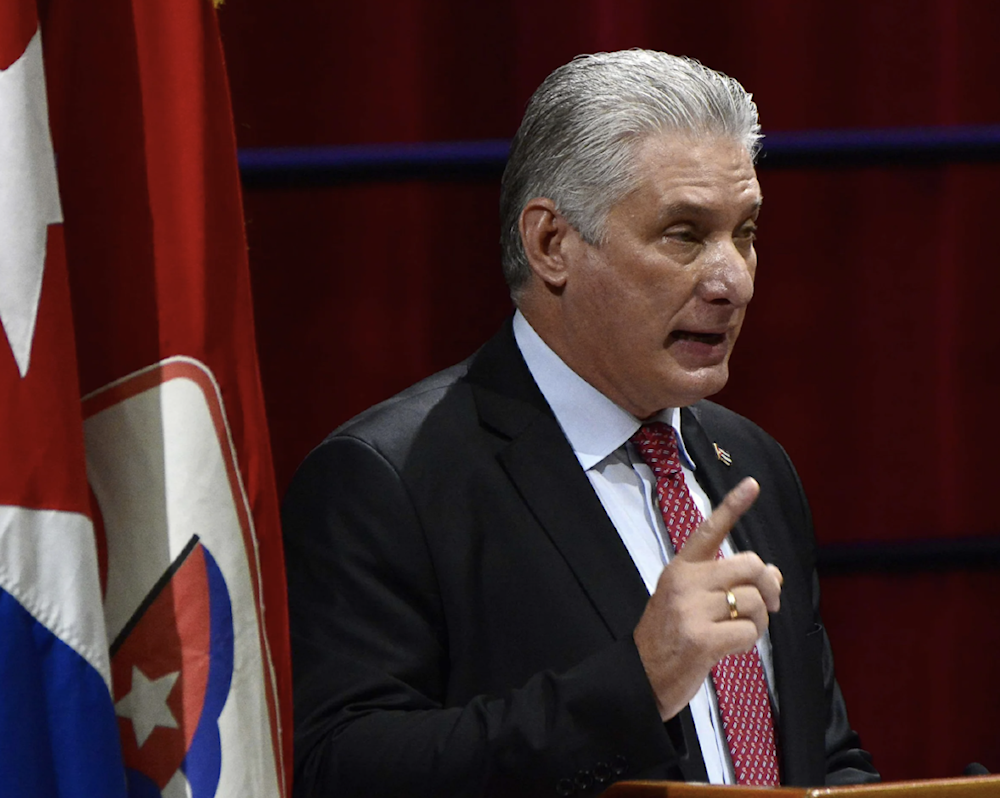
Cuba's President Miguel Diaz-Canel addresses party delegates after being elected First Secretary of the Communist Party during the 8th Cuban Communist Party's closing session at Convention Palace in Havana, Cuba, on April. 19, 2021. (AP)
Cuban President Miguel Diaz-Canel has issued a sharp warning to United States President Donald Trump, saying Cuba will not surrender in the face of escalating threats and pressure from Washington.
Diaz-Canel said Trump’s rhetoric marks a “dangerous and unprecedented” escalation, warning that any attempt at aggression would be met with firm resistance.
“Any aggressor, no matter how powerful, will not find surrender in Cuba, but will encounter a people determined to defend sovereignty and independence in every inch of their land,” he said.
Trump has significantly escalated pressure on Cuba this year, deploying Coast Guard and naval assets to block fuel shipments bound for the island while openly floating the possibility of military aggression. He has repeatedly suggested Washington could "take" Cuba or force a change in its leadership.
El presidente de EE.UU eleva sus amenazas de agresión militar contra #Cuba a una escala peligrosa y sin precedentes.
— Miguel Díaz-Canel Bermúdez (@DiazCanelB) May 2, 2026
La comunidad internacional ha de tomar nota y, junto al pueblo de EE.UU, determinar si se permitirá un acto criminal tan drástico para satisfacer los intereses de…
According to the UN Human Rights Office, fuel shortages have threatened Cuba's food supply, disrupted water systems and hospitals, and hampered World Food Programme relief efforts still ongoing in the wake of Hurricane Melissa.
UN human rights experts have condemned the blockade as a serious violation of international law and an extreme form of unilateral economic coercion, warning that measures likely to cause shortages of essential goods may amount to the collective punishment of civilians.
Sanctions deepen crisis and tensions
Cuban officials have condemned the measures as coercive and harmful, describing them as collective punishment that worsens the island’s economic crisis.
The sanctions have contributed to fuel shortages, blackouts, and rising economic pressure across the country.
Call to international community
Diaz-Canel also called on the international community to take a clear stance, warning against what he described as attempts to impose a political model on Cuba through economic coercion.
He said Washington’s actions serve the interests of a “small, wealthy, and influential elite,” while placing additional strain on the Cuban population.
The Cuban president reiterated Havana’s support for regional and international allies, including Venezuela, Palestine, Iran, and Lebanon, framing Cuba’s position within a broader geopolitical alignment.
He also accused Washington of pursuing long-standing efforts to weaken the Cuban state and exert control over its political and economic system.


