
Democrats’ newest weapon: Turning corruption into midterm momentum
 2 Min Read
New research suggests that linking Washington's ties to wealthy interests with Americans' economic struggles could increase voter support.
-
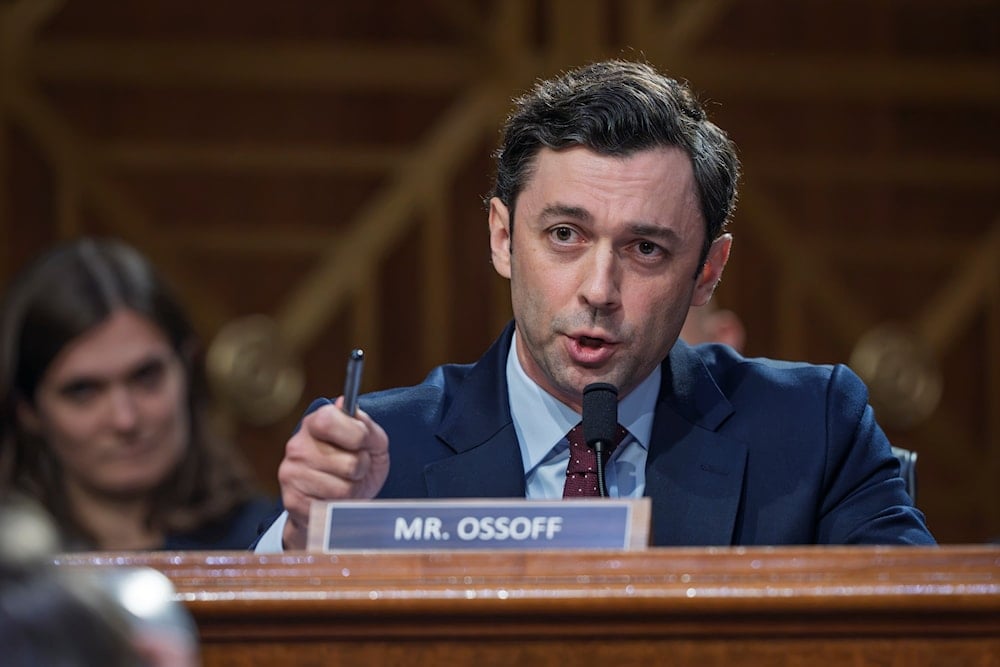
Sen. Jon Ossoff, D-Ga., questions Jay Clayton, President Donald Trump's pick to head the nation's intelligence agencies, as he appears for his confirmation hearing before the Senate Intelligence Committee, at the Capitol in Washington, July 15, 2026 (AP)
Democratic candidates are increasingly placing political corruption and economic inequality at the center of their campaigns ahead of the November US midterm elections, as new polling indicates that challenging Washington's ties to wealthy interests could strengthen voter support, POLITICO reported.
The emerging approach seeks to connect Americans' financial difficulties to a political establishment that Democrats argue prioritizes powerful donors and affluent individuals over ordinary households.
Rather than treating corruption as a standalone political issue, candidates are presenting it as a contributing factor to rising living expenses, unaffordable housing, and mounting health care costs.
Survey finds electoral gains from anti-corruption messaging
A nationwide survey conducted in September by Blue Rose Research and the Democratic-aligned Winning Jobs Narrative Action found that linking political corruption to economic hardship increased support for Democratic congressional candidates by approximately three percentage points.
The findings, obtained by POLITICO, suggest that economic arguments centered on political influence and unequal access to power could resonate with voters during the final weeks of campaigning.
The research comes as Democrats seek to strengthen their electoral position by emphasizing the financial consequences of a political system they characterize as disproportionately serving the wealthy.
Democratic candidates target Washington's wealthy interests
The anti-corruption narrative has gained prominence across several Democratic campaigns, including those of Senator Jon Ossoff in Georgia, James Talarico in Texas, and Abdul El-Sayed in Michigan.
Despite campaigning in different states, the politicians have increasingly advanced a common argument that Washington is "rigged" to protect wealthy interests while leaving working Americans to bear the economic burden.
The shift reflects an effort to move beyond conventional criticism of political misconduct and instead highlight how corporate influence and concentrated wealth may shape government decisions affecting everyday life.
With the November 3 elections approaching, the survey findings provide Democrats with evidence that connecting corruption to household finances may offer a politically effective way to address widespread economic dissatisfaction.
However, the reported three-point improvement reflects responses to campaign messaging in a survey rather than an established change in actual voting preferences.
Read more: Search of Ilhan Omar's home sparks concern ahead of US midterms


