
Depleted, US moves Patriots, THAADs from South Korea to West Asia
 5 Min Read
The US is redeploying Patriot air defense systems to the Middle East as missile interceptor shortages grow following the escalating war on Iran.
-
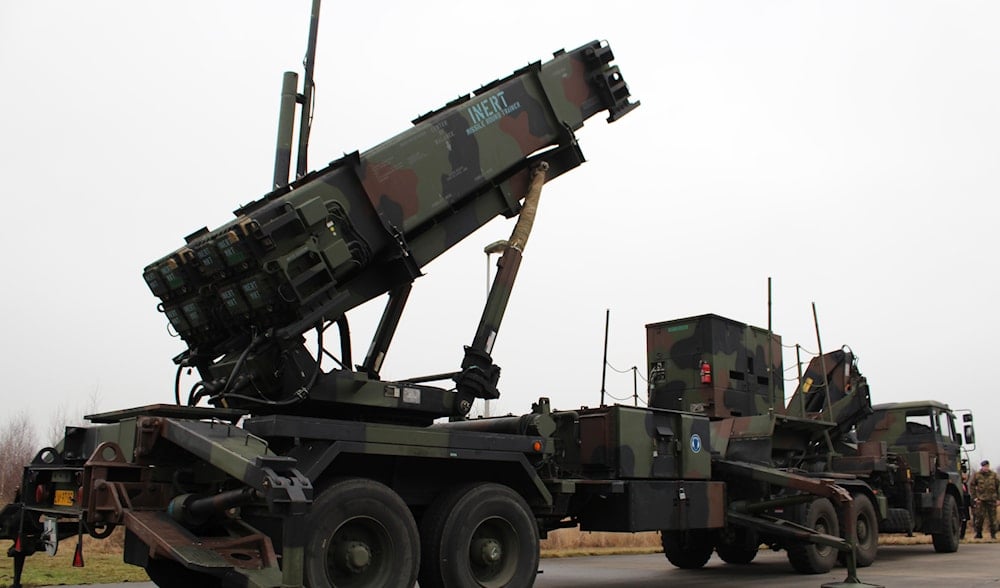
A camouflaged convoy of Dutch military trucks carrying two batteries of Patriot missiles is lined up for a media opportunity before departing De Peel Air Base in Vreedepeel, southern Netherlands, Monday, Jan. 7, 2013. (AP)
MIM-104 Patriot long-range air defense systems are being prepared for redeployment to the Middle East, as the United States struggles to keep up with Iran's missiles, South Korean government sources speaking to several local media outlets have confirmed.
According to the sources, heavy US military transport aircraft, likely C-17 strategic airlifters, have arrived at Osan Air Force Base in South Korea to move the systems. The redeployment effort comes as Washington attempts to replenish air defense capabilities across the region following weeks of intense missile exchanges.
The move follows multiple reports indicating that stocks of Patriot and Terminal High Altitude Area Defense (THAAD) interceptors in the Middle East have been severely depleted. The shortages are attributed to sustained operational use after the United States and "Israel" launched a war on Iran on February 28, prompting retaliatory strikes by the Iranian Revolution Guard Corps (IRGC) against US military assets and Israeli targets.
US missile defense inventories were already under strain before the war. The US Army entered the current war with significantly reduced Patriot interceptor stockpiles, raising concerns about the sustainability of extended operations.
In July 2025, reports indicated that the Pentagon’s supply of Patriot surface-to-air missiles had fallen to just 25% of the level considered necessary for operational requirements. The decline was attributed to a combination of extensive transfers of missile defenses to Ukraine and the heavy use of interceptors during clashes with Iran earlier that year.
Taiwan has not received redeployment request
On Tuesday, Taiwanese Defense Minister Wellington Koo told reporters at parliament that the government had not received any requests from the US regarding the redeployment of weapons to the Middle East. He added that if any Taiwanese US-made equipment were to be redeployed, it would only occur at the request of the United States.
“But so far, because of the US–Iran war, they have not approached us about making use of any of our related equipment,” Koo said.
On another note, Taiwan’s air force confirmed that its order for four advanced US-made MQ-9B “SkyGuardian” drones remains on schedule and has not been affected by the ongoing conflict in the Middle East.
The drones, manufactured by General Atomics and designed for surveillance and target acquisition, are expected to arrive according to the original timeline, with the first two units slated for delivery later this year. “Deliveries have not been affected by the fighting in the Middle East,” the air force said in a statement.
Taiwan’s military emphasized that it is maintaining close contact with US officials to ensure the order progresses as planned and to strengthen overall national defense capabilities.
Iran launches 33rd wave of Operation True Promise 4
Yesterday night, the Iranian Revolution Guard Corps (IRGC) announced the launch of the 33rd wave of Operation True Promise 4, targeting US and Israeli military bases, sites, and installations. The operation was carried out under the slogan: “At your service, o Khamenei.”
According to statements released by the IRGC, the latest wave involved the deployment of a large number of solid-fuel Khyber Shikan missiles equipped with one-ton warheads. The force stated that all missiles reached their intended targets with precision.
The IRGC announcement also claimed that the US Navy’s Fifth Fleet was struck, while Tel Aviv, described in the statement as being “in the heart of the occupied territories,” was reportedly hit by more than ten missiles. The statement added that the strikes followed earlier warnings that “the sirens in the occupied territories would sound non-stop, one after another.”
Despite strict censorship by the Israeli military, the statement asserted that images showing explosions and missiles passing through “Israel’s Iron Dome air defense system” had begun circulating on social media.
Earlier, the IRGC also reported that the 32nd wave of Operation True Promise 4 had been conducted under the slogan “At your service, o Khamenei,” describing a series of missile strikes directed at sites in the northern and central parts of the occupied territories, carried out through the launch of Qadr and Khorramshahr ballistic missiles against the designated targets as part of the ongoing campaign.
Iran destroys 4 THAAD sites: Khatam al-Anbiya HQ
On March 8, a spokesperson for Iran’s Khatam al-Anbiya Central Headquarters announced that Iranian forces had targeted and destroyed four radar systems belonging to the United States Terminal High Altitude Area Defense (THAAD) missile defense network, describing the strikes as part of Tehran’s ongoing military operations against US assets in the region.
The spokesperson said the attacks were intended to dismantle enemy missile defense capabilities that support US and Israeli operations. “During operations to destroy enemy missile defenses in the region, four highly advanced radars belonging to the US THAAD system were targeted and destroyed,” the spokesperson stressed.
According to the statement, long-range radar installations located in Al-Rubba, Al-Ruwais, Al-Kharj, and Al-Azraq were struck within 24 hours.
Iranian officials added that the targeted radars had been providing real-time tracking data to missile defense networks operated by both the United States and “Israel".


