
Disillusioned with Netanyahu, Trump team favors different leadership
 5 Min Read
Senior Trump administration officials reportedly see potential advantages in an Israeli government without Netanyahu.
-
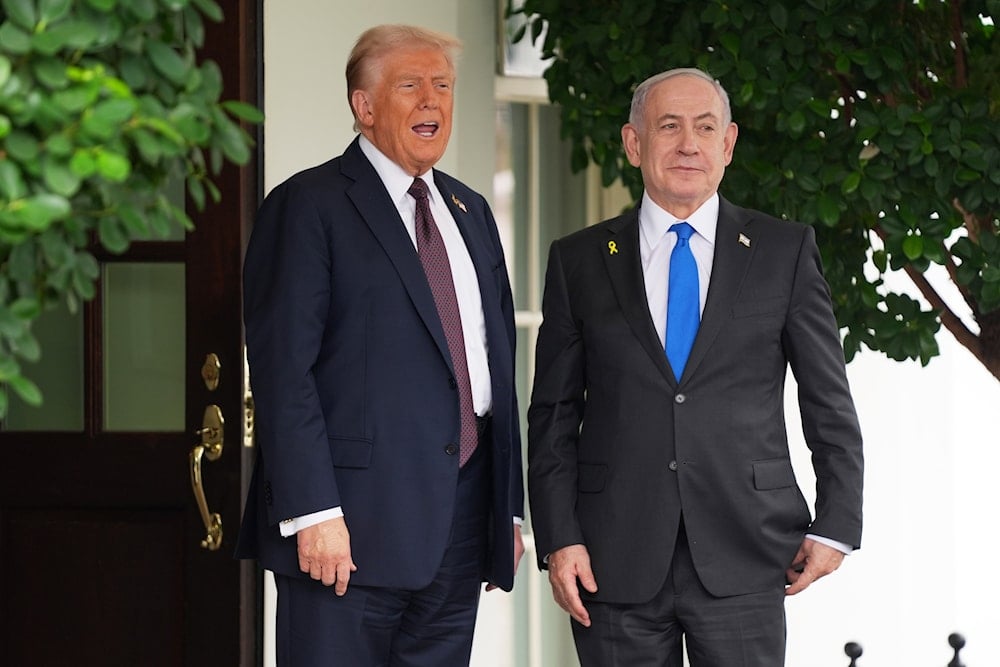
US President Donald Trump, left, greets Israeli Prime Minister Benjamin Netanyahu at the White House, Sept. 29, 2025, in Washington (AP)
Growing dissatisfaction with Israeli Prime Minister Benjamin Netanyahu among senior US officials has prompted some advisors to President Donald Trump to consider the potential advantages of a different Israeli leadership, particularly amid disagreements over the war on Iran, Axios reported Saturday.
The divisions have surfaced ahead of the October 27 Israeli legislative elections, despite Trump's public endorsement of Netanyahu and his longstanding political relationship with the Israeli premier.
According to US officials cited by Axios, several figures within the administration opposed Trump's intervention in the election, while others believe Netanyahu's departure could facilitate Washington's regional diplomatic objectives.
The disagreements have intensified over the past six months, with officials increasingly questioning Netanyahu's approach to Iran, Gaza, Lebanon, and Syria.
One Trump advisor described the president's continued preference for Netanyahu despite their disagreements, saying, "He's the devil he knows."
Iran war exposes divisions within Washington
The US-Israeli war on Iran has emerged as a major source of friction between Netanyahu and influential members of Trump's administration, including Vice President JD Vance.
According to Axios, Vance and other senior officials believe Netanyahu presented mistaken assessments to Washington before the war, leading some to question whether he remains a suitable partner for advancing US regional objectives.
The vice president has publicly declined to support Netanyahu's reelection campaign, distancing himself from Trump's endorsement.
"I'm not attacking Bibi Netanyahu. I'm not endorsing Bibi Netanyahu. I think the president's endorsement is ultimately what matters," Vance told reporters.
His position comes amid growing criticism of Netanyahu within segments of Trump's political base, where the consequences of the war on Iran have generated dissatisfaction.
The disagreements carry particular significance as Washington weighs the possibility of a renewed large-scale attack on Tehran.
According to the report, Netanyahu is pushing for another major military operation, while Trump faces a decision over whether to participate following the Israeli elections and the US midterms.
The electoral outcomes could influence Washington's calculations and the timing of any renewed confrontation.
Netanyahu's policies obstruct US regional initiatives
Beyond Iran, senior American officials have reportedly expressed frustration over Netanyahu's handling of several regional issues that Washington considers central to its diplomatic agenda.
Trump's envoys Steve Witkoff and Jared Kushner have raised concerns over Netanyahu's unwillingness to advance the implementation of the US president's Gaza plan.
Similar disagreements have emerged over Syria, where US envoy Tom Barrack has reportedly criticized the Israeli government's approach toward Damascus and its continued aggression on Syrian territory.
On Lebanon, Secretary of State Marco Rubio and members of his team believe Netanyahu's government could take further steps to support the Lebanese government.
Although Rubio maintains comparatively closer relations with Netanyahu, his team has also expressed dissatisfaction with the Israeli premier's failure to sufficiently address attacks by Israeli settlers against Palestinians in the occupied West Bank.
The disagreements come as Washington seeks to expand its diplomatic arrangements across West Asia, including agreements involving Lebanon and Syria, implementation of its Gaza proposals, and normalization between Saudi Arabia and "Israel".
According to Axios, some administration officials believe an Israeli government without Netanyahu's far-right coalition partners could prove more cooperative in pursuing these objectives.
Trump's endorsement contrasts with advisors' reservations
Trump's decision to publicly support Netanyahu followed weeks of hesitation, with several advisors reportedly arguing against American involvement in the Israeli electoral contest.
Despite their objections, Trump proceeded with the endorsement, indicating that Netanyahu's defeat could have implications for US-Israeli relations.
However, officials cited by Axios suggested that Washington could retain political leverage regardless of the election results.
Should Netanyahu remain in office, Trump could use his electoral support to press the Israeli premier for concessions on regional matters.
Alternatively, a government formed by Netanyahu's opponents would still be expected to prioritize relations with Washington despite Trump's backing of their rival.
White House deputy press secretary Anna Kelly declined to address the reported disagreements, directing Axios to Trump's public endorsement.
Polls indicate uncertain future for Netanyahu
The reported tensions coincide with unfavorable polling for Netanyahu's governing coalition ahead of Tuesday's vote.
Final surveys published Friday by three major Israeli television networks projected that Netanyahu's bloc would secure approximately 50 seats in the 120-member Knesset, falling short of the 61 required to establish a parliamentary majority.
His Likud party was projected to win 20 seats, compared with its current 32.
Meanwhile, the opposition bloc led by former military chief Gadi Eisenkot was projected to secure between 52 and 56 seats, while two Arab parties were expected to obtain another 14 to 16.
A separate survey by the pro-Netanyahu Channel 14 projected a stronger performance for the premier's coalition, assigning it 60 seats.
Despite Netanyahu's apparent difficulties, the opposition also faces obstacles to forming a government, particularly given Eisenkot's refusal to include Arab parties in his coalition.
The results could therefore produce another political deadlock, potentially forcing additional elections and allowing Netanyahu to remain caretaker prime minister.
Such an outcome would leave Washington confronting continued uncertainty over Israeli leadership while preparing decisions on renewed military action against Iran and the future of its regional diplomatic initiatives.
Read more: Netanyahu says 'Israel' must prepare for sanctions with crypto


