
DOJ drops $1.8bn compensation fund after bipartisan backlash
 3 Min Read
The US Department of Justice has abandoned a proposed $1.8 billion compensation fund after bipartisan criticism, while a separate tax protection order for Donald Trump remains in place.
-
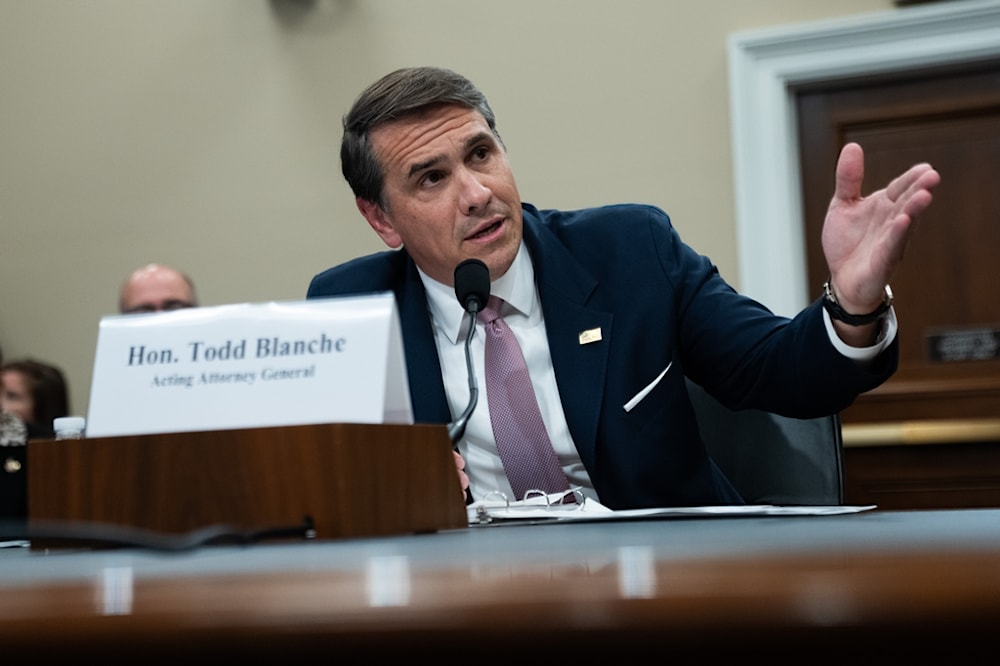
Acting US Attorney General Todd Blanche testifies before the House Appropriations Committee, Tuesday, June 2, 2026 in Washington. (AP Photo/Allison Robbert)
The US Justice Department has withdrawn plans for a controversial $1.8 billion compensation fund after facing mounting opposition from both Republicans and Democrats, in a setback for an initiative critics said would primarily benefit allies of US President Donald Trump.
Acting Attorney General Todd Blanche announced Tuesday that the proposal would not move forward, ending weeks of political controversy surrounding the plan.
Appearing before a House Appropriations subcommittee, Blanche stated that the Justice Department had permanently abandoned the proposal.
"We're not moving forward with the fund, period," Blanche said, emphasizing that the initiative would not be revived.
The proposed fund was intended to compensate individuals who claimed they had been unfairly targeted or prosecuted by the federal government.
Critics, however, argued that the measure could become a taxpayer-funded mechanism benefiting Trump supporters and individuals prosecuted in connection with the January 6, 2021, Capitol attack.
The decision could help ease tensions with Senate Republicans, many of whom had demanded the proposal's cancellation before supporting broader administration legislation.
Read more: Pentagon shuts out journalists in latest Trump-era clampdown
Republicans and Democrats unite against proposal
The compensation fund generated unusually broad opposition across party lines.
Republican lawmakers reportedly viewed the proposal as both a political liability and an ethical risk, particularly ahead of upcoming elections.
Democrats sharply criticized the initiative, arguing that it represented an attempt to use public funds to address political grievances associated with Trump's legal battles.
The controversy intensified after Blanche declined in previous congressional appearances to guarantee that individuals convicted for their roles in the January 6 Capitol unrest would be excluded from receiving compensation.
Lawmakers from both parties subsequently called for the proposal to be formally withdrawn.
Tax protection order for Trump remains in place
While the compensation fund has been scrapped, Blanche confirmed that a separate order limiting Internal Revenue Service investigations involving Trump, his family, and his businesses would remain in effect.
"Nothing has changed with that," Blanche told lawmakers.
According to Blanche, the order applies only to existing tax matters and does not prevent future investigations.
Democrats argued that the measure effectively grants special treatment to the president and his associates.
Representative Rosa DeLauro accused Blanche of prioritizing Trump's interests over those of the public, while other lawmakers demanded written assurances regarding the administration's intentions.
Blanche declined to commit to issuing additional written directives.
Scrutiny grows over Blanche's role and DOJ independence
The controversy has intensified scrutiny of Blanche, who previously served as Trump's defense attorney before assuming leadership at the US Justice Department.
Critics have questioned whether the department is maintaining its institutional independence, pointing to Blanche's continued defense of Trump and his public criticism of prosecutors involved in investigations targeting the president.
In a recent interview with Fox News host Sean Hannity, Blanche criticized several current and former federal officials connected to investigations involving Trump, including former Special Counsel Jack Smith and former FBI Director James Comey.
The interview also drew attention after Blanche publicly discussed aspects of an ongoing investigation that he described as a "grand conspiracy" probe involving several former US intelligence and law enforcement officials.
The remarks prompted renewed debate over US Justice Department practices and the handling of politically sensitive investigations.


