
DPRK slams Japan's push to revise non-nuclear principles
 3 Min Read
The DPRK condemns Japan’s push to revise its Three Non-Nuclear Principles, calling it a threat to regional peace amid Tokyo’s expanding military posture and rising Asia-Pacific tensions.
-
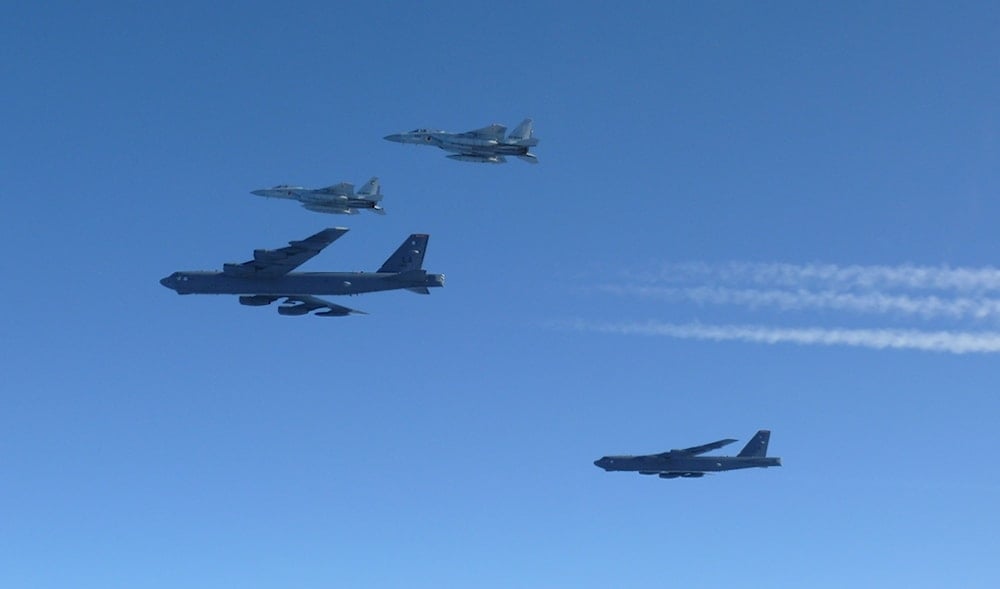
This photo provided by Japan's Ministry of Defense shows the Japan Air Self-Defense Force's F-15 fighters holding a joint military drill with the U.S. B-52 bombers in the vicinity of Japanese airspace, Dec. 10, 2025 (Via AP)
The DPRK has strongly condemned Japan’s reported attempts to revise its longstanding non-nuclear principles, warning that such moves mark a dangerous escalation in Tokyo’s remilitarization agenda.
In a commentary published Thursday by Rodong Sinmun, the official newspaper of the ruling Workers’ Party, the DPRK accused the Japanese government of undermining its post-war pacifist commitments. The article criticized a series of recent policy shifts by Tokyo, including increases in defense spending, the enhancement of preemptive strike capabilities, and discussions on relaxing arms export restrictions.
“Since the current administration came to power, unhealthy trends... and attempts to revise the Three Non-Nuclear Principles have only accelerated,” the editorial stated.
The Three Non-Nuclear Principles, a long-standing policy in Japan, prohibit the production, possession, or introduction of nuclear weapons into Japanese territory.
Pyongyang: Japan's militarization in 'serious phase'
Rodong Sinmun asserted that Japan’s actions represent an "overt challenge to peace" and declared that Tokyo’s decades-long process of remilitarization is entering a "serious phase." It further claimed that Japan's recent steps contradict international principles and fuel regional instability.
The remarks come in response to a report by Japan’s Mainichi Shimbun in November, which revealed that Japanese Prime Minister Sanae Takaichi is considering initiating a discussion within her party to revise the Three Non-Nuclear Principles, ahead of a planned update to the country’s national security documents.
Japan's security shift raises regional concerns
The debate is taking place within the broader context of Japan's historic security policy overhaul, initiated in December 2022. The Japanese government adopted three key defense documents that year, committing to double its defense spending to 2% of GDP by 2027.
The plan includes a five-year budget of 43 trillion yen (approximately $281 billion) and formally introduces "counterstrike capabilities" to target enemy bases, a significant departure from Japan’s post-war defense-only posture.
The United States also recently dispatched nuclear-capable B-52 bombers to fly alongside Japanese fighter jets over the western Pacific near Japan as Japanese-American military cooperation grows, a clear provocation that contributes to rising tensions with China, Russia, and the DPRK.
Russian Foreign Ministry spokeswoman Maria Zakharova also weighed in on the matter, stating that Japan’s moves provoke heightened tensions in the Asia-Pacific region.
Read more: Pacifism to readiness: Inside Japan’s shifting defense industry - FT


