
Duration of Iran-US talks in Islamabad uncertain, US under evaluation
 3 Min Read
Iran says US–Iran talks in Islamabad remain uncertain as it evaluates the US delegation, depending on final internal assessments and meeting preconditions.
-
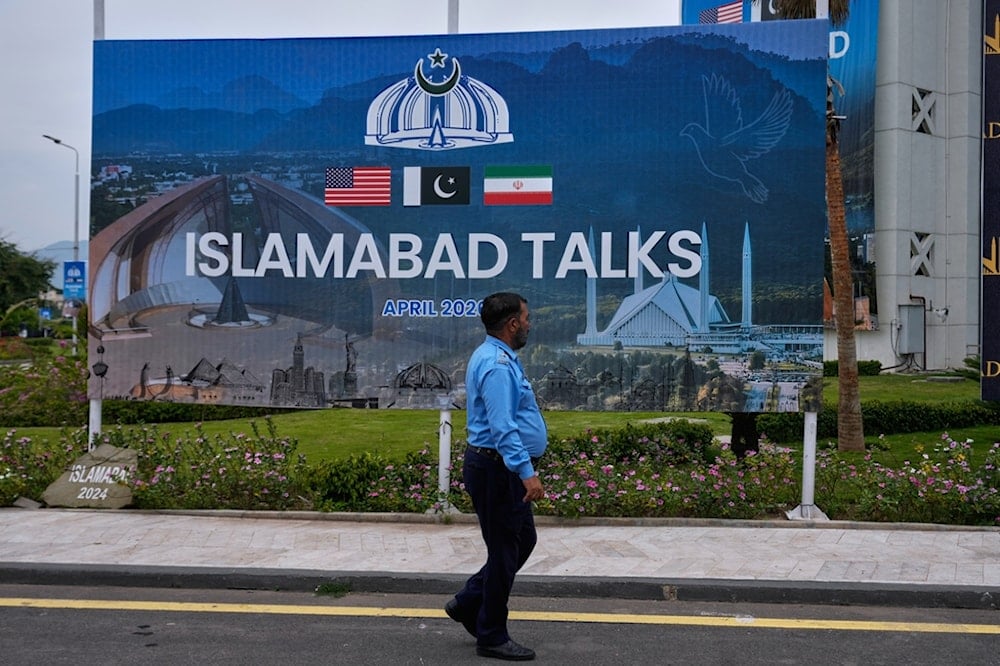
A police officer walks past a billboard regarding US and Iran negotiations, outside a media facilitation center in Islamabad, Pakistan, Saturday, April 11, 2026. (AP Photo/Anjum Naveed)
The duration of the US–Iran negotiations in Islamabad remains uncertain because Tehran is still evaluating the other side before fully committing to the format and timing of the discussions, as emphasized by Iranian officials.
Iran is currently in the process of assessing the US delegation and overall conditions surrounding the negotiations. If talks proceed, they are expected to begin after final internal consultations and procedural clearance, according to a report by Tasnim News Agency.
The report also suggests that the current planning indicates that if negotiations proceed, they are likely to begin on Saturday evening and conclude within a single day.
Iranian officials held meetings with Pakistani authorities following their arrival in Islamabad, including discussions with Pakistan’s Chief of Army Staff and a scheduled meeting with Prime Minister Shehbaz Sharif.
Large delegations arrive at Islamabad
The Iranian delegation arrived in Islamabad on Friday night and is led by Parliament Speaker Mohammad Bagher Ghalibaf and Foreign Minister Abbas Araghchi.
It includes a 71-member delegation made up of senior negotiators, technical experts, economic and security specialists, media representatives, and support staff.
Other members include Central Bank Governor Abdolnaser Hemmati, National Defense Council member Ali Akbar Ahmadian, Deputy Foreign Minister Kazem Gharibabadi, Foreign Ministry spokesperson Esmaeil Baghaei, and several senior parliamentary and security advisors.
Reports also indicate that the US delegation, led by Vice President JD Vance, arrived in Islamabad aboard a US Air Force aircraft, accompanied by a team of around 300 personnel, including advisors, technical experts, and security staff.
US intentions not trusted
Iran has presented a ten-point plan for the negotiations, which includes demands for the withdrawal of US forces from the region, lifting of sanctions, and regulatory control over the strategic Strait of Hormuz, as well as the cessation of Israeli aggression on Lebanon.
Iranian officials maintain that they do not fully trust US intentions, stating that the talks are not necessarily aimed at resolving the war outright, but rather shifting the confrontation from the battlefield to the diplomatic arena.
According to Iranian state TV IRIB, the timing of the talks will only be finalized once preconditions are fully clarified.
Read more: Iran will address US ceasefire violations in talks with Pakistan PM


