
Erdogan urges de-escalation as Türkiye pushes Iran diplomacy
 3 Min Read
Turkiye intensifies diplomatic efforts to ease tensions over the war on Iran, with Erdogan urging ceasefire talks and warning against attempts to derail regional stability.
-
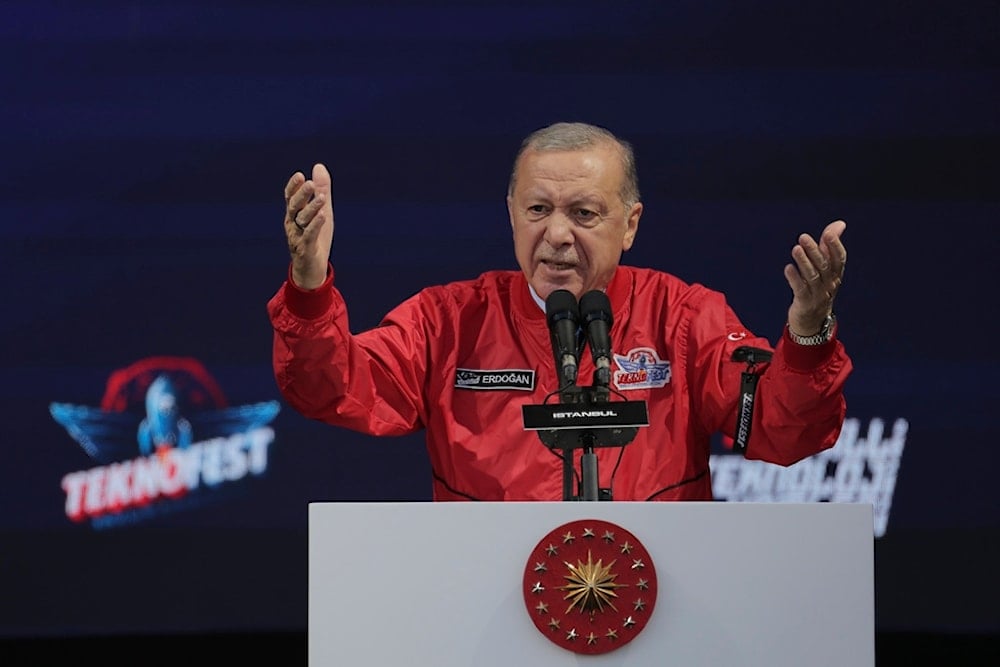
Turkey's President Recep Tayyip Erdogan gestures as he gives a speech at Teknofest aviation, space and technology fair, in Istanbul, Turkey, Friday, September 19, 2025. (AP Photo/Emrah Gurel)
Turkish President Recep Tayyip Erdogan announced that Ankara is actively pursuing diplomatic efforts to reduce tensions surrounding Iran, stressing the need to advance negotiations towards a tangible ceasefire.
Speaking during a parliamentary session of the Justice and Development Party (AKP), Erdogan said Türkiye is making “necessary appeals and initiatives” to extend the ceasefire and prevent further escalation following US and Israeli attacks on Iran.
“The window of opportunity opened by the ceasefire must be utilized,” Erdogan stated, warning that renewed military confrontation would undermine prospects for stability.
Warning against undermining ceasefire efforts
Erdogan pointed to the risk of deliberate attempts to derail diplomatic progress, stating that “the Israeli government, which is known to be unhappy with the ceasefire process, must not be allowed to sabotage it.”
He emphasized that dialogue must take precedence over military action, stating that “Negotiations cannot be held with clenched fists. Weapons must not be allowed to speak again instead of words.”
The remarks reflect Ankara’s positioning as a mediator seeking to contain regional escalation and maintain diplomatic channels amid ongoing tensions.
Shortly after the announcement of the ceasefire on April 8, the Israeli occupation launched over 100 airstrikes on residential areas in Lebanon, breaking the clear clause agreed upon by it and the US. Since then, the Lebanese Resistance has taken up arms to combat "Israel's" act of violence against Lebanese civilians.
Strong stance on Gaza and regional conflicts
Erdogan also reiterated Türkiye’s position on broader regional issues, including Gaza, the West Bank, and Lebanon, framing Ankara’s role as a consistent advocate for civilians affected by conflict.
“We will continue to call the oppressor an oppressor… and to be the voice of the children of Gaza,” he said, underscoring Türkiye’s continued political stance on Israeli military actions.
He further stressed that regional peace efforts must proceed independently of Israeli policy, stating: “If there is to be peace in our region, it will be despite the Israeli government.”
Support for international voices opposing escalation
Erdogan also praised Spanish Prime Minister Pedro Sánchez for his firm stance against Israeli actions, highlighting growing international divisions over the war on Iran, saying he “congratulates from the heart my dear friend Sanchez, who has taken a firm stance against the threats of butcher Netanyahu in Gaza.”
The Turkish president framed such positions as part of a broader global response pushing back against continued escalation and advocating for ceasefire efforts.
Tensions between Ankara and "Israel" have continued to escalate, with both sides exchanging sharp rhetoric.
Türkiye’s Foreign Ministry condemned Israeli Prime Minister Benjamin Netanyahu’s recent remarks targeting Erdogan, linking them to “the discomfort caused by the truths we have expressed on every platform.”
The ministry also referenced the arrest warrant issued by the International Criminal Court against Netanyahu over alleged war crimes and crimes against humanity, warning against actions that could undermine ongoing peace efforts.
Erdogan reaffirmed Türkiye’s readiness to play a leading role in peace initiatives, invoking the principle of “peace at home, peace in the region, and peace in the world.”
Ankara’s diplomatic outreach reflects an effort to balance regional influence while preventing further destabilization, particularly as tensions linked to Iran risk expanding into a wider confrontation.


