
Iran, US sincere on ceasefire, 'Israel' could disrupt process: Fidan
 5 Min Read
The Turkish FM considers both Iran and the US to be genuinely committed to reaching a ceasefire, even after Pakistan-mediated negotiations over the weekend ended without an agreement.
-
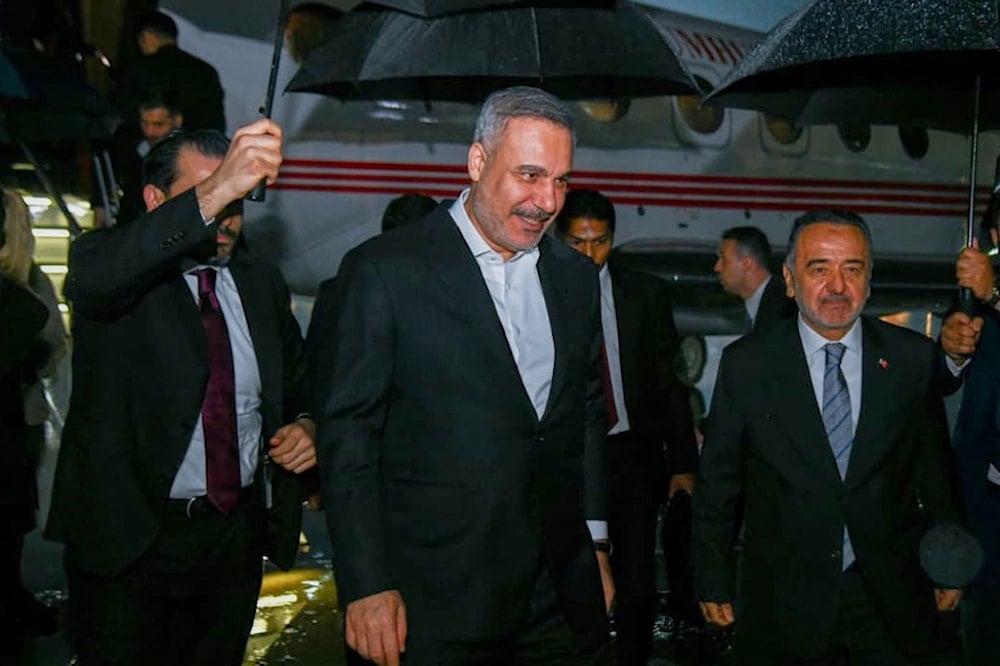
Turkish Foreign Minister Hakan Fidan, center, walks toward his car upon arrival to attend a meeting in Islamabad, Pakistan, Saturday, March 28, 2026 (AP)
Turkish Foreign Minister Hakan Fidan said on Monday that he believes both Iran and the United States remain sincere about reaching a ceasefire despite the failure of Pakistan-mediated talks over the weekend.
US President Donald Trump has blamed Iran's refusal to abandon its nuclear ambitions for the collapse of the negotiations. However, diplomatic sources suggest that Washington's insistence on imposing dictates rather than engaging in genuine dialogue contributed to the breakdown.
Fidan's assessment carries weight given Turkey's active role in regional diplomacy. Ankara has positioned itself as a mediator capable of communicating with both sides while maintaining its firm stance against Israeli aggression.
Both sides aware of need for ceasefire
"Both sides are sincere about the ceasefire," Fidan said in an interview for the official Anadolu Agency, adding that he has been in contact with the parties involved in the negotiations.
"The US and Iran are sincere about the ceasefire. They are aware of the need for this," Fidan said.
The Turkish foreign minister's comments suggest that, despite the public failure of the Pakistan-mediated round, diplomatic channels remain open. Fidan indicated that back-channel communications continue between the parties.
Nuclear enrichment poses potential obstacle
"I am thinking that if the nuclear issue comes down to an all-or-nothing situation especially regarding enrichment, we might face serious obstacles," Fidan said.
"If the nuclear enrichment issue goes to an 'all or nothing' situation in Iran-US talks, we may face problems," he told Anadolu.
"Hopefully, we will try to overcome this with the support of some mediators," he added.
Fidan's warning reflects a core tension in the negotiations. While both sides have shown willingness to discuss a ceasefire, the question of Iran's nuclear program and the US demand of conceding it entirely despite its peaceful nature, remains a potential breaking point that could derail any progress.
Turkey warns 'Israel' could disrupt process
Fidan also cautioned that "Israel" could potentially interfere with or undermine the ceasefire efforts. He did not provide specific details on what form such disruption might take.
Turkish officials have previously expressed concern that "Israel" views the US-Iran ceasefire talks with hostility and has consistently opposed any diplomatic resolution that would leave Iran's nuclear infrastructure intact.
Analysts noted that "Israel" has a track record of attempting to sabotage diplomatic breakthroughs between Washington and Tehran, including previous assassination campaigns against Iranian nuclear scientists and covert operations.
'Israel' may seek to designate Türkiye as a new adversary after Iran
In a further jab at "Israel", Fidan said "Israel" is refraining from certain actions in Syria due to the war on Iran, warning that "it may act when conditions allow."
Middle East countries should commit to each other’s territorial integrity, sovereignty, and security "under a regional security pact," the Turkish foreign minister added.
"We see that Israel may seek to designate Türkiye as a new adversary after Iran, as it cannot sustain itself without an enemy," he maintained, stressing that cooperation between Greece, the Greek Cypriot Administration, and "Israel" "does not bring more trust, it brings more mistrust. It brings more problems and war."
Read more: 'Israel' may try to derail US-Iran ceasefire, ex-UK ambassador warns
Diplomatic path needed for Strait of Hormuz
Regarding the Strait of Hormuz, Fidan said there are many difficulties surrounding the idea of an international force in the waterway.
"There are many difficulties to an international force on the Strait of Hormuz. It needs to be opened through diplomacy," he said.
"I don't see any issue in opening the Strait of Hormuz through negotiations. The problem is whether there will be new regulations proposed during talks," the Turkish foreign minister added.
The Strait of Hormuz has become a flashpoint following US threats to blockade Iranian ports. Iran has repeatedly stated that if its own ports are threatened, no port in the Gulf or the Sea of Oman will remain safe.
Fidan's remarks suggest Ankara believes a negotiated solution to the Hormuz standoff is possible, provided all parties act in good faith and avoid introducing new unilateral conditions.
Turkey joins regional diplomatic efforts
Turkey, while a fierce critic of "Israel", joined diplomatic efforts alongside Egypt and Pakistan to reach a ceasefire in the US-Israeli war on Iran.
Ankara has maintained communication with both Tehran and Washington throughout the war. Turkey's geographic position and its relationship with Iran give it a unique role in mediation efforts.
The Turkish foreign minister's latest statements indicate that Ankara will continue pushing for a diplomatic resolution despite the recent setback. Fidan expressed hope that mediators would succeed in overcoming obstacles in the coming days.
Read more: Ceasefire will support regional stability, Pezeshkian tells Erdogan


