
EU approves over $105 billion in new aid to Ukraine for 2026–2027
 2 Min Read
EU approves $105 billion in aid to Ukraine for 2026–2027, with plans to fund it using frozen Russian assets. Moscow warns of legal consequences.
-
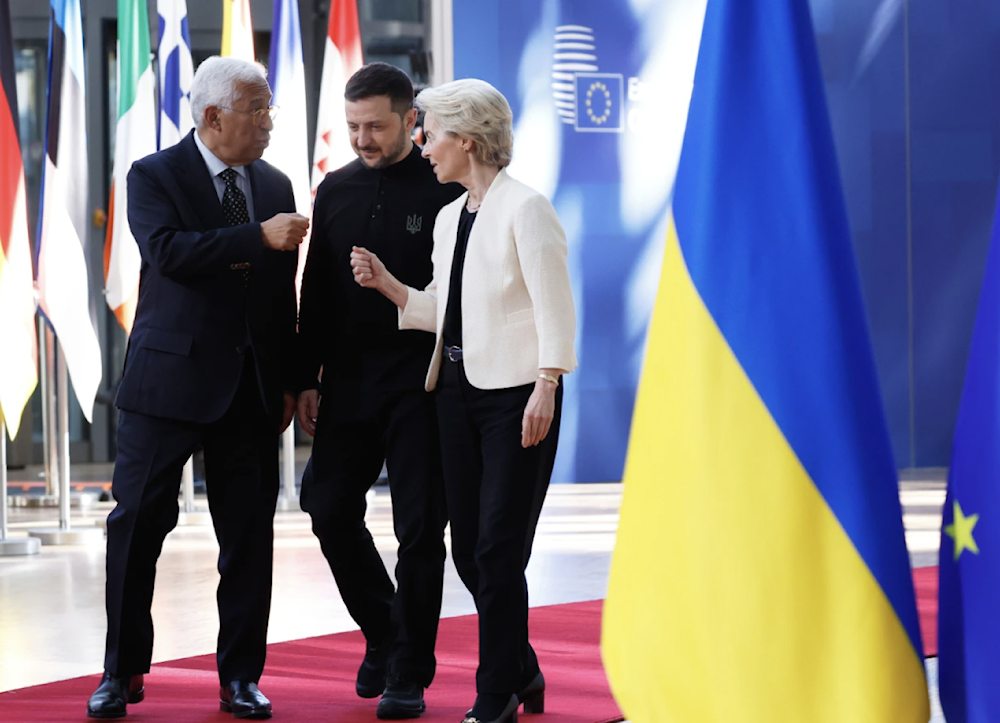
European Council President Antonio Costa, Ukraine's Volodymyr Zelensky, and European Commission President Ursula von der Leyen arrive for an EU summit at the European Council building in Brussels, on March 6, 2025. (AP)
The European Union has approved a new financial aid package worth $105.5 billion for Ukraine covering the years 2026 to 2027, European Council President Antonio Costa announced on Friday.
“We have a deal. Decision to provide 90 billion euros of support to Ukraine for 2026–27 approved. We committed, we delivered,” Costa wrote on X.
We have a deal.
— António Costa (@eucopresident) December 19, 2025
Decision to provide 90 billion euros of support to Ukraine for 2026-27 approved.
We committed, we delivered.
Speaking to reporters on Friday, Costa said the loan will be backed by the EU budget and may eventually be repaid using frozen Russian assets, highlighting the bloc's intent to tie the future of these funds to Ukraine’s war financing.
“We approved a decision to provide 90 billion euros to Ukraine for the next two years. This will address Ukraine’s urgent financial needs, and Ukraine will only repay this loan once Russia pays reparations,” Costa said.
He added that the EU reserves the right to use immobilized Russian assets to recover the loan, further stating that European leaders had given the European Commission a mandate to continue working on a reparations mechanism based on those funds.
The announcement comes amid continued Western support for Kiev, despite growing concerns among some EU member states over the financial and political costs of the conflict.
According to a report published Thursday by Euractiv, EU leaders had been discussing issuing the aid in the form of a loan backed by frozen Russian assets, a highly controversial move that has drawn sharp condemnation from Moscow.
Following the start of the war in Ukraine in 2022, the EU and G7 countries froze an estimated 300 billion euros in Russian foreign currency reserves. Of that amount, roughly 200 billion euros are held in European financial institutions, particularly in the clearinghouse Euroclear.
The Kremlin has repeatedly warned that any attempts to seize or redirect Russian sovereign assets constitute theft and a flagrant violation of international law, vowing that such actions will not go unanswered.


