
EU-led mission in Lebanon to support disarming Resistance weighed
 4 Min Read
EU officials are weighing a post-UNIFIL mission in Lebanon focused on security gaps, Lebanese army support, and regional stabilization efforts.
-
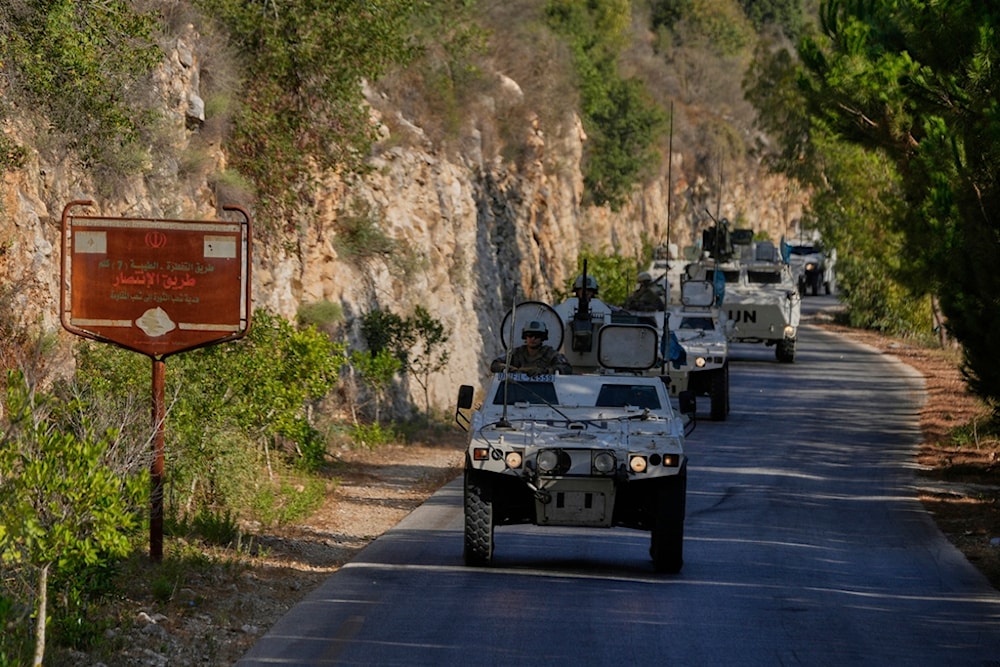
French UN peacekeepers patrol at the Suluki Valley, south Lebanon, Wednesday, Aug. 20, 2025 (AP)
The European Union is exploring the possibility of launching a new security mission in Lebanon once the mandate of the United Nations peacekeeping force ends, as discussions intensify over the future of international involvement in the country, according to EU foreign policy chief Kaja Kallas.
Speaking ahead of an informal European Council meeting, Kallas said EU foreign and defense ministers have been reviewing options for Lebanon as the United Nations Interim Force in Lebanon (UNIFIL) approaches the end of its mandate later this year.
She said one option under consideration is an EU-led mission to replace or complement UNIFIL, but with a revised mandate reflecting evolving security conditions on the ground rather than replicating the current UN framework.
Kallas linked the discussions to broader concerns over Lebanon’s internal stability, including the capacity of the Lebanese armed forces and the need for "stronger state authority" across the country.
Disarming Resistance on agenda
According to Kallas, European ministers are assessing how a future EU presence could help fill potential "security gaps" once UNIFIL withdraws, particularly in coordination with Lebanese state institutions.
She said one key focus is strengthening the Lebanese armed forces. She said the Lebanese Army would require additional support, including in relation to disarmament efforts targeting the Resistance group Hezbollah, as part of what they describe as broader "stabilization objectives".
The EU is also reviewing whether existing maritime and regional security missions could be expanded or adapted to support a broader post-ceasefire arrangement in the region.
'Continued but scaled-down presence'
Separately, the United Nations is also weighing a continued but scaled-down presence in Lebanon after UNIFIL’s mandate expires, according to UN peacekeeping chief Jean-Pierre Lacroix.
UNIFIL, deployed in 1978, currently includes more than 7,000 peacekeepers from 47 countries. The mission has recently suffered casualties, who were under direct threat of Israeli airstrikes.
Lacroix said consultations are ongoing with all stakeholders ahead of the mandate’s expiration at the end of December, with formal recommendations expected to be submitted to the UN Security Council by June.
He added that Lebanese officials have expressed support for maintaining some form of UN presence, though likely at a reduced scale compared to UNIFIL’s current footprint.
“They’re very clear that they would want to keep a U.N. presence,” Lacroix said, noting that future arrangements would likely involve fewer personnel and a narrower mandate.
UNIFIL’s current responsibilities include monitoring the cessation of hostilities, supporting the deployment of the Lebanese army in the south, and assisting in preventing "unauthorized armed activity in the area."
Intensive Israeli attacks on South Lebanon resumed on March 2, prompting Hezbollah retaliation. Even now, "Israel" continues to target civilian infrastructure, cars, and Lebanese towns despite the so-called ceasefire that US President Trump announced and has renewed today for three additional weeks.
UN mission faces budget shortfall
The United Nations currently operates 11 peacekeeping missions worldwide, with more than 46,000 personnel deployed. However, the system is under financial strain due to unpaid contributions from member states.
Lacroix warned that budget shortfalls have forced a 25% reduction in operations, impacting the UN’s ability to maintain stability and protect civilians in conflict zones.
“We are trying to mitigate those impacts, but they are very real,” he said.
Read more: UN working to keep presence in Lebanon after UNIFIL mandate ends


