
EU proposal to fast-track Kiev's membership sends capitals into frenzy
 5 Min Read
Brussels is drafting a two-tier EU membership model to fast-track Ukraine’s accession as part of a future peace deal, triggering concerns among member states over bloc unity, credibility, and precedent for other candidates.
-
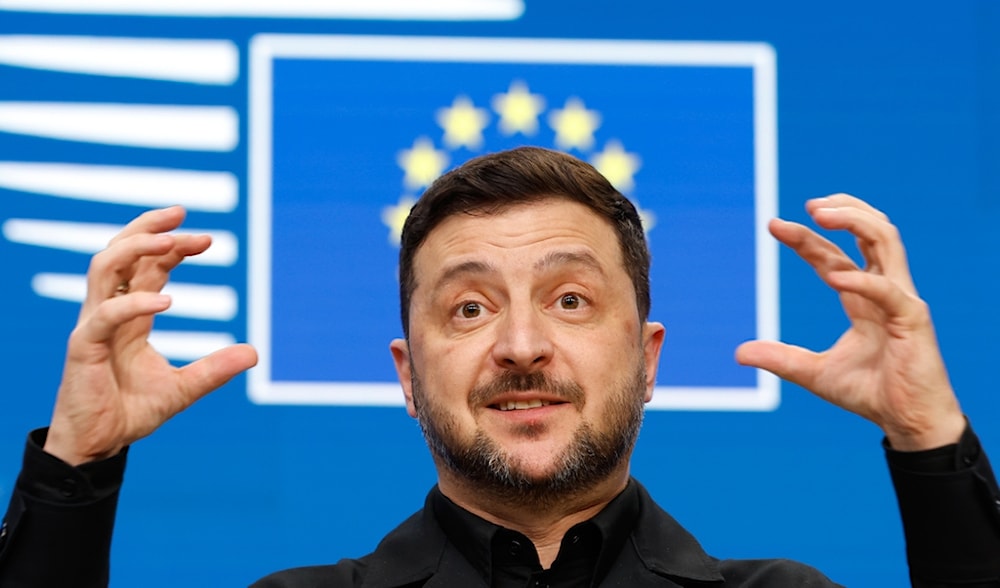
Ukraine's President Volodymyr Zelensky speaks during a media conference at the EU Summit in Brussels on December 18, 2025. (AP)
The European Commission is exploring on Friday a significant overhaul of its decades-old EU accession process, with early-stage proposals suggesting the introduction of a two-tier membership model. The idea, aimed at accelerating Ukraine’s integration, is already triggering unease among several EU member states and candidate countries.
According to seven senior officials involved in the discussions, the preliminary plan would allow Ukraine to join the EU sooner but with limited decision-making powers, a move intended to support a potential peace agreement to end the ongoing war in the country.
Ukraine, which was granted EU candidate status shortly after Russia’s special military operation in February 2022, views membership as a vital component of its post-war recovery and long-term alignment with the West.
Drafts of a US-led 20-point peace plan reportedly include a 2027 target for Ukraine’s EU entry, a timeline seen as highly ambitious given the bloc’s strict regulatory and reform requirements. That said, EU officials estimate it could take a decade under current rules.
However, Commission sources acknowledge that Ukrainian President Volodymyr Zelensky may only be able to accept a peace deal involving territorial concessions to Russia if EU membership is guaranteed as a trade-off.
The proposed system would give Ukraine incremental access to the single market, agricultural subsidies, and EU development funds, without full voting rights in the European Council or ministerial meetings, at least initially. “Extraordinary times call for extraordinary measures… We’re enlarging the concept of enlargement,” said one senior EU diplomat familiar with the proposal.
Pushback from EU capitals
The proposed “enlargement-lite” approach would fundamentally alter the current accession framework established in 1993, which requires candidates to adopt thousands of EU laws across 35 policy chapters before full membership is granted.
While some in Brussels view the reform as necessary to respond to an unprecedented geopolitical crisis, others see it as undermining the EU’s cohesion and credibility. “You can’t have a merit-based process with a fixed completion date,” said one EU diplomat. "Try to force this down the throat of the member states, and they will never accept it," warned another senior official, citing the risk of a damaging rift within the Union.
Diplomats say the fast-tracking of Ukraine could alienate other aspiring members, including Montenegro and Albania, which have spent years progressing through the accession process. There are also concerns about how the model would apply to countries like Bosnia and Turkey, whose paths to membership have stalled. “This creates the perception of a two-speed Europe, where one country’s geopolitical importance can reshape rules that others have spent decades following,” said one of the diplomats.
Previously, Hungarian Prime Minister Viktor Orbán, a vocal critic of EU support for Kiev, reiterated his opposition on July 1: "Ukraine should not join the EU through an accelerated procedure, given that Montenegro had been waiting for 15 years to access the bloc." Additionally, Orbán has invoked a recent Hungarian referendum and suggested that Ukraine's accession could draw Europe deeper into conflict.
Hungary, Trump, and political roadblocks
Hungary has so far used its veto power to delay Ukraine’s progress through the accession chapters, requiring unanimous approval from all EU members. However, officials believe that US involvement in any final peace deal could pressure Budapest and a potential future Trump administration into compliance.
Commission President Ursula von der Leyen recently linked Ukraine’s accession directly to the peace talks, calling it both a security guarantee and an engine of future prosperity.
Still, analysts warn that such a strategic pivot carries considerable risk. “It has no choice but to expedite Ukraine’s accession, yet doing so will open a Pandora’s box of political and policy risks no one in Brussels quite fully understands,” said Mujtaba Rahman, Europe director at Eurasia Group.
The proposed shift also raises questions about the EU’s relationship with European Economic Area (EEA) countries such as Norway, which has access to the single market without full membership, as well as non-candidate partners like the UK.
“You’re posing huge, difficult questions with something like this. There are so many unforeseen outcomes possible,” a senior diplomat stated.
While no final decisions have been made, the debate over Ukraine’s fast-tracked EU path underscores the tension between principle and pragmatism, and the Union’s struggle to adapt to a rapidly changing geopolitical landscape.
Read more: EU says Kiev's accession talks linked to long-term security guarantees


