
Ukraine security guarantees impossible without Russia’s consent: Merz
 4 Min Read
German Chancellor Friedrich Merz says security guarantees for Ukraine post-ceasefire are not possible without Russia's agreement, as talks remain in early stages.
-
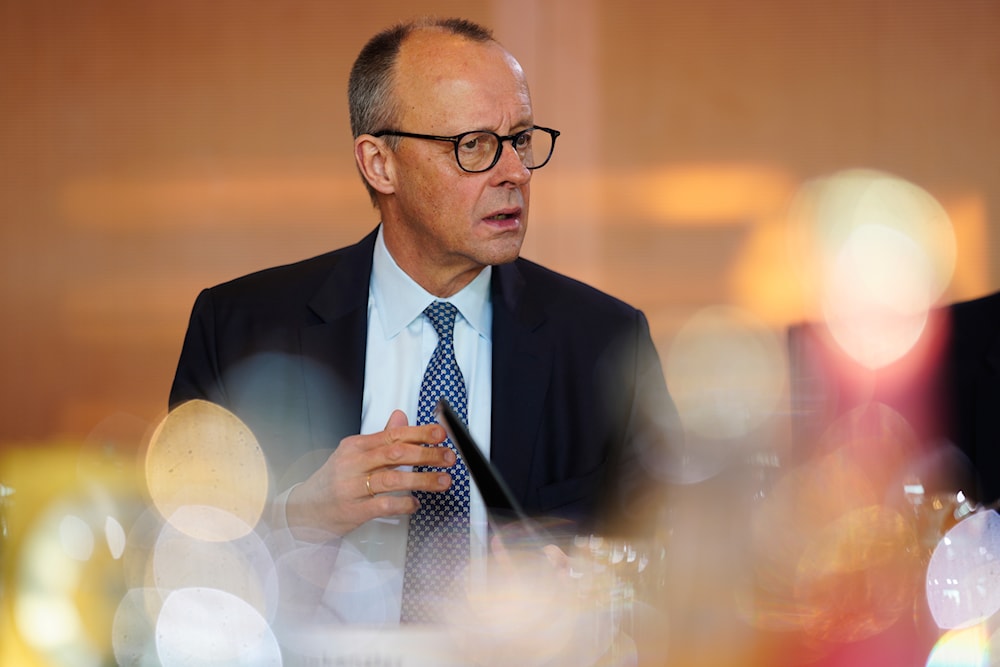
German Chancellor Friedrich Merz leading the cabinet meeting at the chancellery in Berlin, Germany, on Wednesday, Jan. 7, 2026 (AP)
The formation and deployment of multinational forces as part of security guarantees for Ukraine would be impossible without Russia’s consent, German Chancellor Friedrich Merz said on Tuesday.
“I want to be clear so there are no misunderstandings. We are talking about security guarantees [for Ukraine] after the ceasefire. There is no one here, not a single member state of the EU or outside it, who believes that we should intervene in the ongoing conflict in Ukraine now,” Merz told a press conference, adding that the matter concerns “only about military support for peace, about a ceasefire agreement.”
Merz noted that talks are still at an early stage regarding potential contributors to such efforts, saying, “The question of which countries can contribute is currently being discussed, and we are only at the beginning of the process, not the end,” while emphasizing that any sequence of steps must begin with halting hostilities.
“The order should be as follows: first a ceasefire, then security guarantees for Ukraine, for a long-term agreement with Russia. And none of this is possible without Russia's consent. And we're probably still a long way from that,” the German chancellor said.
He added that Germany is prepared to contribute to efforts aimed at maintaining a possible ceasefire in Ukraine but cautioned that any concrete role would depend on domestic political processes. “How far we can go in this regard depends not only on me. For this, I need a decision from the German government. A mandate from the Bundestag may also be necessary. But again, that is still a long way off,” Merz said.
'Coalition of the Willing' announces plans to deploy forces in Ukraine
Leaders of the so-called Coalition of the Willing signed a declaration in Paris outlining their intention to deploy troops to Ukraine in the event of a peace agreement, UK Prime Minister Keir Starmer said on January 6.
Speaking after the meeting, Starmer said the declaration outlines plans to deploy forces to Ukraine in the event of a peace deal, describing it as part of an “ironclad commitment” to long-term support and a legal framework for British, French, and partner forces to operate on Ukrainian territory.
Starmer also said the United Kingdom and France would move to establish military bases across Ukraine and build protected depots for weapons and equipment in the event of a ceasefire, as part of broader post-conflict security arrangements.
According to the UK prime minister, the plans include establishing military hubs across Ukraine, with coalition partners also agreeing on further steps, such as participating in US-led ceasefire monitoring, providing long-term arms support, and pursuing binding commitments to back Ukraine in the event of a future Russian attack.
West plans for Ukraine push away peace
Meanwhile, Russia strongly criticized the West’s latest plan for Ukraine, portraying it as a move away from peace and toward further militarization, Russian Foreign Ministry spokeswoman Maria Zakharova said on Thursday. She argued that the document is “extremely far from a peaceful settlement” and is intended to escalate the conflict rather than ensure lasting security.
She said the plan envisions the deployment of “multinational forces” on Ukrainian territory to assist in rebuilding the Ukrainian armed forces and to maintain containment of Russia after hostilities cease. Zakharova warned that such deployments and military facilities on Ukrainian soil would be classified as interventions threatening Russia and other European nations.
“All such units and facilities will be considered as legitimate combat targets of the Russian armed forces,” Zakharova stated, adding that these warnings have been repeatedly issued at the highest level and remain in force.
She also stressed that a peaceful settlement is possible only by addressing the root causes of the conflict and returning Ukraine to a non-bloc status, arguing that expanded Western involvement would undermine stability rather than contribute to peace.


