
Drone attack forces Russia-bound oil tanker to divert to Turkey
 4 Min Read
The Elbus crew is unharmed, and no pollution is reported.
-
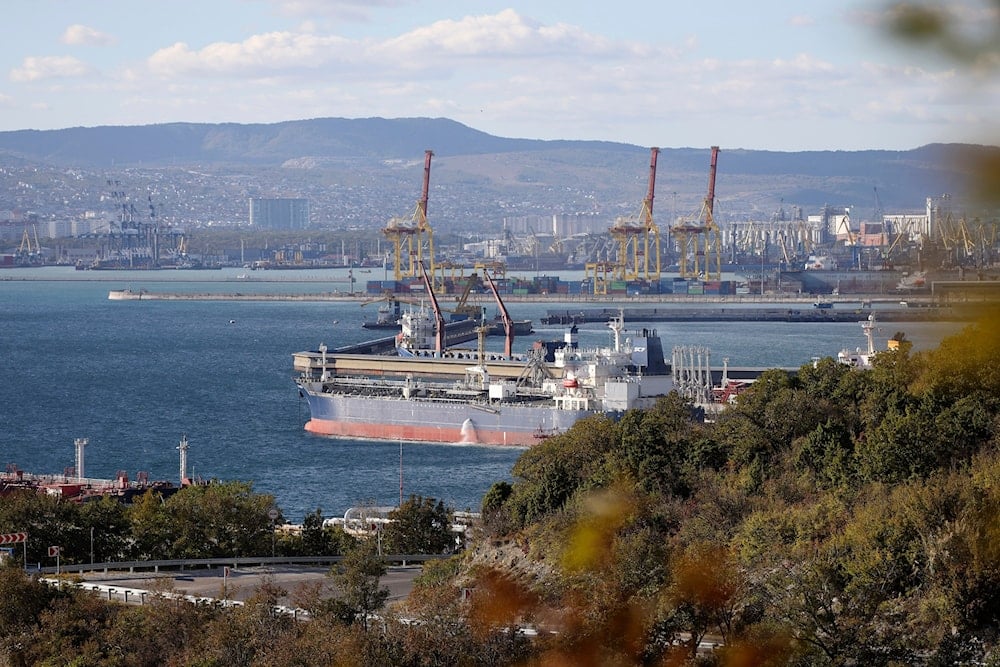
An oil tanker is moored at the Sheskharis oil and petroleum complex on the Black Sea port of Novorossiysk, Russia, Oct. 11, 2022 (AP)
A Russia-bound oil tanker was forced to divert to northern Turkey following a drone attack in the Black Sea, according to maritime data sources. The Palau-flagged vessel Elbus, en route from Singapore to the Russian port of Novorossiysk, reported the incident on Wednesday and requested assistance from the Turkish coastguard.
Maritime intelligence firm Lloyd’s List reported that the tanker’s engine room was targeted by an “unmanned marine-vehicle and drone attack,” though no crew members were injured and no pollution was detected. The vessel’s 25-member crew remained unharmed.
A separate maritime security source confirmed the incident as a drone attack, though details regarding the perpetrators remain unclear. Following the attack, Elbus altered its course and settled a few kilometres off the northern Turkish port of Inebolu on Thursday, dropping anchor under its own power.
Ukraine has increasingly targeted Russian oil tankers, especially those linked to Moscow’s so‑called “shadow fleet” used to evade Western sanctions, as part of its maritime campaign. In late November 2025, Ukrainian naval drones struck two sanctioned tankers, Kairos and Virat, in the Black Sea, disabling the vessels as they sailed empty toward Novorossiysk and dealing a significant blow to Russia’s ability to transport crude oil abroad.
In December 2025, Kiev expanded this campaign beyond the Black Sea, reportedly hitting a Russian tanker in the Mediterranean Sea with long‑range drones, marking one of the first strikes so far from Ukrainian waters. These operations form part of a broader strategy to disrupt Moscow’s energy exports that fund its war effort.
West plan for Ukraine step away from peace, closer to militarization: Zakharova
Meanwhile, Russia has sharply criticized the West’s latest plan for Ukraine, describing it as a step away from peace and toward further militarization, Russian Foreign Ministry spokeswoman Maria Zakharova said on Thursday. According to Zakharova, the document is “extremely far from a peaceful settlement” and is designed to escalate the conflict rather than achieve lasting security.
She said the plan envisions the deployment of “multinational forces” on Ukrainian territory to assist in rebuilding the Ukrainian armed forces and to maintain containment of Russia after hostilities cease. Zakharova warned that such deployments and military facilities on Ukrainian soil would be classified as interventions threatening Russia and other European nations.
“All such units and facilities will be considered as legitimate combat targets of the Russian armed forces,” Zakharova stated, noting that these warnings have been repeatedly issued at the highest level and remain relevant.
Zakharova also emphasized that a peaceful resolution to the conflict is possible only by addressing its root causes and returning Ukraine to non-bloc status, suggesting that broader Western involvement would undermine stability rather than promote it.
Leaders of the so-called coalition of the willing signed a declaration in Paris outlining their intention to deploy troops to Ukraine if a peace agreement is reached, with UK Prime Minister Keir Starmer stating on January 6 that the plans involve establishing military hubs across the country to support Ukraine’s defensive requirements and bolster its armed forces while providing a coordinated framework for allied assistance.
Russian Vostok group takes control of Bratskoye
Meanwhile, Russia’s Vostok (East) group of forces has taken control of the settlement of Bratskoye (also known as Bratske) in Ukraine’s Dnipropetrovsk region, the Russian Defense Ministry announced on Thursday.
The Ministry said the operation involved “active actions” by Russian units that resulted in the seizure of a major Ukrainian stronghold spanning more than 9 square kilometers (3.5 square miles).
According to the statement, capturing Bratskoye has enabled the Vostok group to expand its bridgehead on the western bank of the Gaichur (Haichur) River, creating conditions for further military advancement in the area. The Ministry characterized the operation as a significant step in consolidating Russian positions in the region.


