
Europe warns it may struggle to sustain prolonged war with Russia
 5 Min Read
The concerns rise as NATO governments seek higher defense spending while preparing for a possible reduction in the US military role in Europe.
-
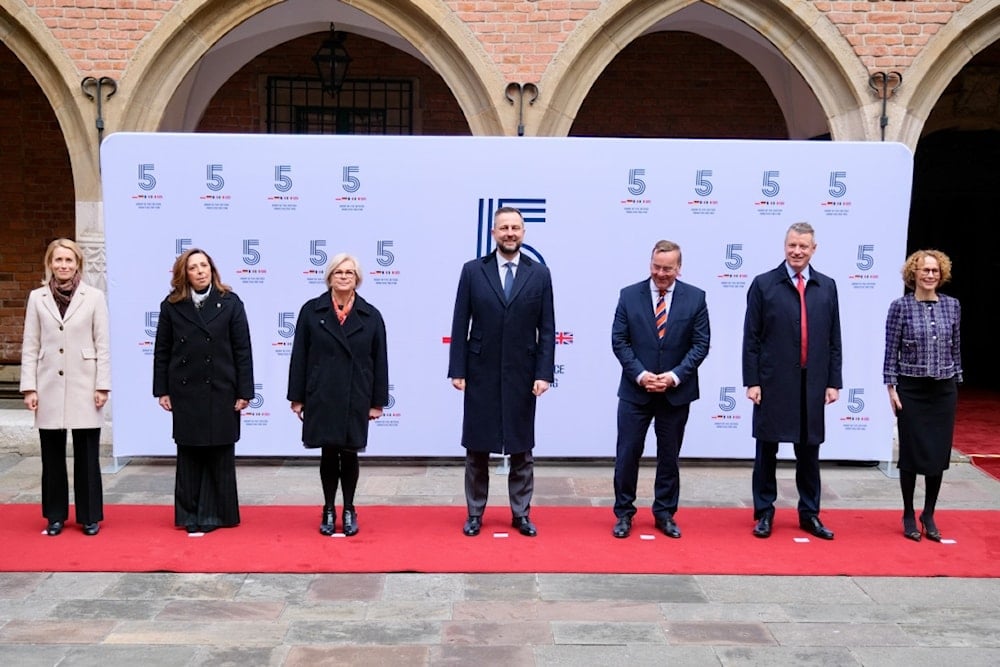
Officials gather for the E5 Ministers of Defence meeting in Krakow, Poland, on February 20, 2026 (EEAS)
European defense officials are warning that the continent may be unable to sustain a prolonged military confrontation with Russia as NATO governments seek higher defense spending while preparing for a possible reduction in the United States’ military role in Europe.
The concerns, raised at a Munich Security Conference (MSC) forum and reported by The Guardian, center on whether European populations would support a lengthy war requiring sustained military expenditure, economic sacrifice, and potentially deeper cuts to social spending.
Public appetite for prolonged war questioned
Rather than reassessing the policies that contributed to worsening relations with Moscow, several officials argued that European governments had failed to prepare the public for what they described as a growing Russian threat.
One former British cabinet member said the West had been “crap” at educating the public about what officials characterize as a hybrid conflict with Russia. Another British diplomat said successive prime ministers had failed to explain the alleged danger.
“The level of the debate has been at that of a kindergarten,” the diplomat said.
The remarks highlight a divide between security establishments seeking higher military spending and sections of the public increasingly skeptical of confrontation with Moscow amid stagnant wages and high living costs.
NATO planners confront declining public appetite for war
Defense planners fear European societies may not tolerate a prolonged war of attrition with Russia, leading NATO strategists to focus on a shorter conflict.
The debate comes as Washington considers reducing its troop presence and conventional defense commitments in Europe, potentially leaving European states responsible for more of the military burden.
E5 states push deeper defense coordination
Britain, France, Germany, Italy, and Poland are discussing deeper coordination through the E5 grouping, including joint procurement in air and missile defense, long-range precision strike systems, and space-based early warning capabilities.
Wolfgang Ischinger, chair of the MSC, called for greater military integration.
“Europe is stagnating at a time when the external threats were assuming a dimension which is really very serious. These are really huge and existential challenges requiring greater integration in defence,” he said.
Supporters say the E5 could bring Britain more directly into continental defense planning and eventually include Ukraine if a truce is reached. Some diplomats doubt Washington would welcome a more autonomous European military structure inside NATO.
“The US are better at talking about burden shifting than power sharing,” one diplomat said.
Political dissent increasingly framed as Russian influence
Another concern at the MSC gathering was the rise of political movements that oppose continued escalation with Russia and favor ending the war in Ukraine.
European officials increasingly describe such trends as Russian “hybrid warfare", arguing that Moscow is seeking to exploit social divisions and weaken support for NATO policy. Critics counter that governments risk using claims of Russian interference to delegitimize genuine opposition to war, sanctions, and military spending.
In Italy, Roberto Vannacci, leader of the far-right Futuro Nazionale, mocked suggestions that criticism of Brussels amounted to serving Russian interests.
“Just discovered that I am a ‘Manchurian candidate’ sent by the Russian federation to complain about the unaffordable petrol prices in my country Italy,” he said.
“Forgive me, but I still find it hard to accept the idea that dissent from Brussels’ orthodoxy is now, in practical terms, tantamount to disloyalty towards the west.”
Italy warns of election interference
Tajani also warned that Italy faced daily cyberattacks and could be targeted ahead of upcoming national elections.
Defense Minister Guido Crosetto has also argued that European states remain vulnerable to digital interference, while acknowledging that public dissatisfaction cannot simply be reduced to Russian influence. He has pointed to low wages, economic pressure, and fatigue over the Ukraine war as genuine sources of discontent.
NATO expansion absent from wider framing
The debate comes after decades of worsening relations with Russia, including NATO’s eastward expansion, the militarization of its eastern flank, and the war in Ukraine.
Moscow has repeatedly argued that NATO enlargement and Western military infrastructure closer to Russian borders have undermined European security and fueled the confrontation.
The Guardian report largely presents European militarization as a response to Russia, while giving little attention to Moscow’s longstanding argument that NATO policies contributed to the collapse of the post-Cold War security order.
Europe accelerates military buildup
European governments are now seeking to expand military production and draw lessons from Ukraine’s battlefield experience, particularly in drone warfare.
Ukraine is producing around 200,000 drones each month, according to the report, and aims to raise annual production above seven million.
The push reflects a broader effort to strengthen Europe’s defense industry as officials prepare for reduced US involvement and greater European responsibility for sustaining NATO’s military posture against Russia.


