
Europeans participation in talks pointless, no venue set: Russia spox
 4 Min Read
Russia-Ukraine negotiations remain uncertain as Moscow awaits a US decision following the Geneva talks, with Peskov and Zakharova outlining Russia’s stance.
-
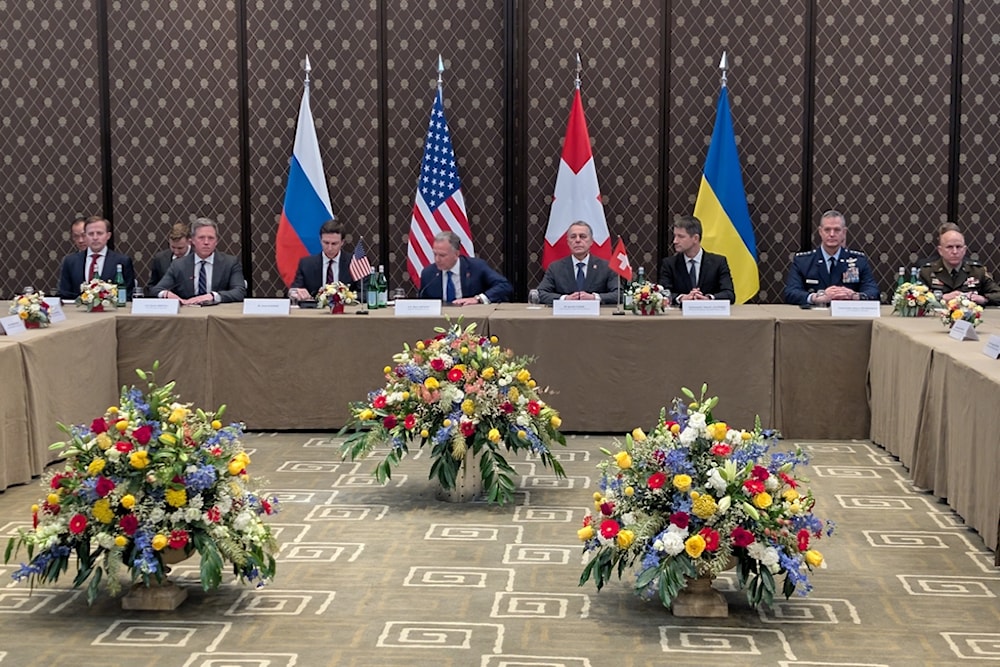
The US delegation attends the next round of trilateral talks between the United States, Ukraine, and Russia on the Russia-Ukraine war in Geneva, Switzerland, on Tuesday, Feb. 17, 2026 (AP)
The location for the next round of negotiations on Ukraine will be determined after assessing the outcomes of the recent Geneva talks, Russian Presidential press secretary Dmitry Peskov said Monday.
Speaking to reporters, Peskov confirmed that Russian President Vladimir Putin has already been briefed by the negotiating delegation on the results of the Geneva meetings. “Of course,” he replied when asked if Putin had received the report.
When asked about the venue for the next round of consultations, Peskov said no decision has been made. “No, we can’t name anything yet,” he stated, adding that the schedule for future talks will depend on the United States. He noted there have been no new contacts with Washington since Geneva, and none are currently planned.
Peskov also emphasized that representatives from the European Union are not involved in the Ukraine negotiation process. He argued that European positions on the conflict have largely contributed to the continuation of hostilities rather than promoting peace. “As of now… at least Russia sees no point in the Europeans’ participation,” he said, citing the ongoing difficulty of the work.
The Kremlin’s comments underline Russia’s insistence on a limited negotiation format, focusing on direct discussions with the US while sidelining European involvement, as officials continue to evaluate the outcomes of the Geneva talks.
Russia rejects claims US only brought Kiev, Moscow to the negotiation table
Russia dismissed claims that the United States was solely responsible for bringing Moscow and Kiev to the negotiating table, with Russian Foreign Ministry spokesperson Maria Zakharova calling such statements “incorrect” and diplomatically inappropriate.
Zakharova was responding to remarks by US Secretary of State Marco Rubio. She described the American position on Ukraine as “unique”, noting that the conflict was inherited from previous US administrations while continuing to receive Washington’s military support for Ukraine.
“At the same time, the current US leadership, as we see, is making efforts to find ways out of the crisis around Ukraine, which was instigated by Washington itself more than ten years ago,” Zakharova said, highlighting what she described as the complex and contradictory role of the United States in the conflict.
Past efforts derailed by Western interference
Zakharova recalled that multiple countries previously offered to help organize talks between Moscow and Kiev, including rounds held in Belarus’ Gomel and Brest regions in February and March 2022. She said these early meetings helped develop initial elements of potential settlement agreements.
Zakharova noted that contacts continued via video links and later in Turkey. During a session in Istanbul on March 29, 2022, the heads of the Russian and Ukrainian delegations reportedly reached a shared understanding on a draft agreement. She expressed gratitude to Belarus and Turkey for assisting in organizing the meetings.
However, Zakharova claimed that Ukraine’s Western backers were opposed to a peaceful resolution. She cited the example of then British Prime Minister Boris Johnson, who, according to her, was sent to Kiev to prevent further dialogue and to urge Ukraine to continue fighting.
She added that, on Russian President Vladimir Putin’s initiative, direct talks resumed in Istanbul in May 2025 after a break allegedly caused by Western interference. Three rounds were held on May 16, June 2, and July 23, 2025, resulting in agreements on prisoner exchanges, the return of civilian detainees, and the repatriation of soldiers’ bodies.
Zakharova said Russia also presented Ukraine with a memorandum of settlement proposals, proposed a bilateral ceasefire control and monitoring center, and set up working groups on military, political, and humanitarian issues. She stressed that Kiev did not respond, and in November 2025, the Ukrainian Foreign Ministry announced the termination of talks, citing a lack of “tangible progress".


