
Ex-ICE chief warns border tactics in US cities will get people killed
 5 Min Read
The Trump administration's broader deployment of Border Patrol agents for immigration enforcement inside US cities could heighten the chances of violent confrontations.
-
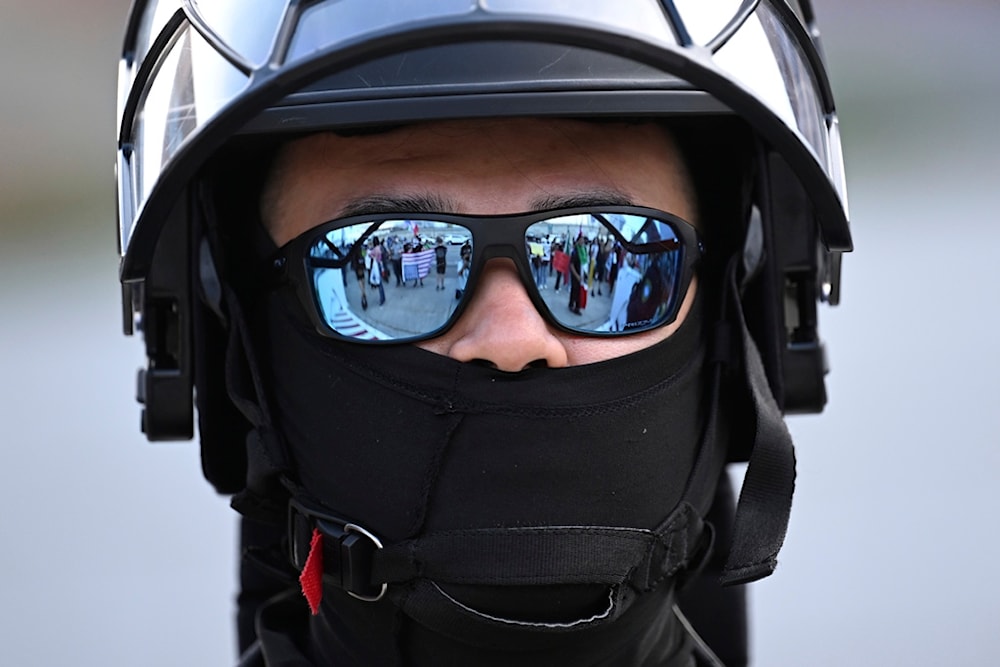
A US Customs and Border Patrol agent looks on during a protest outside the Federal Building on June 13, 2025, in Los Angeles. (AP Photo/Wally Skalij, file)
NewsWeek published on Friday an investigation warning that the Trump administration’s expanded use of US Border Patrol agents for immigration enforcement inside American cities could increase the risk of serious injuries and fatalities involving both migrants and US citizens.
The assessment was provided by Darius Reeves, a former senior official with Immigration and Customs Enforcement (ICE), who said the operational methods now being deployed in interior cities are ill-suited to dense urban environments and raise the likelihood of violent encounters.
"It’s going to get worse," Reeves told Newsweek in a phone interview. "I think there are going to be a lot more people hurt."
Reeves previously served as field office director for ICE’s Enforcement and Removal Operations (ERO) in Baltimore and retired in 2025. He warned that Border Patrol agents are being deployed far from the border using tactics designed for frontier enforcement, not for civilian urban settings.
Border tactics controversy
The comments come amid nationwide protests following the fatal shooting of Renée Nicole Good, a 37-year-old US citizen and mother of three, during a federal immigration operation in Minneapolis on January 7. Good was shot multiple times by ICE agent Jonathan Ross while in her vehicle.
The Trump administration has claimed Good aimed her car at the officer. Local officials, however, have said video evidence indicates she was attempting to flee the scene.
The killing has intensified scrutiny of federal immigration agencies, particularly as videos and witness accounts emerge from Minnesota, Chicago, and Los Angeles showing agents detaining individuals who later said they were US citizens.
According to Reeves, the incidents reflect a broader shift in immigration enforcement under the Trump administration’s mass deportation policy, which has expanded the role of US Border Patrol in interior operations and drawn in personnel from other federal law enforcement agencies.
"They brought their Border Patrol tactics with them into the interior United States, and that’s a recipe for disaster," Reeves said.
He added that Border Patrol agents are trained primarily for border regions, where they are authorized to rapidly question and detain individuals to establish immigration status. Applying those practices in cities, he said, creates confusion over authority, escalates encounters, and increases the risk of force being used unnecessarily.
"They are going to operate as if they’re on the border, in the interior aspects of the United States," Reeves said. "And you just cannot—you can’t do that."
"Any time you bring the Border Patrol from the border into the interior of the United States for any type of enforcement activity, the wheels are going to fall off."
Federal Enforcement Sparks Profiling Concern
Civil rights organizations have accused federal authorities of racial profiling, arguing that the operations disproportionately affect Black, Latino, and immigrant communities. Witnesses and advocacy groups have described enforcement actions involving tear gas, forced vehicle extractions, and aggressive detentions.
Reeves said part of the danger stems from public confusion over the roles of different federal agencies. Both ICE and Customs and Border Protection (CBP) fall under the Department of Homeland Security, but they operate under different mandates.
ICE’s ERO branch historically focused on civil immigration enforcement in the interior, targeting individuals with final orders of removal or confirmed warrants, while attempting to minimize contact with US citizens. Border Patrol, by contrast, is primarily tasked with securing areas near the border between ports of entry.
Reeves also raised concerns about rapid hiring across DHS, particularly within ICE’s ERO division, arguing that it has reduced institutional experience and professionalism.
"It’s taken away from our level of professionalism, it’s taken away from our level of expertise," he said.
He said former colleagues have reported falling morale, early retirements, and an increase in departures for other agencies.
Questions Over Immigration Strategy
While Reeves said he had no direct knowledge of internal White House or DHS strategy, he questioned whether the recent concentration of high-profile operations in major cities could signal a coordinated national approach ahead of the midterm elections.
"I’ve never seen anything like this," he said. "It’s just a dress rehearsal for something else that’s coming our way."
In response, a spokesperson for the Department of Homeland Security rejected claims that Border Patrol agents are improperly trained or operating outside their mandate.
"Apprehensions at the US border are down to a 50-year low, thanks to President Trump and Secretary Noem enforcing our nation’s immigration laws once again and empowering Border Patrol to do the job they were not allowed to do for nearly four years under the previous administration," he told NewsWeek.
Read more: Cuban migrant’s death in ICE custody ruled homicide by asphyxiation


