
Explosions reported in Doha as Iran strikes US assets in Gulf states
 4 Min Read
Explosions were heard in Doha as Iran expands missile and drone strikes across Gulf states following US and Israeli attacks on the Islamic Republic.
-
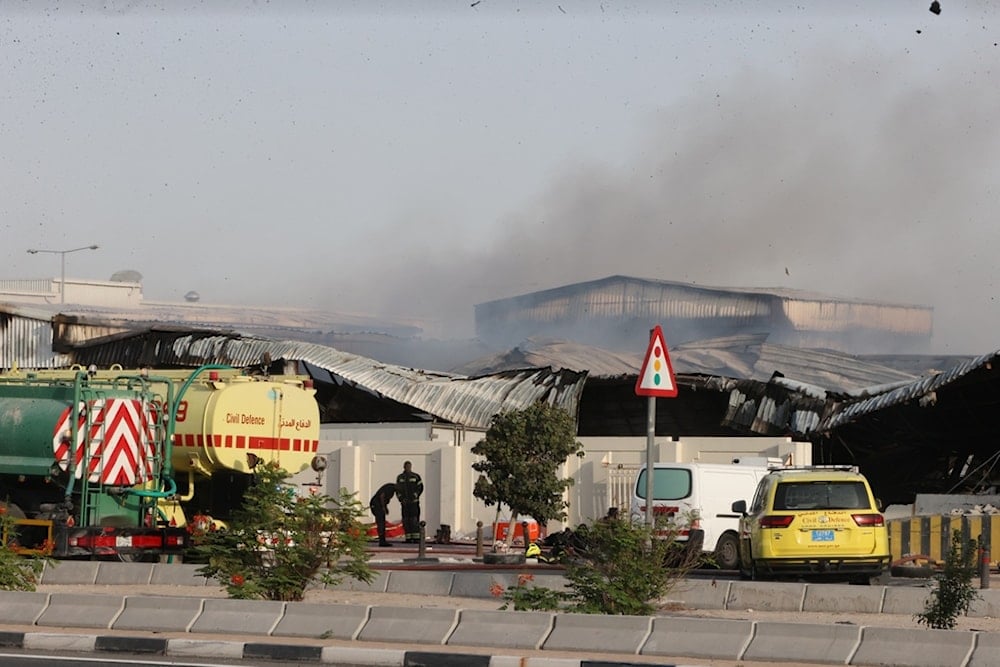
Firefighters work as smoke rises outside a damaged warehouse in an industrial area in Al Rayyan, Qatar, following an Iranian strike, Sunday, March 1, 2026 (AP)
Several explosions were heard early Monday in the Qatari capital Doha as Iran continued its retaliatory strikes against US assets across the Gulf region following US-Israeli attacks on the Islamic Republic.
AFP journalists in Doha reported hearing the blasts while Gulf nations confirmed new missile and drone attacks targeting multiple countries across the region.
Qatar’s defense ministry said its air defense forces intercepted a missile attack on Monday, amid Iran’s ongoing retaliation campaign against the large-scale aggression it has faced.
Doha has been repeatedly targeted since Iran launched wide-ranging missile and drone strikes across the Gulf after the United States and the Israeli occupation began a large-scale air campaign against Iran on February 28, which kicked off with the two imperialist powers assassinating the leader of the Islamic Republic.
Missile and drone attacks reported across Gulf states
Elsewhere in the Gulf, Kuwait’s defense ministry said the country’s air defense systems were working to intercept incoming missiles and drones early Monday.
🚨 Situation is getting worse with the time
— Ahmad Hassan Bobak (@ahmad__bobak) March 8, 2026
KUWAIT IS UNDER ATTACK NOW pic.twitter.com/WaoE3oz0Aq
Authorities said Kuwait had already been targeted on Sunday by seven missiles and five drones.
In Bahrain, an Iranian drone struck the island of Sitra on Sunday, according to the interior ministry, while AFP journalists reported hearing two loud explosions.
Breaking | A US Patriot air defense missile fails and crashes onto civilian homes in Bahrain, leaving several people injured. pic.twitter.com/k0DlzpG23W
— Quds News Network (@QudsNen) March 8, 2026
The United States, meanwhile, announced that it had ordered embassy staff to leave Saudi Arabia as Iran’s retaliation expanded across the region.
The US State Department said in a travel advisory that it had “ordered non-emergency US government employees and US government employee family members to leave Saudi Arabia due to safety risks”.
🚨 BREAKING:
— GPX News (@GPX_News) March 8, 2026
Saudi Arabia — Riyadh, Diplomatic Quarter (Al-Safarat District). pic.twitter.com/DYeqHUCjsH
Gulf states face growing impact of Iran retaliation
Drones struck the US embassy in the Saudi capital Riyadh last week, while similar drone attacks also caused damage to US embassies in Kuwait and the United Arab Emirates.
Gulf countries have borne a significant portion of Iran’s retaliatory campaign following the US-Israeli military assault. Iranian President Masoud Pezeshkian warned on Sunday that the Islamic Republic would be forced to respond against neighboring countries directly if their territory is used to launch attacks against Iran.
He also stressed that Iran’s defensive operations are strictly limited to targets responsible for acts of aggression against the Iranian people.
He added that Iran has not attacked friendly or neighboring countries, stressing that Tehran’s strikes have instead focused on US military bases, facilities, and capabilities in the region. “We remain steadfast and will resist, even to the point of sacrificing our lives, in defense of our country,” he said.
Regional escalation fuels concerns
Iranian officials report significant civilian and military losses from the ongoing US-Israeli aggression, while satellite imagery indicates key US defense assets, such as the THAAD radar network in Jordan, have been destroyed.
The growing effectiveness of Iran’s missile and drone capabilities has intensified fears of collateral damage to commercial and energy infrastructure, prompting businesses to seek broader insurance protection.
Iran’s parliamentary speaker, Mohammad Bagher Ghalibaf, emphasized that peace in the region remains unattainable as long as US military bases operate in West Asia, underscoring the persistent security risks faced by Gulf economies.
The expanding war is likely to increase both the cost and demand for comprehensive political violence insurance, reflecting the deepening uncertainty for investors and businesses in the region.
Read More: Iran hits US bases in Gulf, targets 'Israel' and Iraqi Kurdistan sites


