
FBI emails reveal details behind Jeffrey Epstein file redactions
 4 Min Read
Newly released FBI emails shed light on the Epstein Transparency Project and redaction efforts tied to the Freedom of Information Act request.
-
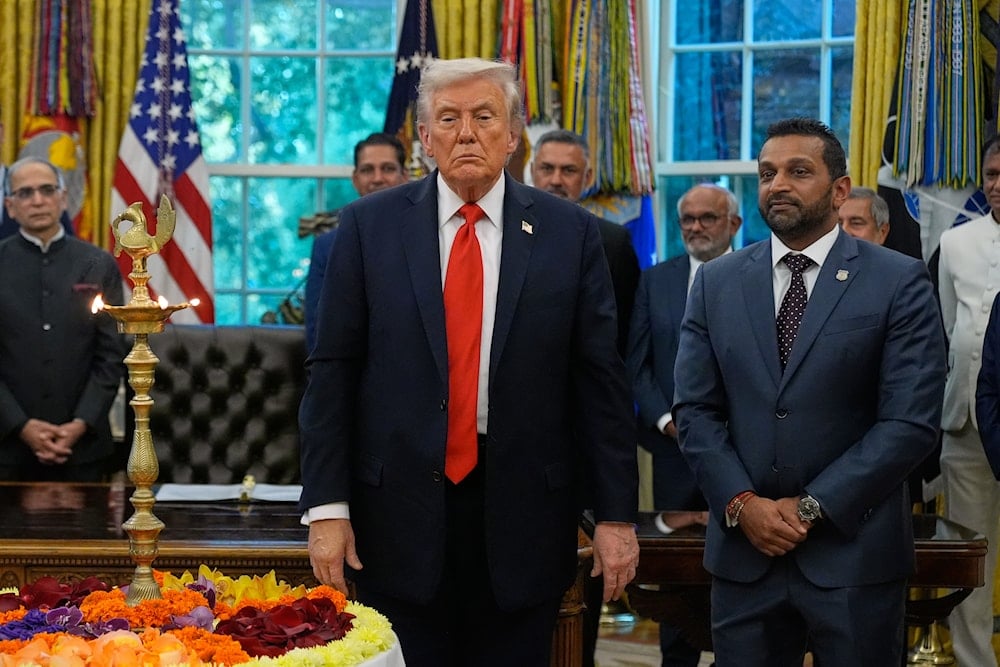
US President Donald Trump stands with FBI director Kash Patel as he participates in a Diwali celebration in the Oval Office at the White House, Tuesday, Oct. 21, 2025, in Washington (AP)
Newly obtained FBI emails detailing the government’s handling, review, and redaction of the Jeffrey Epstein files have triggered public reactions from senior officials, including Deputy Director Dan Bongino, who addressed the disclosures and their broader implications for transparency and accountability in the ongoing scrutiny surrounding the case.
The communications, secured by journalist Jason Leopold through the Freedom of Information Act (FOIA), offer a limited glimpse into the bureau’s internal “Epstein Transparency Project”, which directed the preparation of the documents for public release earlier this year.
The FBI’s formal FOIA response to Leopold states that 220 pages were reviewed and 61 pages made public, with the rest withheld under several exemptions covering ongoing law-enforcement activity, privacy concerns, and protected investigative methods.
Transparency vs. redactions
The dispute surrounding the FBI’s approach to the Epstein files has emerged as a measure of the government’s readiness to demonstrate transparency in cases involving alleged misconduct by influential figures.
The newly released emails provide an uncommon window into the bureau’s internal redaction process, prompting wider questions about how much of the long-anticipated records will ultimately be accessible to the public and how the FBI navigates legal constraints while facing persistent demands for accountability.
As national scrutiny of the Epstein investigation continues, the manner in which these files are handled carries consequences not only for public trust but also for the credibility of future disclosures in high-profile cases.
A 'special' redaction project
The emails cited by Leopold and released through FOIA portray a broad, fast-moving redaction effort conducted under strict deadlines. The bureau characterizes this undertaking as part of the “Epstein Transparency Project” and, in certain internal messages, as the “Special Redaction Project.”
Throughout the documents, there are references to training modules, workflow instructions, and coordination among several divisions, including the OGC and the Information Management Division.
In a March 10 message, Assistant Director Shannon Parry highlights the need for “guidance from the GC on the types of redactions the FBI should apply to these files."
A separate March 22 email indicates that “updated training materials and workflow guidance is expected for dissemination later tonight,” signaling that staff were receiving ongoing direction as they prepared materials for Department of Justice review.
The overtime logs included in the FOIA release show that FBI employees spent 4,737 hours on the project between January and July 2025, with more than 70 percent of those hours concentrated in March.
According to tables within the FOIA documents, overtime costs from the six days of March 17–22 alone amounted to $851,344.
The FOIA documents additionally outline how several categories of reviewed videos were classified, including “search warrant execution photos,” “street surveillance video,” and “aerial footage from FBI search warrant execution,” without bringing any sentence to a full conclusion until the paragraph ends.
Epstein files saga
The saga of releasing the Epstein files has unfolded as a long, contentious fight over transparency, privacy, and public accountability. For years, journalists, attorneys, and survivors have pushed for the unsealing of court documents connected to Jeffrey Epstein’s criminal network, arguing that disclosure is essential for understanding how his abuse was enabled and who may have been involved.
Courts have gradually released batches of records, some heavily redacted, while weighing legal challenges from individuals named in the materials who argue the disclosures could be misleading or reputation-damaging. Each new release has fueled public scrutiny, revealed more about Epstein’s operations, and intensified debate over how much of the remaining sealed material should become public.
Infamous Epstein
Jeffrey Epstein was an American financier and convicted sex offender whose wealth, political connections, and access to influential circles drew intense scrutiny after his criminal activities came to light.
Operating for decades, Epstein cultivated a powerful network while secretly running a trafficking operation that exploited underage girls, leading to his 2008 conviction on state charges and later federal indictment in 2019. His death in jail that same year, officially ruled a suicide, fueled widespread public suspicion and further interest in uncovering how he was able to operate for so long with such limited accountability.