
Fuel protests spread in Syria as authorities weigh response
 4 Min Read
Protests spread across eight Syrian provinces over fuel price hikes, with concerns mounting over transport fares, food costs, and declining purchasing power.
-
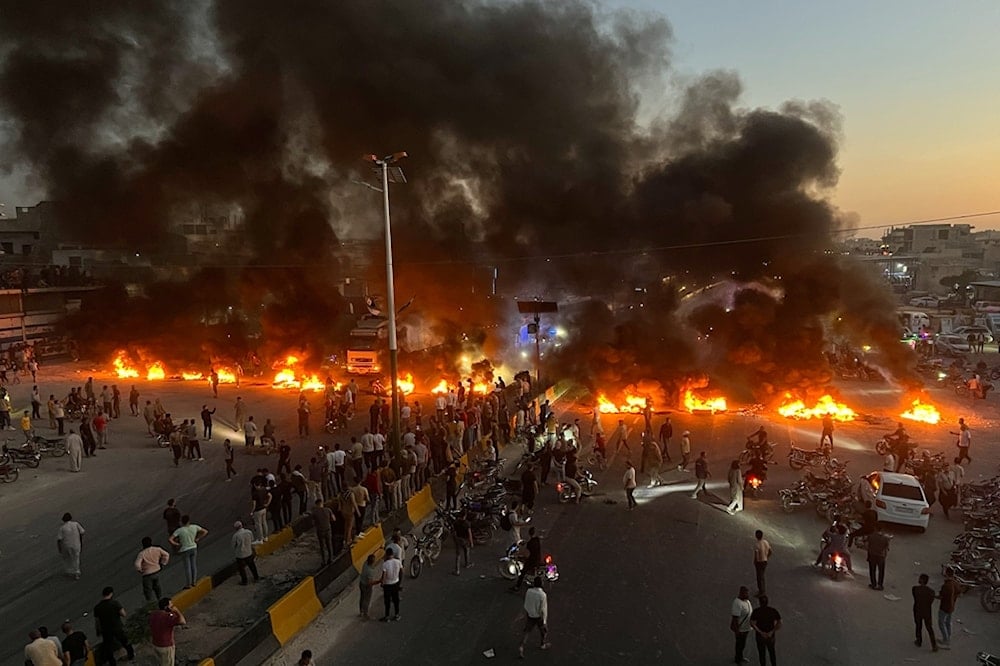
Protesters burn tires and other debris to block a highway as demonstrations over fuel price increases spread across Syria, in Maarat al-Numan, Idlib province, Sunday, Sept. 13, 2026. (AP Photo/Ahmed Albam)
Protests against fuel price increases spread across Syria on Sunday as growing concerns mounted that the decision would drive up transportation fares, food prices, goods, and service costs amid declining purchasing power.
Different forms of popular mobilization swept eight Syrian provinces: Aleppo, Idlib, Hama, Daraa, Raqqa, Deir Ezzor, Hasakah, and the Damascus countryside. In certain areas, demonstrators burned car tires and blocked roads while transport workers suspended their operations.
Protests overtake Syria
In Aleppo, protests and road blockades were reported in Azaz and its countryside, including along the Gaziantep-Aleppo road near al-Jamal roundabout, as well as in Ahtimlat, Hayyan, al-Jina, and al-Bab.
In Idlib, protesters blocked the Aleppo-Damascus international highway near Maarrat al-Numan and called for lower fuel prices. In Raqqa, roads were blocked in al-Mansoura and al-Hasiwa, while the Raqqa-Tall Abyad road was closed.
In Deir Ezzor, protests were reported in several areas, including al-Tayana, Khasham, and al-Kasrah. Protesters burned tires and blocked roads, while some transport drivers stopped working.
Hasakah also saw protests in Tal Hamis, Tal Tamer, Tal Brak, al-Shaddadi, Markadah, and Area 47. Protesters in Area 47 blocked the M4 highway to prevent crude oil tankers from passing.
Protests were also reported in Hama city and Kafr Nabudah, while transport disruptions affected Jaramana in the Damascus countryside. Daraa witnessed demonstrations against rising fuel costs and their impact on living and transportation expenses.
🇸🇾 Protests Escalate in Syria
— DD Geopolitics (@DD_Geopolitics) September 13, 2026
Large crowds have taken to the streets in Maarrat al-Numan, with protesters blocking the Aleppo–Damascus highway as demonstrations over the Al-Sharaa government’s latest fuel-price increases grow increasingly confrontational.
Diesel prices jumped… https://t.co/9lkTD7Yfh3 pic.twitter.com/5YzAhxCVBx
Fuel hike raises wider economic concerns
The protests reflect concerns that the fuel increase will quickly affect transportation, agriculture, production, basic goods, and services.
Transport drivers are seeking higher fares to offset increased operating costs, while residents fear that fare increases will add to their financial burden.
The developments come as large segments of the population face limited incomes and declining purchasing power, increasing the potential impact of higher energy and transportation costs on living standards.
Banyas refinery seeks higher output
Meanwhile, the Banyas Refinery has entered a comprehensive maintenance and rehabilitation phase aimed at increasing production.
Refinery Director General Ahmad Abdel Rahman al-Sousi told Al-Modon that the work includes production units, the replacement of a reactor, the distillation unit, power station, buildings, roads, safety systems, and laboratory.
The rehabilitation is expected to raise production from around 90,000 barrels per day to 130,000 barrels per day, an increase of nearly 40,000 barrels per day. The refinery will continue producing gasoline, diesel, kerosene, and household gas.
The impact of the price increase is already being felt beyond fuel costs, with road blockades, tire burning, and disruptions to oil-product tanker movements reported particularly in Hasakah, Deir Ezzor, and Raqqa.
Energy Ministry justifies price hikes
The Syrian Energy Ministry said the adjustment in fuel product prices was driven by an “exceptional rise in the global cost of securing supplies,” coinciding with maintenance work at the Banyas Refinery.
The ministry said the measure is “temporary and aims to ensure continued supplies and the availability of fuel on the domestic market.”
It added that Syria’s domestic demand stands at around 300,000 barrels per day of oil and petroleum products, while local crude oil production is only around 100,000 barrels per day, leaving the country dependent on imports to cover the shortfall.
#Syria: protests sparked by a sharp increase in fuel prices have now reached #Idlib-city, driven by skyrocketing international oil prices & the closure of Baniyas refinery for an overhaul.
— Qalaat Al Mudiq (@QalaatAlMudiq) September 13, 2026
Residents are calling the Energy minister - who is from Idlib province - to step down,… https://t.co/hKVPJfRaxO pic.twitter.com/gHfNHW0U8A
What can authorities do?
With protests spreading across eight provinces, the authorities now face pressure to address the economic impact of the fuel increase before rising transportation, food, and service costs further deepen the crisis.
According to the Syrian Observatory for Human Rights, authorities have several options to address growing discontent over fuel price increases, including reviewing the decision and providing direct support to the groups most affected.
The measures could also include a smart-card system to determine subsidized fuel allocations and targeted fuel subsidies for public transportation, alongside a new fare structure.
The Observatory said combining de-escalation measures, targeted support, regulated transport fares, and direct dialogue would offer the most effective way to contain public anger and prevent protests over worsening living conditions from spreading further.
Read more: War remnants continue to threaten lives across Syria: AFP


