
G7 urges end to attacks in Sudan's El-Obeid, calls for arms embargo
 4 Min Read
G7 foreign ministers urge Sudan's warring sides to halt fighting, allow humanitarian aid, and engage in negotiations while supporting an expanded arms embargo.
-
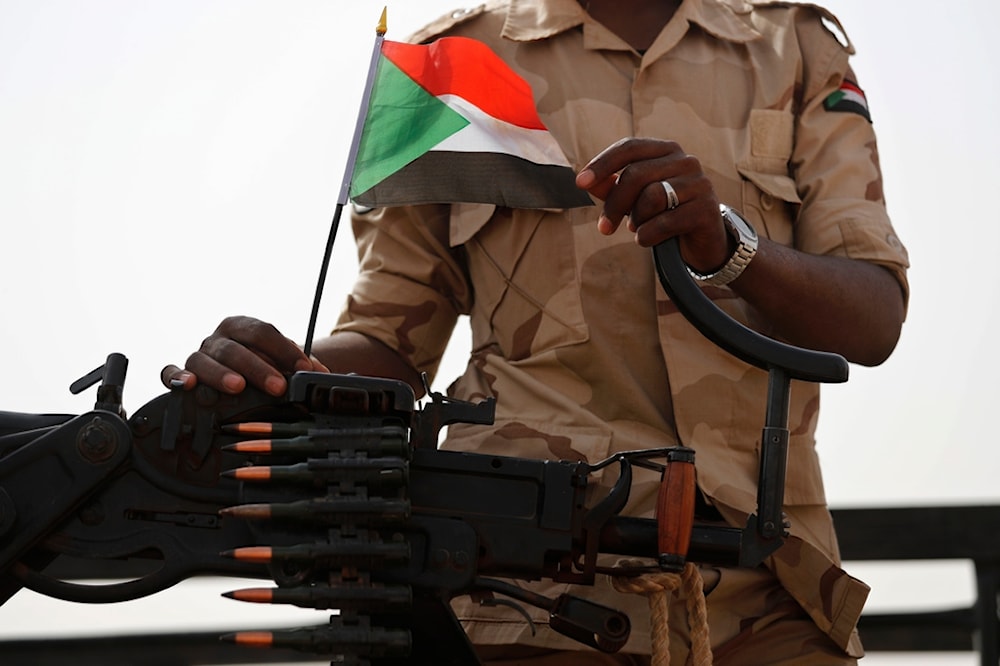
A Sudanese soldier from the Rapid Support Forces or RSF stands on his vehicle in the East Nile province, Sudan, on June 22, 2019. (AP Photo/Hussein Malla)
The Group of Seven (G7) foreign ministers and the European Union's foreign policy chief on Wednesday called on Sudan's Rapid Support Forces (RSF) and allied armed groups to halt attacks in the city of El-Obeid, warning against actions that could lead to further atrocities or endanger civilians.
In a joint statement reported by Reuters, the officials also urged all parties to the conflict, including the Sudanese Armed Forces, to cease hostilities, facilitate humanitarian aid access, and engage in negotiations in good faith.
The G7 expressed support for United Nations efforts to de-escalate the conflict and called on the UN Security Council to expand the existing arms embargo on Darfur to cover all of Sudan.
The statement also urged external actors to stop providing military and financial support to the warring parties, stressing the need to prevent further escalation of the conflict.
The G7 and the EU pledged to promote accountability for violations committed during the war while reaffirming their support for Sudan's sovereignty, unity, and democratic aspirations.
Sudanese army demands full RSF withdrawal
Last week, the Sudanese army has made the complete withdrawal of the RSF from all cities under its control a key condition for accepting a US-backed peace initiative aimed at ending Sudan's more than three-year conflict, according to documents reviewed by Reuters.
The documents, whose contents were confirmed by senior Sudanese officials, show that Khartoum accepted most elements of the US proposal but rejected provisions allowing only limited RSF redeployments. Instead, the government insists that any agreement must require the RSF to withdraw from every city it has occupied since May 11, 2023.
The US proposal calls for an immediate 90-day humanitarian ceasefire to facilitate negotiations on a permanent truce and pave the way for a civilian-led political transition ending in national elections.
It also proposes a UN-supervised mechanism to oversee phased RSF withdrawals, initially focusing on North Darfur and North Kordofan. However, the Sudanese army rejected that framework, arguing that any settlement must include a full RSF withdrawal nationwide.
US peace plan outlines political transition
In addition to the ceasefire, the proposal envisions the creation of a unified national army through a process of disarmament, demobilization, and reintegration, alongside a civilian-led political transition that would exclude the armed groups accused of committing atrocities.
Although the United States initially informed the UN Security Council that Sudan had rejected the initiative, US Senior Adviser for Arab and African Affairs Massad Boulos later said he was "extremely pleased" to learn that Sudanese army chief General Abdel Fattah al-Burhan had "apparently accepted, rather than rejected," the latest proposal.
War continues despite diplomatic efforts
The latest proposal comes after repeated international mediation efforts failed to halt the conflict, which has displaced millions of people and caused widespread humanitarian suffering.
According to Reuters, UN experts have accused the RSF of committing genocide in Darfur, where the group controls large areas and has moved to establish a parallel administration, allegations the RSF has denied.
A senior RSF official told Reuters that the group had received the proposal, welcomed it, and submitted a written response, while providing no further details.
Fighting has continued despite diplomatic initiatives, with the RSF maintaining a drone campaign across the Kordofan region as the conflict between the Sudanese army and the paramilitary force shows little sign of ending.


