
G7 weighs tapping emergency oil reserves as war on Iran roils markets
 3 Min Read
G7 countries are considering releasing strategic oil reserves to stabilize energy markets as the US-Israeli war on Iran drives oil prices higher and raises fears of disruptions to global energy supplies.
-
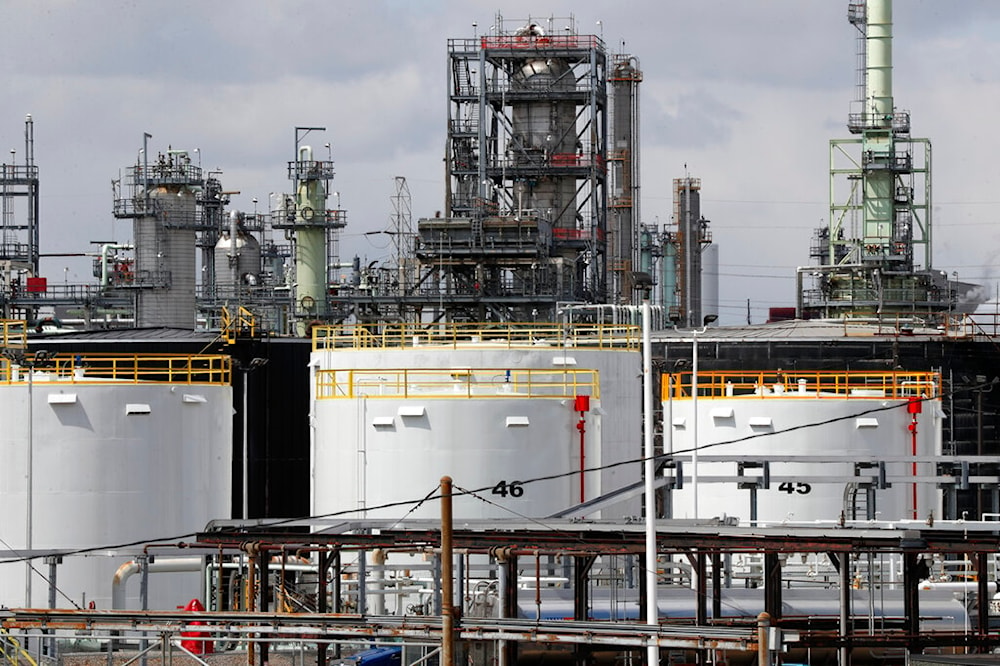
Storage tanks are shown at a refinery in Detroit, Tuesday, April 21, 2020. (AP)
The Group of Seven (G7) is considering releasing emergency oil reserves as Western economies struggle to contain the economic fallout of the ongoing US-Israeli war on Iran, French President Emmanuel Macron said Monday.
Speaking to reporters while traveling to Cyprus, Macron indicated that major Western economies are examining the possibility of using strategic petroleum stockpiles to calm global markets shaken by rising energy prices.
“The use of strategic reserves is an option being considered,” Macron said.
He also said that discussions were underway about coordinating an energy response among G7 leaders.
“A coordination among G7 heads of state and government this week on the issue of energy is being examined,” he added.
France currently holds the rotating presidency of the G7, which also includes the United States, Canada, Germany, Italy, Japan and the United Kingdom.
Crisis talks over Gulf energy disruption
Finance ministers from the bloc were set to hold emergency talks to assess the economic repercussions of the war and the instability it has created in the Persian Gulf energy corridor.
French Industry and Energy Minister Roland Lescure was scheduled to chair the virtual meeting, which officials said would examine “the situation in the Gulf from an economic point of view” and the “events of recent days.”
According to reports, ministers are discussing the possibility of coordinating the release of hundreds of millions of barrels of oil through the International Energy Agency to ease pressure on global energy markets.
The talks come after oil prices surged sharply as the conflict expanded across the region, raising fears of supply disruptions in the Gulf.
Western economies scramble as prices surge
Markets reacted nervously as crude prices climbed above $100 per barrel, with global stock markets falling amid concerns that the war could threaten energy flows from the Gulf.
Much of the concern centers on the Strait of Hormuz, a narrow waterway through which roughly one-fifth of global oil shipments pass.
Iranian authorities have warned that the continuation of US-Israeli aggression could place the strategic route at risk, underscoring the country’s capacity to disrupt global energy trade if hostilities escalate.
Strategic petroleum reserves are emergency stockpiles maintained by governments and industry to help stabilize markets during supply shocks. These reserves were established after the 1973 oil crisis to coordinate responses to major disruptions in oil supply.
Divisions emerge within Western camp
While some G7 members support releasing reserves to contain price volatility, analysts say the move may only provide temporary relief if the war continues.
The debate also highlights tensions within the Western bloc over how to respond to the energy shock triggered by the war on Iran, with some experts suggesting the crisis could reshape global energy competition.
Meanwhile, US President Donald Trump defended the surge in oil prices, calling it a “small price to pay” for confronting Iran and dismissing concerns about the impact on global markets.
Read more: Iran rejects G7 interference, slams support for 'Israel'


