
Germany loses out on UNSC seat, likely due to 'Israel'
 2 Min Read
Germany fails to secure a seat on the United Nations Security Council, with FM Wadephul citing its strong support for Ukraine and close ties with "Israel" as possible factors behind the vote outcome.
-
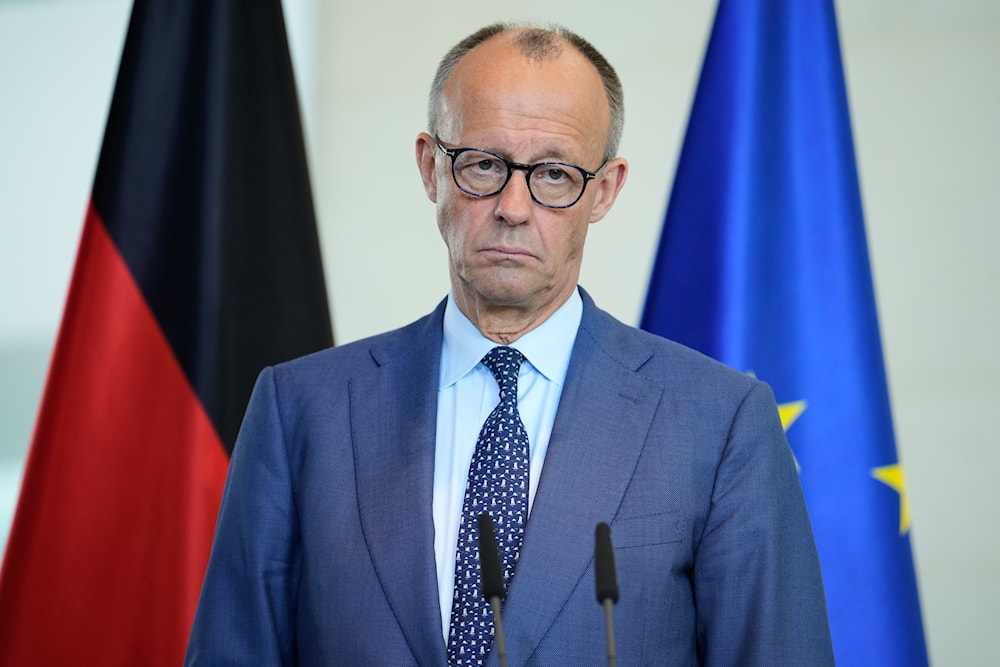
German Chancellor Friedrich Merz attends a joint press conference with President of the Swiss Confederation Guy Parmelin, not pictured, at the chancellory in Berlin, Germany, pn May 19, 2026. (AP Photo/Ebrahim Noroozi)
Germany’s bid for a non-permanent seat on the United Nations Security Council (UNSC) has failed, with officials suggesting that Berlin’s positions on Ukraine and "Israel" may have influenced the outcome of the vote.
The Council vote on Thursday elected Austria and Portugal to two-year terms, alongside Zimbabwe and Trinidad and Tobago, in a setback for Germany’s foreign policy ambitions. The result marks a diplomatic setback for Berlin, which had competed directly with Austria and Portugal for the available European seats.
Foreign Minister Johann Wadephul said Germany’s foreign policy positions may have played a role in the outcome. "We have always taken a clear stance on certain issues, and these are positions that not all member states share", he told reporters.
He pointed specifically to Berlin’s strong support for Ukraine and its close relations with "Israel" as possible factors. "There is our firm support for Ukraine; the fact that Russia does not want such a voice at the Security Council", he said.
He added that Germany’s "special responsibility" toward "Israel" in West Asia may also have cost votes, referring to the post–World War Two historical context. Germany has faced repeated international pressure over its stance on the genocide in Gaza, while maintaining its support for “Israel” alongside limited criticism of the occupation government’s policies.
Domestic political backlash against Merz government
hancellor Friedrich Merz’s government has sought to position Germany as a leading voice in European and global affairs. He acknowledged the defeat, stating that Germany had “applied with conviction” but failed to secure the necessary support.
Opposition parties blamed the result on government strategy. The Greens described it as an “embarrassing defeat,” arguing that Berlin failed to modernize its diplomatic messaging. The far-right Alternative for Germany party said the outcome reflected years of “ideologically blinkered” foreign policy, particularly regarding Ukraine and Russia.
Despite the setback, Merz reaffirmed Germany’s commitment to the multilateral system and congratulated the newly elected members.


