
Ghalibaf from Baghdad: US intervention fuels regional crises
 4 Min Read
Iranian Parliament Speaker Mohammad Bagher Ghalibaf calls for stronger ties with Iraq and says US intervention remains a central driver of regional instability.
-
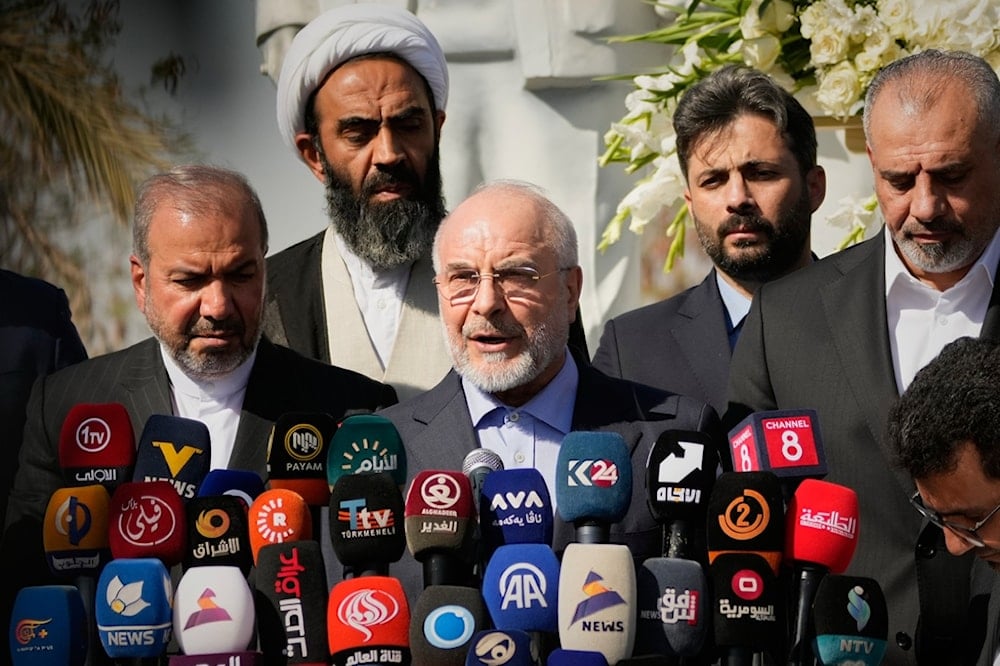
Iranian Parliament Speaker Mohammad Bagher Ghalibaf addresses attendees at the site near Baghdad International Airport where IRGC Quds Force commander Qassem Soleimani was martyred, in Baghdad, Iraq, Wednesday, Aug. 19, 2026.(AP Photo/Hadi Mizban)
Iranian Parliament Speaker Mohammad Bagher Ghalibaf arrived in Baghdad on Wednesday at the head of a high-level parliamentary delegation, holding talks with senior Iraqi officials on bilateral relations and regional developments.
Ghalibaf met with Iraqi President Nizar Amidi, Prime Minister Ali Faleh al-Zaidi, and Parliament Speaker Hibat al-Halbousi.
His visit also includes meetings with Supreme Judicial Council President Judge Faiq Zidan and National Security Adviser Qasim al-Aboudi.
WATCH | Iranian Parliament Speaker Mohammad Bagher Ghalibaf and his accompanying delegation arrive at the site in Iraq where Hajj Qassem Soleimani and Abu Mahdi al-Muhandis, known as the Leaders of Victory, were martyred near Baghdad International Airport
— Al Mayadeen English (@MayadeenEnglish) August 19, 2026
Ghalibaf delivered a… https://t.co/8qOLOZ7pBP
During his meeting with al-Zaidi, Ghalibaf expressed Iran’s determination to continue developing relations with Iraq in a manner that serves the shared interests of both peoples.
He also praised the Iraqi government’s efforts in receiving and assisting Iranian pilgrims during the Arbaeen pilgrimage.
During his meeting with al-Halbousi, Ghalibaf stressed the need to expand economic relations between Iran and Iraq so they correspond with the strength of their political and cultural ties.
Ghalibaf: US is behind regional crises
During his meeting with Amidi, Ghalibaf said Iran and Iraq have recognized that the United States and its policies constitute a principal factor behind the region’s problems.
He said Washington is responsible for problems affecting the Gulf and obstacles facing regional energy markets, linking them to the United States’ reliance on military intervention and war.
"America approached the Gulf states and the region with the aim of plundering and looting their resources," Ghalibaf said.
أبو مهدي والحاج قاسم العزيزان! ها هي ثمرة جهادكما ودمكما المبارك.
— محمدباقر قالیباف | MB Ghalibaf (@mb_ghalibaf) August 19, 2026
في النظام الإقليمي الجديد، أخذ تدخل القوى الأجنبية في المعادلات بين الدول ينحسر بشكل متسارع؛ فأمريكا تبحث عن مخرج مشرّفٍ لها من المنطقة وبات مشروع من النهر إلى البحر للكيان الصهيوني محضَ أضغاث أحلام. #أخوتنا_قوتنا pic.twitter.com/bKHFyeNxPv
He added that Iraq possesses strategic advantages and extensive natural and human resources, stressing that Baghdad would continue relying on and adhering to the Resistance.
Addressing the US war on Iran and the wider region, Ghalibaf said the United States had suffered defeat both militarily and politically in what he described as the third imposed war, adding that Washington had failed to achieve any of its objectives.
Amidi, for his part, described the war as inhumane and contrary to international rules, stressing that its repercussions for Iraq and the wider region had been severe.
He said comprehensive regional security would be achieved through the security of the countries of the region, adding that Iraq, as a supporter of regional stability, would support Iran.
Read more: War on Iran exposes limits of US power and alliances: Axios
Ghalibaf: Foreign intervention declining
Ghalibaf said the regional order is undergoing significant changes, arguing that foreign powers’ ability to interfere in relations between regional states is rapidly declining.
"The interference of foreign powers in the equations between states is rapidly receding in the new regional order," he said.
He also rejected the expansionist ambitions associated with the Zionist project, saying that "the project of the Zionist entity from the river to the sea is merely a pipe dream."
Regarding Washington, Ghalibaf said the United States was now "searching for an honorable way out of the region."
Earlier on Wednesday, Ghalibaf visited the site of the assassination of the Resistance leaders known as the Commanders of Victory near Baghdad Airport.
Speaking there, he said, "the world today knows the dirty identity of the Zionist entity."
Iran and Iraq seek stronger ties
Before traveling to Baghdad, Ghalibaf described Iranian-Iraqi relations as historic and inseparable, saying the relationship between the neighboring countries was built on brotherhood, resistance to foreign interference, and a shared destiny.
His meetings in Baghdad focused on strengthening political, economic, cultural, and security cooperation between Tehran and Baghdad.
The visit also comes amid heightened regional tensions and changes in the regional balance, with Iran emphasizing greater cooperation among regional states and reduced dependence on external powers.


