
Global airlines face crisis as war on Iran disrupts energy, routes
 4 Min Read
The aviation sector faces its worst crisis since COVID as war drives fuel costs, disrupts routes, and hits global airline markets and passenger demand.
-
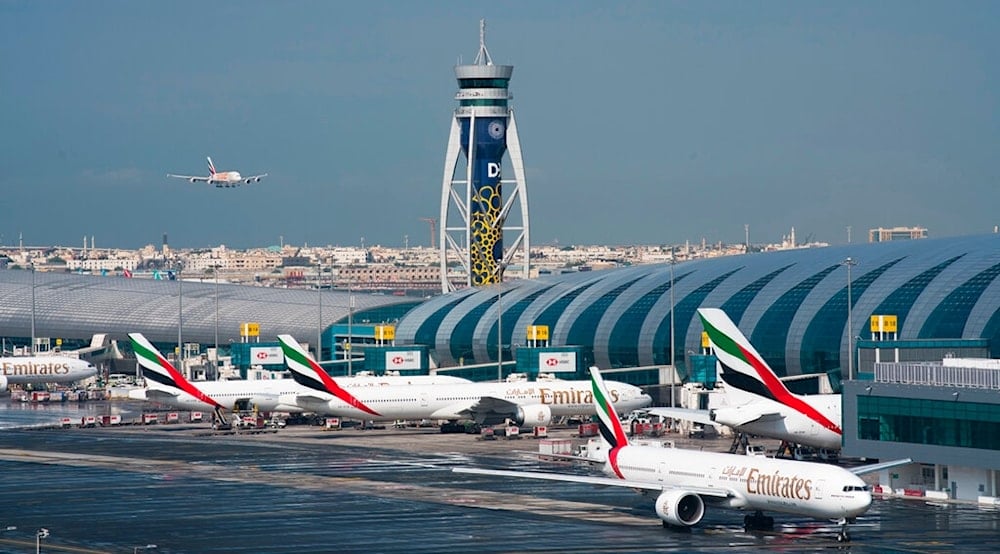
An Emirates jetliner comes in for landing at the Dubai International Airport in Dubai, United Arab Emirates, December 11, 2019 (AP)
The global aviation industry is facing its most severe crisis since the COVID-19 pandemic, as the ongoing US-Israeli war on Iran continues to disrupt air travel, energy markets, and key transport hubs.
Airlines have been forced to cancel flights and reroute services due to widespread airspace closures across the Gulf, a region that serves as a critical junction for long-haul international travel. The disruption has rippled far beyond West Asia, affecting routes across Europe, Asia, and beyond.
As the war enters its fourth week, industry leaders warn that the scale of instability is testing the resilience of a sector still recovering from the pandemic-era shutdown of global travel.
Fuel prices surge as energy front expands
A central driver of the crisis is the sharp rise in jet fuel prices, closely tied to escalating tensions in global energy markets. Fuel, which accounts for roughly one-third of airline operating costs, has surged dramatically since the outbreak of war on Iran.
The increase reflects broader instability surrounding key oil transit routes, particularly the Strait of Hormuz, through which a significant share of global energy supplies pass.
Airline executives have warned that even companies with fuel hedging strategies are unable to fully absorb the sudden spike in costs. The surge has already surpassed previous shocks, including those seen after the Ukraine war.
Read more: Suspension of flights causes deep crisis for Israeli aviation sector
Airlines face financial shock and investor pressure
The financial impact has been immediate and substantial. The world’s 20 largest publicly listed airlines have collectively lost more than $50 billion in market value since the war began.
Investor sentiment has deteriorated rapidly, with increased short-selling activity targeting major carriers such as Wizz Air and easyJet.
The scale of the losses reflects growing concern that the war could trigger a prolonged downturn, particularly if fuel costs remain elevated and travel demand weakens.
Rising ticket prices and demand uncertainty
Passengers are expected to bear the brunt of the crisis, with airlines preparing to raise ticket prices in the coming months to offset rising operational costs.
Executives have warned that profit margins remain too thin to absorb the increases. As Carsten Spohr stated, “Our average profit is about €10 per passenger, there’s no way you can absorb the additional cost.”
While demand had rebounded strongly following the pandemic, there are growing concerns that sustained price increases could suppress travel, particularly on long-haul routes.
Gulf carriers at center of the crisis
The epicenter of the disruption remains in the Gulf, where major state-backed airlines such as Emirates, Etihad Airways, and Qatar Airways have been forced to significantly scale back operations.
Airspace restrictions and a collapse in regional tourism have compounded the crisis, placing additional strain on carriers that serve as global transit hubs.
Industry analysts suggest that these airlines may require financial support from their governments if the conflict continues, highlighting the importance of state backing in weathering prolonged instability.
Qatar Airways sends aircraft to Spain for long-term storage
Qatar Airways has dispatched nearly a dozen of its widebodies to a storage facility at Teruel Airport (TEV) in Spain.
Teruel Airport is a major European base for aircraft maintenance, storage, and recycling, and is home to TARMAC Aerosave.
FlightRadar24 showed five Airbus A330s landing at the airport, which has space for 120 aircraft, within 48 hours. They arrived primarily from their base in Doha; one flew in from Cairo.
A Qatar Airbus A380 was also shown recently on the ground at Teruel, having flown in from London Heathrow.
On Friday morning, another tranche of Qatari aircraft was en route, including three Airbus A350-900s, a Boeing 787-8, and a Boeing 787-9. Their departure airports – all in Africa – ranged from Lagos to Cape Town.
Additional recent arrivals into Teruel include an Emirates and a British Airways A380.
Cargo bottlenecks add to industry strain
The crisis has also disrupted global cargo flows, as shipping instability pushes more freight onto air transport networks. This shift has overwhelmed airport capacity in some regions.
At Geneva Airport, for example, cargo overflow has forced logistics operators to reroute goods through other European hubs, including Paris.
These bottlenecks illustrate how the war is reshaping not only passenger travel but also global supply chains.


