
Hegseth’s firing spree put on hold, as House panel demands explanation
 3 Min Read
A House Armed Services Committee provision would require the Pentagon to brief Congress within five days on senior officer firings, amid concerns over recent dismissals.
-
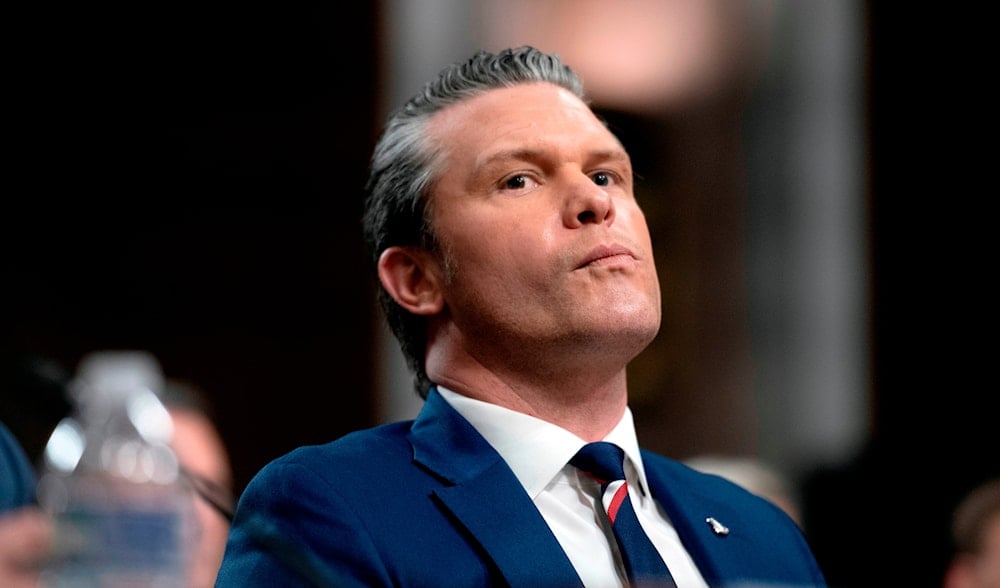
Secretary of War Pete Hegseth testifies before the Senate Armed Services Committee, on Capitol Hill, in Washington, April 30, 2026 (AP)
The House Armed Services Committee has adopted a provision for the annual National Defense Authorization Act (NDAA) that would require the Pentagon to inform Congress why senior military officers were fired or dismissed within five days, The Hill reported.
The measure, introduced by Rep. Pat Ryan (D-N.Y.), was approved on Thursday through a bipartisan voice vote with no objections, reflecting growing congressional concern over recent leadership changes within the US military.
The provision comes amid a wave of senior military dismissals under War Secretary Pete Hegseth, who has reportedly removed around two dozen senior officers since taking office at the Pentagon. Lawmakers from both parties have raised concerns that experienced military leaders are being removed without sufficient explanation to Congress.
If enacted, the measure would formalize a reporting requirement, ensuring lawmakers are notified of senior-level firings and provided with justification within a short timeframe.
Dismissal of Randy George breaking point
Earlier this year, Hegseth’s decision to dismiss Army Chief of Staff Gen. Randy George drew bipartisan scrutiny on Capitol Hill. Some Republican lawmakers publicly questioned the move, citing George’s long military career and leadership record.
Rep. Steve Womack (R-Ark.) described George as a “patriotic American” and expressed regret over the circumstances of his departure, praising his decades of service in the US Army.
The issue of military leadership turnover became a focal point during congressional hearings in April involving Army Secretary Dan Driscoll, when lawmakers pressed officials on the rationale for senior personnel changes.
Driscoll defended the authority of civilian leadership over military appointments, stating that while Gen. George was widely respected, the system allows civilian officials to choose military leaders and direct outcomes accordingly.
NDAA provision still faces full congressional approval
Despite its adoption by the House Armed Services Committee, the measure is not yet law. It must still pass both chambers of Congress before reaching the president for final approval.
If enacted, it would add a new layer of congressional oversight to Pentagon personnel decisions at the senior command level.
Politicization of the US Army under Hegseth
Hegseth’s tenure has been marked by an aggressive effort to reshape the Army along partisan and ideological lines. He has removed senior leaders he perceived as being aligned with Diversity, Equity, and Inclusion initiatives, including female officers and minority generals.
Efforts to influence promotions have extended across multiple branches, with NBC reporting that at least a dozen minority and female officers have had their advancement blocked.
For example, critics suggested that the removal of General Randy George, alongside four-star General David Hodne and Major General William Green, Jr., the Army’s top chaplain, reflects a pattern targeting senior officers closely aligned with Secretary of the Army Dan Driscoll.
The Pentagon has given no official explanation, but the firings are likely tied to Hegseth’s long-standing grievances with the US Army, which he claimed “spit me out” in his 2024 memoir, according to a report by The Atlantic.
Critics argue that Hegseth is ill-prepared for the War Secretary role and has used his authority to replace experienced officers with loyalists of the Trump administration.


