
Hungary must arrest Netanyahu if he visits country: PM-elect Magyar
 3 Min Read
Hungary’s PM-elect Peter Magyar says Budapest would arrest Netanyahu under an ICC warrant and halt the country’s withdrawal from the court.
-
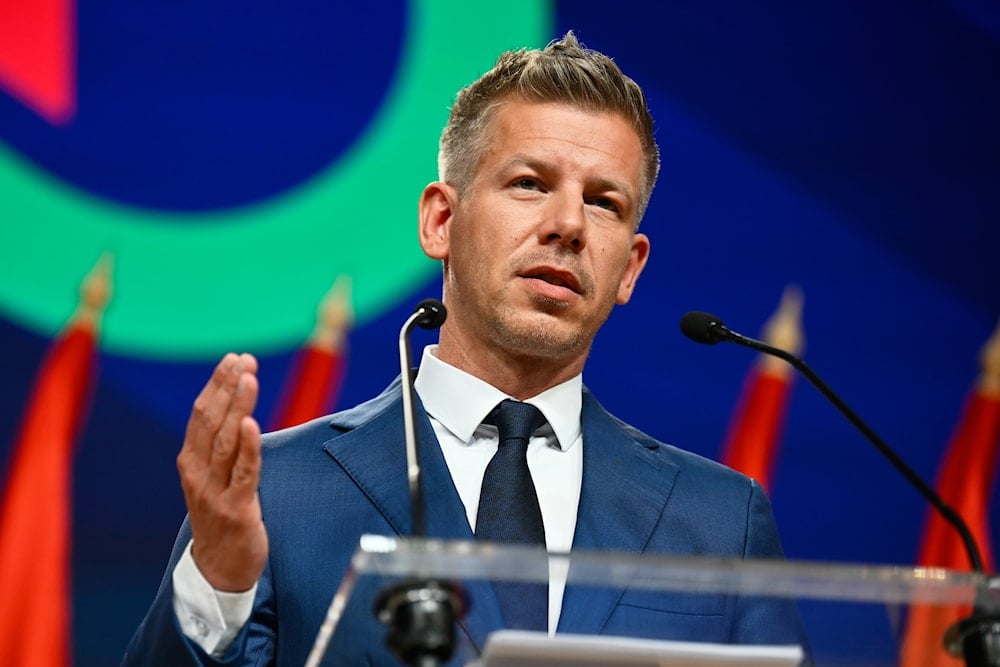
Peter Magyar gestures as he speaks to the media in Budapest, Hungary, Monday, April 13, 2026, after defeating Prime Minister Viktor Orban's party in the country's parliamentary elections (AP)
Budapest must take Israeli Prime Minister Benjamin Netanyahu into custody if he enters Hungarian territory while subject to an arrest warrant issued by the International Criminal Court, Hungary’s Prime Minister-elect Peter Magyar stated Monday, according to POLITICO.
Magyar stated that his incoming government intends to halt Hungary’s withdrawal from the ICC by June 2, reversing a process initiated nearly a year earlier when Budapest formally notified the United Nations of its intent to leave the court.
Speaking to reporters, Magyar said he had conveyed this position directly to Netanyahu, emphasizing that his government is committed to maintaining Hungary’s membership in the ICC and adhering to its legal obligations.
“If a country is a member of the ICC and a person who is wanted by the ICC enters our territory, then that person must be taken into custody,” Magyar said, outlining the legal framework governing member states.
The ICC issued an arrest warrant for Netanyahu in November 2024 over war crimes and crimes against humanity. As a member of the court, Hungary would, in principle, be required to detain individuals subject to such warrants upon entry.
Hungary previously declined to arrest Netanyahu during his visit to Budapest in April 2025, when then-Prime Minister Viktor Orban hosted him. Ahead of that visit, Orban announced Hungary’s withdrawal from the ICC, a process that takes one year to take effect, and assured Netanyahu he would not face detention.
Orban prioritizes war criminals over legal obligations
Hungary’s decision to allow Israeli Prime Minister Benjamin Netanyahu to visit Budapest in April 2025 drew controversy because he was subject to an active arrest warrant issued by the International Criminal Court. Despite the warrant, then-Prime Minister Viktor Orban hosted Netanyahu, highlighting Budapest’s refusal at the time to comply with ICC enforcement expectations.
During the same visit, Orban announced Hungary’s intention to withdraw from the ICC, describing the court as politically influenced and rejecting its authority. The timing of the announcement, coinciding with Netanyahu’s presence in the country, was widely interpreted as a political gesture of defiance toward the institution.
Under ICC rules, withdrawal from the court does not take immediate effect and requires a one-year period after formal notification to the United Nations secretary-general. This means Hungary remained legally bound by its obligations as a member state during that transitional phase, including cooperation with arrest warrants issued by the court.
The episode sparked criticism from legal and diplomatic observers, who argued that Hungary’s stance weakened the ICC’s ability to enforce its rulings. It also underscored broader divisions within Europe over compliance with international judicial mechanisms, particularly in politically sensitive cases involving senior Israeli officials.


