
Inside Trump and Netanyahu's relationship post-war on Iran: WSJ
 6 Min Read
US President Donald Trump and Israeli Prime Minister Benjamin Netanyahu clash over the war on Iran and ceasefire diplomacy, amid disputes on strikes, negotiations, and regional escalation.
-
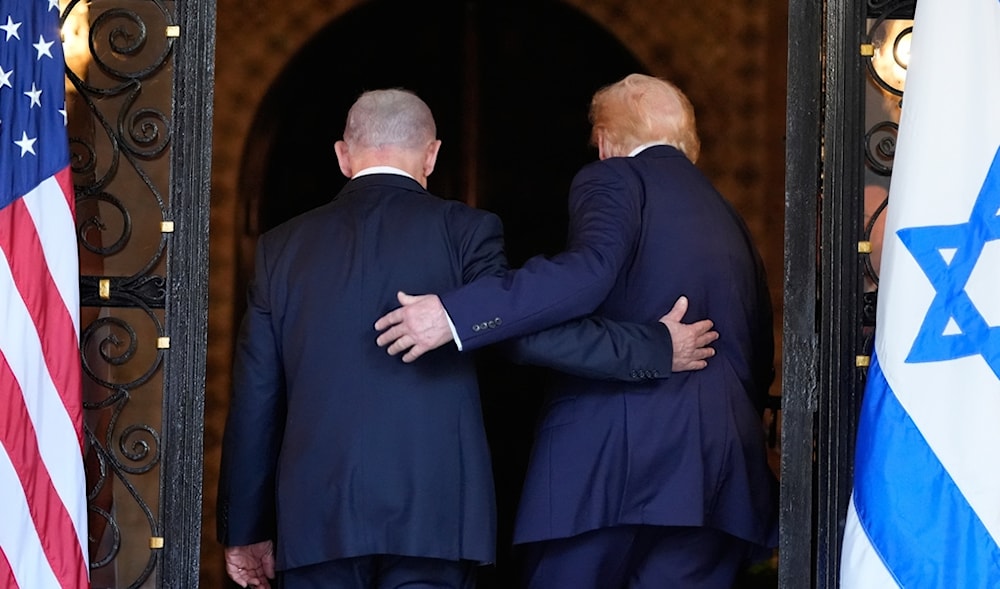
President Donald Trump and Israeli Prime Minister Benjamin Netanyahu walk into Trump's Mar-a-Lago club, Dec. 29, 2025, in Palm Beach, Fla., after an arrival greeting. (AP)
US President Donald Trump has reportedly become increasingly frustrated with Israeli Prime Minister Benjamin Netanyahu as he seeks to broker an end to the war on Iran, which has strained the US economy and driven fuel prices above $4 per gallon.
A Wall Street Journal editorial details that the relationship, once politically cooperative, has grown tense over disagreements on continued military escalation versus diplomatic settlement.
“Why are you blowing up buildings?” Trump asked Israeli Prime Minister Benjamin Netanyahu in a recent phone call about Lebanon, according to people familiar with the call. “Stop blowing up buildings.”
In another exchange, Trump reportedly voiced concern that the war's economic impact could associate his presidency with historical downturns in the United States.
War drama and disagreement
A memorandum of understanding between Washington and Tehran reportedly outlines a major economic exchange: Iran would fully reopen the Strait of Hormuz in return for the US ending its blockade and allowing Iranian oil exports to resume.
The agreement leaves more complex nuclear issues for later negotiations, with a 60-day window set for further talks on dismantlement.
Israeli officials were reportedly surprised by the ceasefire announcement and had expected Washington to lean more toward continued strikes rather than diplomacy, with Israeli forces remaining on standby for potential aggression.
According to WSJ, tensions also surfaced over continued Israeli strikes in Lebanon, despite diplomatic efforts aimed at stabilizing the region. Trump has pushed for restraint as part of broader negotiations involving Iran and regional security arrangements.
During discussions on a potential nuclear agreement, Netanyahu questioned how enforcement could be guaranteed. “Donald, how are you going to verify that?” Netanyahu asked during a call, according to people familiar with the conversation.
He repeatedly urged continued pressure on Iran, arguing that past behavior made compliance unlikely, while encouraging Trump to delay any easing of pressure and “wait the Iranians out.”
Precedents point to consistent Israeli violations of ceasefire commitments, particularly in Gaza and Lebanon. For 15 months before the war on Lebanon, Israeli attacks targeted the south and Beirut's southern suburbs daily, while Hezbollah remained committed to the ceasefire. In Gaza, Israeli strikes and expansion are still ongoing despite the truce reached last October.
In Iran, an April 8 ceasefire with Washington was marked by Israeli airstrikes across the entirety of Lebanon, which was included in the provisions of the deal, killing at least 400 civilians.
How Netanyahu tries to take over US strategy
Senior US administration officials disclosed repeated disagreements between the two leaders over the pace and scope of military operations. In multiple calls, Netanyahu is said to have argued for continued strikes, while Trump increasingly leaned toward a negotiated settlement.
“Bibi tells the president why he needs to blow something up, and why Israeli intelligence knows how to do it, and when to do it, and the president listens,” a senior administration official said. “The calls are usually the same.”
Officials also noted growing frustration within parts of the White House over Netanyahu's recurring attempts to shape US military posture, WSJ stated. Trump himself has reportedly told advisers that managing Netanyahu is difficult, at one point saying he wanted to “bomb everyone,” according to a person who heard the remarks.
Netanyahu has pushed for sustained military pressure, including targeting Iranian energy infrastructure and maintaining economic strain. One proposal included strikes on Kharg Island.
Trump, while escalating threats against Iran, has simultaneously backtracked and leaned toward diplomacy, telling advisers he wants any deal to be “ironclad” and not solely reliant on military force.
He has also grown more cautious about Israeli intelligence claims and now reportedly seeks confirmation from US officials after calls.
'Bibi is terrified'
Trump’s relationship with Netanyahu has fluctuated sharply over time, ranging from public praise to frustration over policy disagreements.
“I find him to be great, but sometimes he gets carried away,” Trump said in an interview. He also described a clear hierarchy in their interactions: “He calls us the big one, and he’s the little one,” Trump said.
Netanyahu, meanwhile, faces domestic political pressure ahead of elections, with polling suggesting difficulty forming a ruling majority. Trump previously supported him politically, including calls for a pardon in his corruption trial, though that backing appears less certain now.
“I wonder if Bibi even wants to continue,” Trump said in an interview, prompting Netanyahu to reaffirm his candidacy.
Analysts and insiders describe a relationship defined by mutual dependence but growing mistrust.
“Bibi is terrified that Trump will flip on him, but he also sees Trump as a guy who can be convinced of anything, including attacking Iran,” said Natan Sachs of the Middle East Institute.
'Israel' tries to patch things up
Israeli political messaging has reportedly focused heavily on projecting closeness between Trump and Netanyahu, including coordinated social media strategies and AI-generated imagery showing the two leaders together.
Netanyahu has met Trump multiple times during the term and maintained frequent contact, while Israeli officials worked to reinforce the perception of strong alignment with the US president.
US-Israeli military coordination also expanded significantly during the aggression, with Israeli officers reportedly present in US operational rooms and US tanker aircraft supporting regional operations.
Israeli pilots also coordinated closely with US refueling operations, reflecting unusually deep battlefield integration.
Skepticism, civilian killings, and a crazy Netanyahu
At the start of the war, Trump reportedly engaged closely with Netanyahu on targeting decisions, including late-night discussions on strike outcomes and leadership eliminations.
However, over time, he became more skeptical of some Israeli claims and rejected proposals such as a Kurdish-led invasion plan to destabilize Iran.
Another major source of friction has been continued Israeli strikes in Lebanon despite ceasefire efforts. Trump reportedly convened Israeli and Lebanese officials in the Oval Office in an attempt to mediate directly, after being shown images of civilian casualties.
In another reported call, Trump described Netanyahu in highly critical terms, reflecting frustration with continued escalation. “F***ing crazy” Trump reportedly said in a call, also warning Netanyahu he would be in prison without US support.


