
IOF admit failure in Bekaa airdrop; attempt foiled, no sign of Arad
 4 Min Read
Israeli special forces carried out an airborne operation in Lebanon’s Bekaa region to search for missing pilot Ron Arad, but the mission failed after Resistance fighters confronted the force.
-
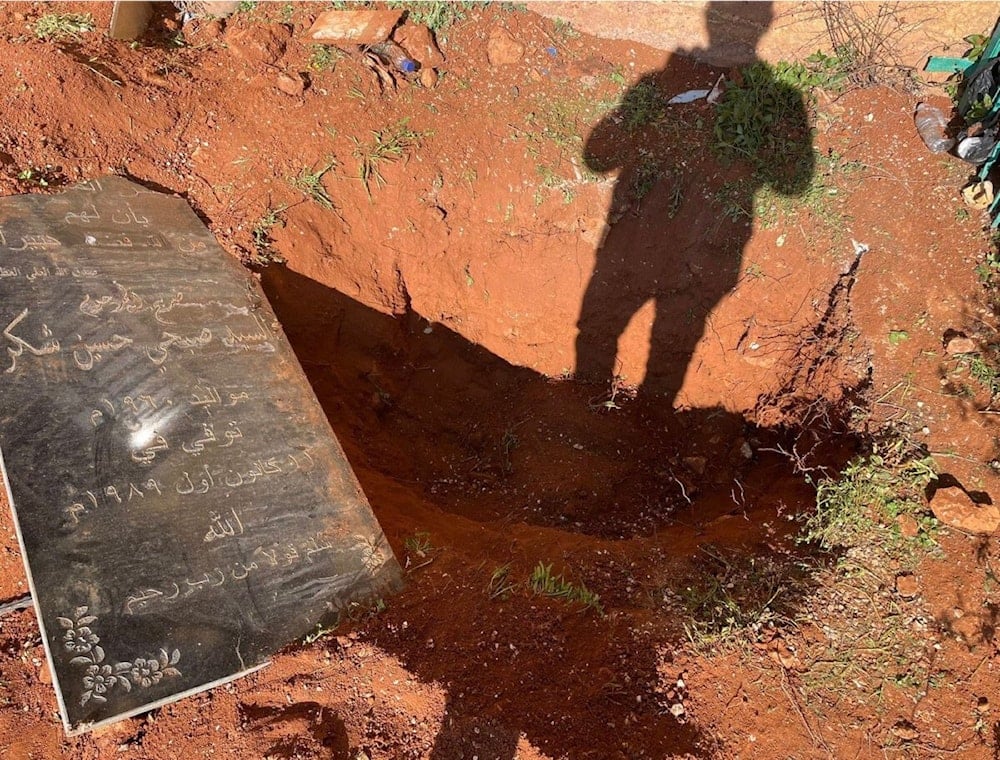
A grave dug by Israeli occupation forces during a failed operation to recover Ron Arad's remains, Nabi Sheeit, Lebanon, March 7, 2026 (Social media)
The Israeli occupation army admitted on Saturday the failure of an airborne operation carried out by special Israeli units at dawn in the Bekaa region of eastern Lebanon, which aimed to recover the remains of its pilot missing since 1986, Ron Arad.
A spokesperson for the Israeli occupation army said that IOF special forces operated last night in an attempt to find evidence related to the missing air navigator Ron Arad, but no evidence related to him was found at the search site, as the Israeli force was exposed and came under Resistance fire.
Hezbollah foils Israeli incursion
Earlier, the Islamic Resistance in Lebanon announced that shortly before midnight on Friday, its fighters confronted an Israeli airborne landing attempt in the Bekaa region in eastern Lebanon.
Hezbollah said Resistance fighters detected at 10:30 pm on Friday the infiltration of four helicopters belonging to the Israeli occupation army from the direction of the Syrian border, which airdropped an infantry force at the triangle of the outskirts of the towns of Yahfoufa, al-Khraibe, and Ma’raboun.
The statement added that “the enemy infantry force advanced toward the eastern neighborhood of the town of Nabi Sheet (the Shokr family neighborhood), and upon reaching the cemetery at 11:30 pm, a group of Islamic Resistance fighters engaged it with light and medium weapons.”
It noted that the confrontation escalated after the enemy force was exposed, prompting the Israeli occupation to carry out intensive fire belts that included around 40 airstrikes using warplanes and helicopters to secure the withdrawal of the force from the battleground.
Withdrawing under Resistance fire
Meanwhile, the Resistance’s artillery carried out concentrated fire using appropriate weapons around the battleground and along the withdrawal route of the Israeli force, while residents of nearby villages also participated in providing supporting fire.
This comes as Hezbollah continues to confront Israeli forces, launching daily operations targeting military objectives deep inside the occupied territories.
Hezbollah continues to defend Lebanon
The Islamic Resistance in Lebanon - Hezbollah announced a series of operations on March 6 targeting Israeli occupation forces, military bases, and settlements, in response to Israeli aggression that struck dozens of Lebanese towns and cities, including Beirut’s Southern Suburb.
The attacks came within the framework of warnings issued by the Resistance to several settlements in northern occupied Palestine, targeting troop concentrations, military sites, and strategic facilities using rockets, drones, and guided weapons.
Since the early hours of Friday, operations targeted several Israeli military sites, including the Haifa Naval Base, the Yoav Barracks in the occupied Syrian Golan, the Amiad base south of Safad, and the Katsavia base, as well as forward positions near the border such as Markaba, Hamames, and Blat.
Hezbollah also targeted several settlements with rocket fire, including Sa’sa’, al-Malikiya, Ramot Naftali, Shomera, and Kiryat Shmona.
According to the Resistance, the operations included multiple rocket and missile salvoes, as well as swarms of one-way attack drones. Targets included Israeli military positions and troop gatherings in Markaba, Hamames, Metula, Manara, Marj, Hadabat al-Ajal, Wadi al-Asafir, and the newly established Blat, Jal al-Deir, and Hamames sites inside Lebanese territory.
Rockets and drones also struck military bases in the occupied Syrian Golan, including the Haifa Naval Base, Yoav Barracks, Amiad base south of Safad, Katsavia base, Zar’it Barracks, and settlements, such as Sa’sa’, al-Malikiya, Ramot Naftali, Shomera, and Kiryat Shmona.


