
Iran, Qatar hold talks as nuclear talks with US hang in balance
 3 Min Read
Iranian FM Araghchi and Qatar's Al Thani discuss indirect US-Iran nuclear negotiations, as Tehran rejects enrichment suspension claims and Trump issues a 15-day ultimatum.
-
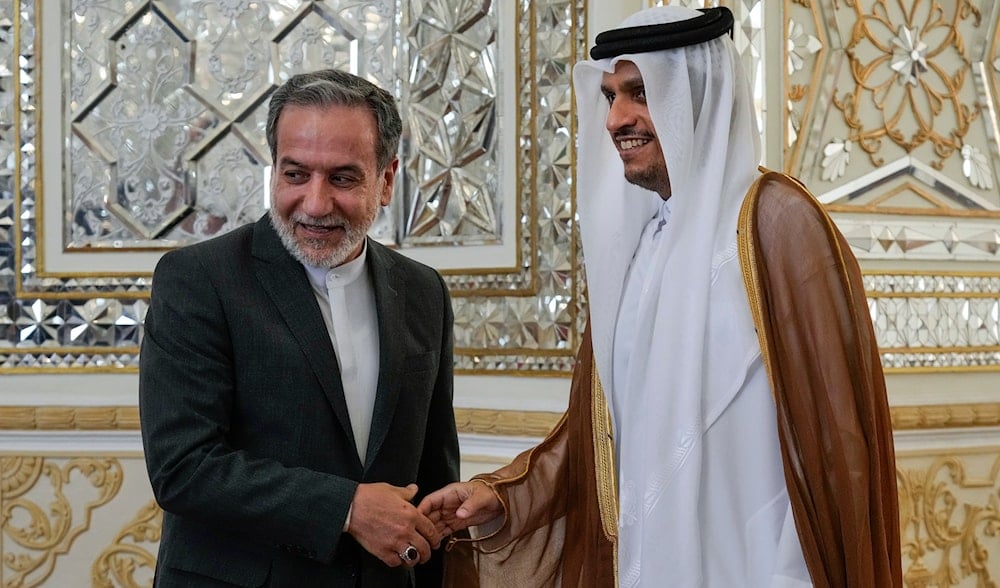
Iranian Foreign Minister Abbas Araghchi, left, welcomes Qatari Prime Minister and Foreign Minister Sheikh Mohammed bin Abdulrahman Al Thani for their meeting in Tehran, Iran, Monday, August 26, 2024. (AP Photo/Vahid Salemi)
Iranian Foreign Minister Abbas Araghchi held a phone call with his Qatari counterpart, Prime Minister Mohammed bin Abdulrahman Al Thani, during which the two sides reviewed the latest developments in the indirect nuclear negotiations between Tehran and Washington, according to Iranian state media.
Both ministers affirmed their commitment to continuing consultations and working to facilitate the diplomatic process within the framework of regional cooperation, a signal of Qatar's continued role as a key regional interlocutor in the talks.
The call came amid a flurry of diplomatic activity surrounding the Iranian nuclear file. In an interview on the Morning Joe, Araghchi moved to clarify the actual state of the negotiations, stating that Iran "has not proposed any suspension of enrichment," and that Washington "has not put forward a zero enrichment demand," directly contradicting public statements by senior US officials.
"What we are now talking about is how to make sure that Iran's nuclear program, including enrichment, is peaceful and would remain peaceful forever," Araghchi said.
Iran insists on its right to enrich uranium, even at low levels, as enshrined in the Treaty on the Non-Proliferation of Nuclear Weapons (NPT), citing both the economic and medical benefits the programme provides to its population.
Two rounds, a draft framework, and next steps
Tehran has now held two rounds of nuclear negotiations with Washington in February, following an initial meeting on 6 February in Oman, the first since the talks collapsed in the wake of last year's Israeli-US military aggression on Iran. A second round was subsequently held in Geneva earlier this week.
Araghchi said both sides had agreed to develop a draft framework for a potential deal and would begin negotiating its specific wording at their next meeting, describing the process as "a normal way of any international negotiations." He also noted that IAEA Director General Rafael Grossi had played a constructive role in the latest round of talks.
Despite the diplomatic momentum, the negotiations are proceeding under considerable pressure. US President Donald Trump has continued to demand a total ban on enrichment and has issued an explicit ultimatum, warning that Washington would launch a military strike if Tehran failed to reach an agreement within 10 days, a deadline he later extended to 15.
Araghchi, for his part, maintained that Iran was "ready for peace and diplomacy to the same extent" it was ready to defend itself, stressing there was "no military solution" to the nuclear file. "The only way to ensure the programme remains peaceful is through negotiation and a diplomatic solution," he said.


