
Iran does not negotiate to implement US impositions: Baghaei
 3 Min Read
Iran reaffirms diplomatic engagement while warning the US and "Israel" against escalation, stressing nuclear rights and support for Lebanon.
-
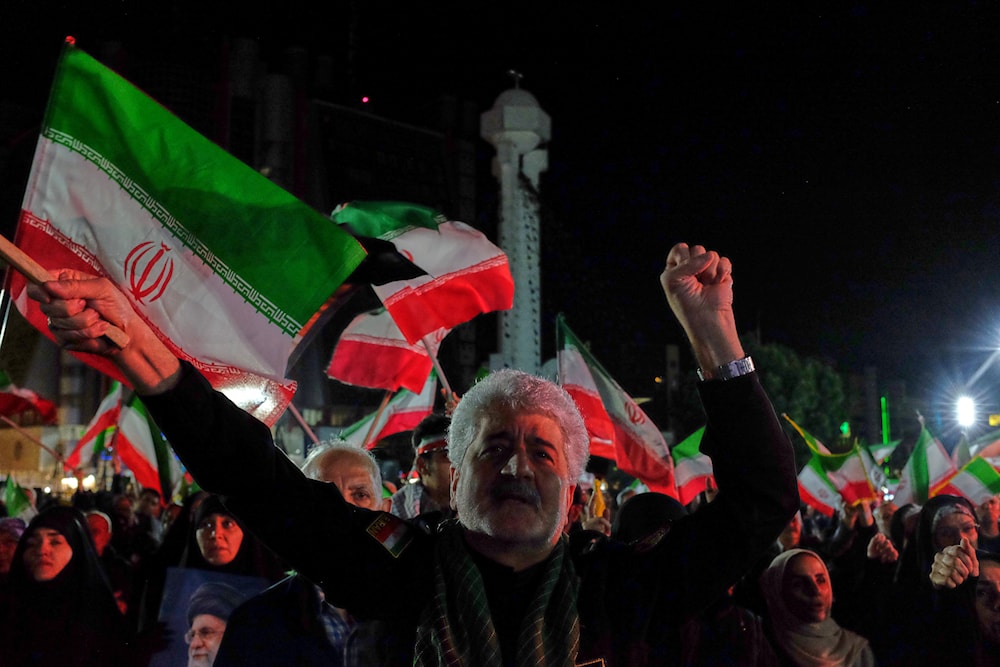
An Iranian demonstrator chants slogans as the others wave Iranian flags during a gathering in Tehran, Iran, Saturday, April 11, 2026 (AP)
Iran remains committed to ongoing diplomatic engagement and is ready to defend its interests amid rising regional tensions, Iran’s Foreign Ministry spokesperson Esmaeil Baghaei stated on Wednesday.
Baghaei said that Iran continues its diplomatic efforts and that the exchange of messages has not ceased, underscoring that Tehran does not enter negotiations to implement US demands but rather to secure its national interests.
He also stressed that the Iranian armed forces remain fully prepared to confront any move or escalation by the United States or "Israel", warning against potential “adventures” by both parties.
On regional matters, Baghaei affirmed that Iran would “never abandon Lebanon,” adding that a ceasefire in Lebanon is among the items of the Islamabad talks.
Iran's right to peaceful nuclear energy cannot be taken away by war
Addressing Iran’s nuclear program, the spokesperson reiterated that it is solely for peaceful purposes, stating that “Iran’s right to the peaceful use of nuclear energy is not something granted by others to be taken away under pressure or war.”
He further emphasized that uranium enrichment is a right derived from Iran’s membership in the Nuclear Non-Proliferation Treaty (NPT), adding, “As long as we are members of the treaty, it is natural for us to continue enrichment.”
Baghaei also criticized US officials, accusing them of deliberately ignoring Iran’s stated positions. “US officials insist on pretending they are unaware of Iran’s positions, which in itself is evidence of their bad intentions,” he said, adding that “US-Israeli aggression is an enemy to all Iranian people.”
Trump claims US-Iran talks possible within two days
US President Donald Trump signaled a possible resumption of negotiations with Iran in Pakistan, pointing to renewed diplomatic momentum following a recent round of deadlocked talks.
Speaking on April 14, Trump suggested that progress could materialize within days, highlighting ongoing behind-the-scenes efforts. “You should stay there, really, because something could be happening over the next two days, and we're more inclined to go there,” he was quoted as saying in remarks reported by the New York Post.
His comments came after negotiations held last weekend in Islamabad, which marked the first direct engagement between US and Iranian officials in more than a decade. Despite the high-level nature of the meeting, the talks ended without a breakthrough, as both sides remained divided over key issues.
Vice President JD Vance led the US delegation, while Parliament Speaker Mohammad Bagher Ghalibaf led the Iranian delegation. Iranian officials reportedly presented a framework for a potential agreement, but US negotiators reiterated longstanding demands that Tehran has consistently rejected.
At the core of the impasse is the nuclear issue. Washington has pushed for sweeping restrictions, including a complete halt to uranium enrichment and the relinquishment of Iran’s existing nuclear stockpile. This reportedly includes hundreds of kilograms of highly enriched uranium stored at facilities such as Isfahan Nuclear Technology Center.
Tehran, however, maintains that its nuclear program is a sovereign right under international law, citing its commitments under the Nuclear Non-Proliferation Treaty. Iranian officials argue that US demands exceed non-proliferation requirements and effectively amount to unilateral concessions without meaningful reciprocity.


