
Iran IRGC Navy warns only approved route safe in Hormuz
 3 Min Read
Iran’s IRGC Navy warns ships to follow a designated route through the Strait of Hormuz, as tensions escalate and maritime traffic faces growing disruption.
-
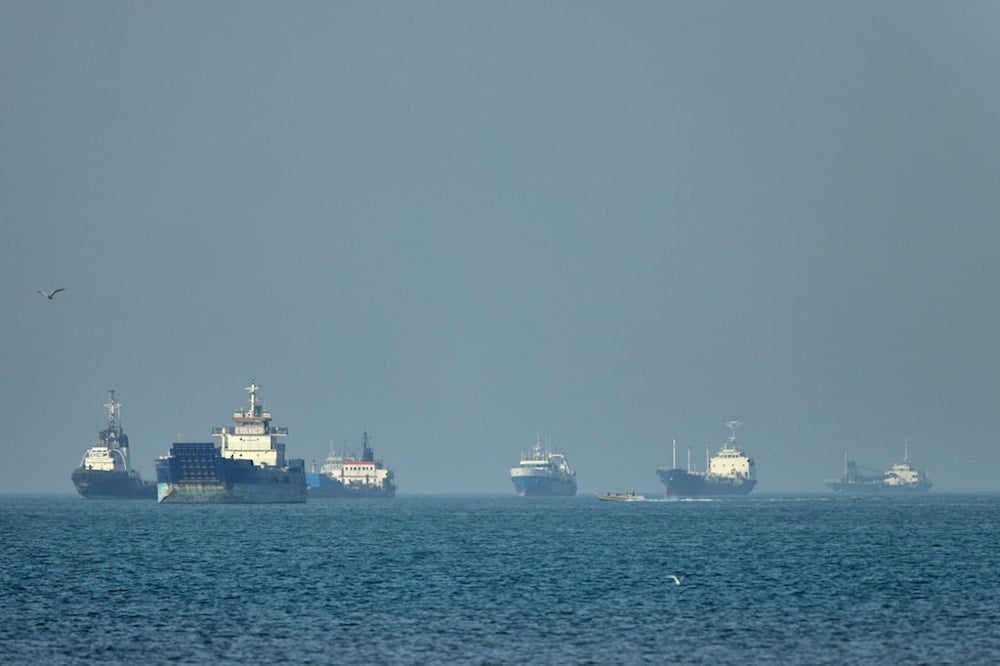
Cargo ships, including bulk carriers and general cargo vessels, sit at anchor offshore as a small motorboat passes in the foreground, in the Strait of Hormuz off Bandar Abbas, Iran, Monday, May 4, 2026. (Amirhosein Khorgooi/ISNA via AP)
The naval forces of Iran’s Islamic Revolution Guard Corps (IRGC) have renewed their warning to all vessels intending to pass through the Strait of Hormuz, stressing that only the previously declared Iranian-designated route is considered safe.
Iranian Naval Command emphasized that any deviation from this course would be treated as unsafe and could trigger a firm response.
The warning reflects tightened Iranian control over maritime navigation in one of the world’s most critical energy corridors.
Tehran has effectively imposed new rules governing transit through the Strait of Hormuz, reinforcing its authority over the passage amid ongoing confrontation with the United States.
Shipping disruptions and regional impact
Recent developments indicate a growing disruption in regional shipping patterns. According to reports cited by Bloomberg, hundreds of vessels have gathered near Dubai after diverting away from the strait, which remains largely empty.
The shift in maritime traffic suggests compliance with Iranian navigation directives, as shipping companies seek to avoid potential escalation.
Meanwhile, sources cited by Fars News Agency reported that US vessels claimed by Washington to have crossed Hormuz remain stranded in hazardous rocky areas off the coast of Oman, challenging official US narratives.
Read more: Ships divert from Hormuz Strait, cluster off Dubai coast
Iranian officials signal strategic shift
Iranian officials have framed the situation as part of a broader strategic transformation in the region.
Foreign Minister Abbas Araghchi stated that recent developments demonstrate the absence of a military solution to the crisis, describing US President Donald Trump’s operation, referred to as the “Project Freedom,” as a “project of stagnation.”
At the same time, Speaker of Parliament Mohammad Bagher Ghalibaf said that a “new equation” governing the Strait of Hormuz is “in the process of being established,” adding that Washington “cannot sustain the current situation, while Iran has not yet begun.”
Strait of Hormuz and escalating tensions
Amid the ongoing US-led war on Iran, the waterway has emerged as a focal point of confrontation, with both sides seeking to assert control over maritime flows.
Iran has increasingly leveraged its geographic position and naval capabilities to impose deterrence measures, including monitoring, warnings, and restrictions on vessel movement.
At the same time, US efforts to enforce a maritime blockade have contributed to rising tensions, increasing the risk of confrontation in the confined waters of the Gulf.
The evolving situation reflects a broader struggle over control, deterrence, and economic pressure, with global energy markets closely monitoring developments.
Read more: UAE 'sitting in a fragile glass house' warns Iranian official


