
Iran may conclude deal with Oman on Strait of Hormuz control
 3 Min Read
Iran may conclude an agreement with Oman on control of the Strait of Hormuz, a lawmaker says, as Tehran moves to formalize its authority over the waterway.
-
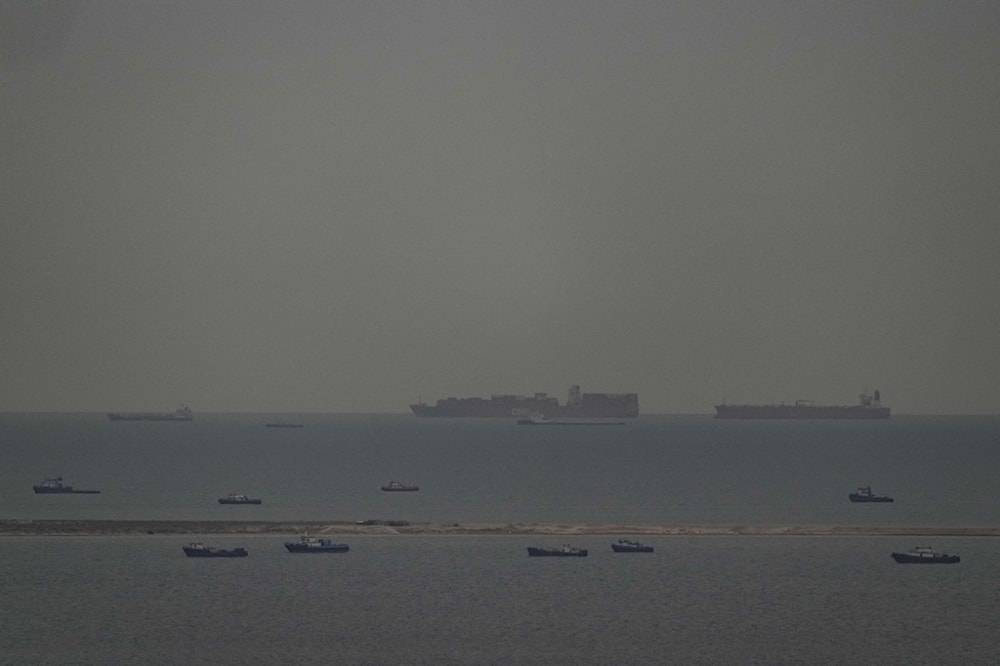
Fishing boats dot the sea as cargo ships, in the background, sail through the Arabian Gulf toward the Strait of Hormuz off the United Arab Emirates, Friday, March 27, 2026. (AP)
Iran may conclude an agreement with Oman on control of the Strait of Hormuz, although Tehran views Muscat as "part of, not the basis for" any plan to manage the waterway, the chairman of the National Security and Foreign Policy Commission of the Iranian parliament said on Friday.
Ebrahim Azizi told Iranian state broadcaster IRIB that the government can, as a continuation of its plans for the strait, conclude an agreement with Oman if necessary, and parliament would vote for its adoption.
"We consider Oman as part of this plan, not the basis. We are not going to ask Oman on the Strait of Hormuz what its opinion is on our views," Azizi said.
On Wednesday, Omani Minister of Transport, Communications and Information Technology Saeed al Maawali said that vessels transiting through the Strait of Hormuz should not be subject to tolls under international maritime agreements, as the strait is a natural waterway. He noted that some countries, including the United States and Iran, have not signed maritime navigation agreements, creating a legal gap on this issue.
Ceasefire and reopening
On Wednesday, the Financial Times reported, citing an official spokesman for Iran's Union of Exporters of Oil, Gas and Petrochemical Products, that Iran is prepared to allow oil tankers to transit the Strait of Hormuz for a toll of $1 for each barrel of oil on board.
On Tuesday night, US President Donald Trump announced that he had agreed to a two-week bilateral ceasefire with Iran. Iranian Foreign Minister Abbas Araghchi said on Wednesday that the Strait of Hormuz would reopen under the terms of the agreement.
However, Iran's position on the strait remains clear: Tehran intends to maintain control over the waterway and formalize its authority through legislation and, potentially, an agreement with Oman. While Washington may have secured a temporary ceasefire, Iran's long-term strategy for the strait is already taking shape. The toll system, first implemented as a wartime measure, appears poised to become permanent.
Ceasefire shattered as 'Israel' resumes attacks on Lebanon
The discussion over the Strait of Hormuz comes as the two-week ceasefire between Iran and the United States has already been violated by "Israel." Despite the truce announced on Tuesday night, Israeli forces carried out a massive wave of airstrikes across Lebanon on Wednesday, killing 254 people and injuring 1,165 others in a single day.
The Sultanate of Oman condemned the Israeli aggression on Lebanon, calling it a war crime and a violation of Lebanon’s sovereignty and international law.
Oman stressed the need for the international community to take decisive action to deter "Israel" and hold it fully accountable for its ongoing crimes.
The Sultanate pointed out that Israeli attacks intensified despite the ceasefire agreement announced by Tehran and Washington.
The Speaker of the Iranian parliament confirmed that the United States and "Israel" have violated three clauses of the ceasefire agreement. Iran has made clear that continued violations will be met with consequences. The strait may be open, but the war is far from over.
Read More: Strait of Hormuz fully shut, oil tankers turned back: Fars


