
Oman, Iran discuss Strait of Hormuz amid war disruptions
 3 Min Read
Oman and Iran hold talks on securing the Strait of Hormuz as the US-Israeli war on Iran disrupts global oil supply and maritime traffic.
-
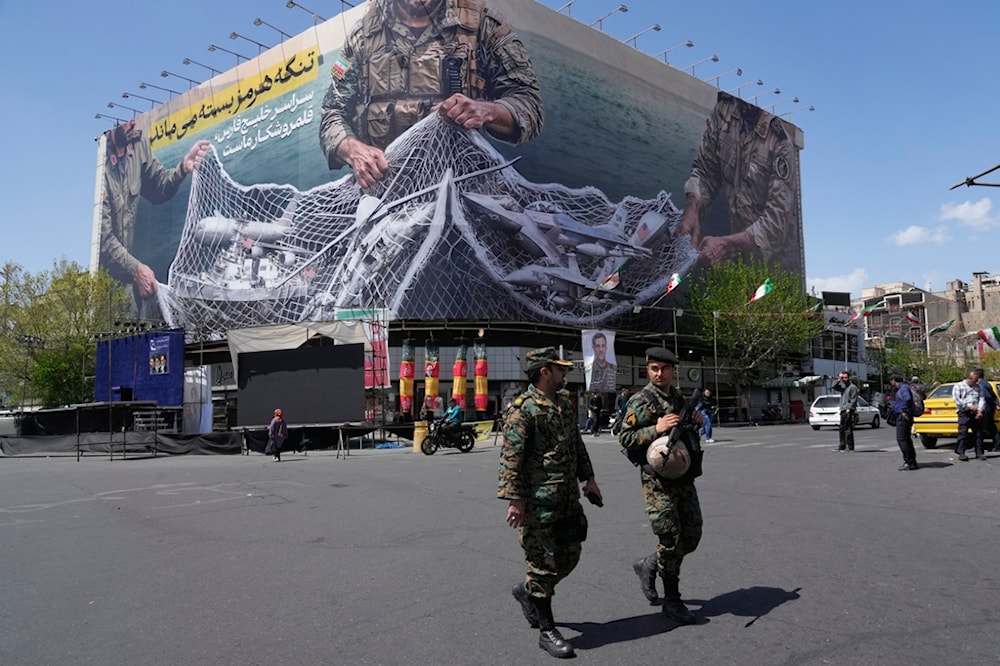
Two police officers walk in front of an anti-U.S. billboard depicting the American aircrafts into the Iranian armed forces' fishing net with signs that read in Farsi: "The Strait of Hormuz will remain closed, The entire Persian Gulf is our hunting ground," at the Eqelab-e-Eslami, or Islamic Revolution square in downtown Tehran, Iran, Sunday, April 5, 2026 (AP Photo/Vahid Salemi)
Oman and Iran have held talks on ensuring safe passage through the Strait of Hormuz, as the critical maritime corridor remains severely disrupted amid the ongoing US-Israeli war on Iran.
According to Oman’s state news agency, the discussions took place at the level of deputy foreign ministers, with technical experts from both sides participating.
"Oman and the Islamic Republic of Iran held a meeting at the deputy ministers' level in the foreign ministries of the two countries, with the attendance of specialists from both sides, during which the possible options were discussed regarding ensuring the smooth passage through the Strait of Hormuz," the agency said in a post on X.
"The experts from both sides put forward a number of visions and proposals regarding it," it added.
Read more: US doubles Hormuz tanker insurance to $40 bln
War impact on Strait of Hormuz and global oil supply
In response to unprecedented US and Israeli strikes launched in late February, Iran utilized its leverage over shipping routes in the Strait of Hormuz, contributing to a near-total halt in maritime traffic.
The passage is a vital artery for the global oil supply, handling nearly one-fifth of worldwide crude shipments under normal conditions.
The escalation has had far-reaching consequences, disrupting energy flows and intensifying pressure on the global economy. The war on Iran has also extended beyond maritime zones, with Iranian retaliatory strikes targeting US and Israeli-linked assets within the region.
US President Donald Trump threatened on Saturday that Tehran had 48 hours to reach an agreement or face "all Hell", shortly before US officials confirmed the recovery of a second American airman downed in Iran.
Tehran outlines post-war maritime protocol
Iranian officials have indicated that discussions with Oman could lead to a formal mechanism governing navigation in the Strait of Hormuz once hostilities against the nation end.
On Thursday, Tehran announced it was drafting a peacetime protocol to regulate maritime traffic and enhance long-term stability in the waterway.
Deputy Foreign Minister Kazem Gharibabadi told Russia’s Sputnik that the framework would take effect after the war concludes, establishing guidelines for ship movements, according to IRNA.
He also warned that the region could face further military aggression after the war, noting that “aggressors are always present, and unfortunately, war remains a tool and policy for some countries and regimes.”
Gharibabdi noted that Iran and Oman “make diligent efforts to ensure the safety and security of maritime traffic, and over the past decades, safety has been maintained.”
"The draft of this protocol is currently in the final stages of preparation. Once we have it ready, we will begin negotiations with Oman so that we can draft a joint protocol," Gharibabadi added.
Proposed tolls and shipping restrictions
Separately, an Iranian parliamentary committee has approved measures to impose tolls on vessels transiting the Strait of Hormuz, while also moving to ban ships linked to the hostilities committed by the United States and "Israel".
The proposals underscore the growing strategic importance of the waterway as tensions continue to reshape maritime security dynamics in the region.


