
Iran drafting protocol with Oman to cooperate on Hormuz post-war
 3 Min Read
Iran is set to implement a new navigation system in the Strait of Hormuz, in cooperation with Oman, to enhance security and ensure safe maritime passage after the war.
-
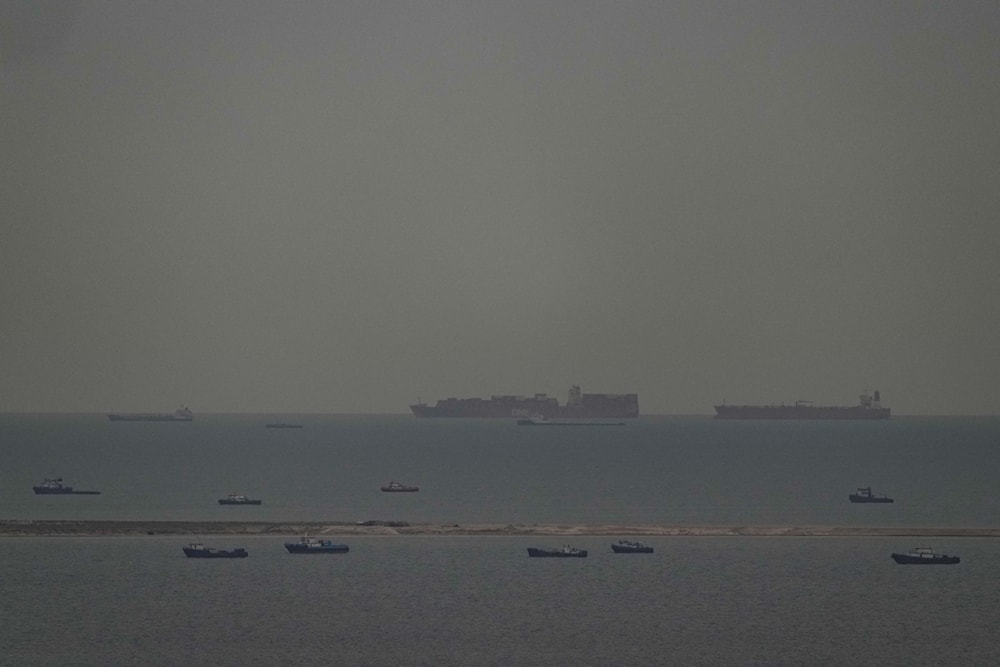
Fishing boats dot the sea as cargo ships, in the background, sail through the Gulf toward the Strait of Hormuz off the United Arab Emirates, March 27, 2026 (AP)
Iran intends to implement a new navigation system in the Strait of Hormuz, in cooperation with Oman, once the US-Israeli war ends, Iran’s Deputy Foreign Minister, Kazem Gharibabadi, announced on Thursday.
In an interview for Sputnik, Gharibabadi emphasized that the Strait of Hormuz has historically remained open, allowing maritime traffic to flow smoothly and without obstacles.
He explained that “naturally, when we face armed attacks or acts of aggression, maritime navigation also encounters significant disruptions resulting from these military operations and aggressive acts.”
Gharibabadi stressed that, given the current state of war, the rules that applied to the Strait before the war should not be automatically enforced.
He also warned that the region could face further military aggression after the war, noting that “aggressors are always present, and unfortunately, war remains a tool and policy for some countries and regimes.”
Highlighting Iran’s approach, he said it is crucial to prevent ships belonging to aggressors and their allies, whether commercial or military, that support or participate in hostile operations from transiting the Strait of Hormuz.
Gharibabadi noted that this measure represents a central aspect of Iran’s strategy for handling future scenarios, while other considerations will pertain to peacetime navigation.
Iran, Oman set to cooperate on Strait of Hormuz
Gharibabadi highlighted that the Strait of Hormuz has two coastlines: one under Iran’s control and the other under Oman’s. He noted that “both countries make diligent efforts to ensure the safety and security of maritime traffic, and over the past decades, safety has been maintained.”
He added, “In reality, it is the services provided by the two coastal countries that make this passage safe,” pointing out ongoing discussions about environmental protection and navigational safety.
Gharibabadi stressed that even during peacetime, all vessels passing through the Strait must secure all necessary agreements, permits, and licenses in advance from both Iran and Oman.
He explained that this process ensures the security of the Strait, with Iran and Oman assuming major responsibility for maintaining its safety. Measures are also being considered to formalize a protocol with Oman.
He emphasized that under the agreement between the two coastal nations, the requirements will not act as restrictions but will instead facilitate navigation, ensure safe passage, and provide services for vessels wishing to transit the area without obstacles.
Gharibabadi noted that work on this initiative is ongoing and “the project has reached its final stages of implementation.”
Draft protocol for Hormuz navigation near completion
Iran has nearly completed its draft protocol, which would establish a new navigation regime in the Strait of Hormuz, and plans to begin talks with Oman to develop a joint solution, Gharibabadi said in the interview for Sputnik.
"The draft of this protocol is currently in the final stages of preparation. Once we have it ready, we will begin negotiations with Oman so that we can draft a joint protocol," Gharibabadi added.


