
Araghchi reasserts Iran's position on war in phone call with Omani FM
 2 Min Read
Iran and Oman discuss the war, focusing on diplomacy, regional stability, and concerns over the Strait of Hormuz.
-
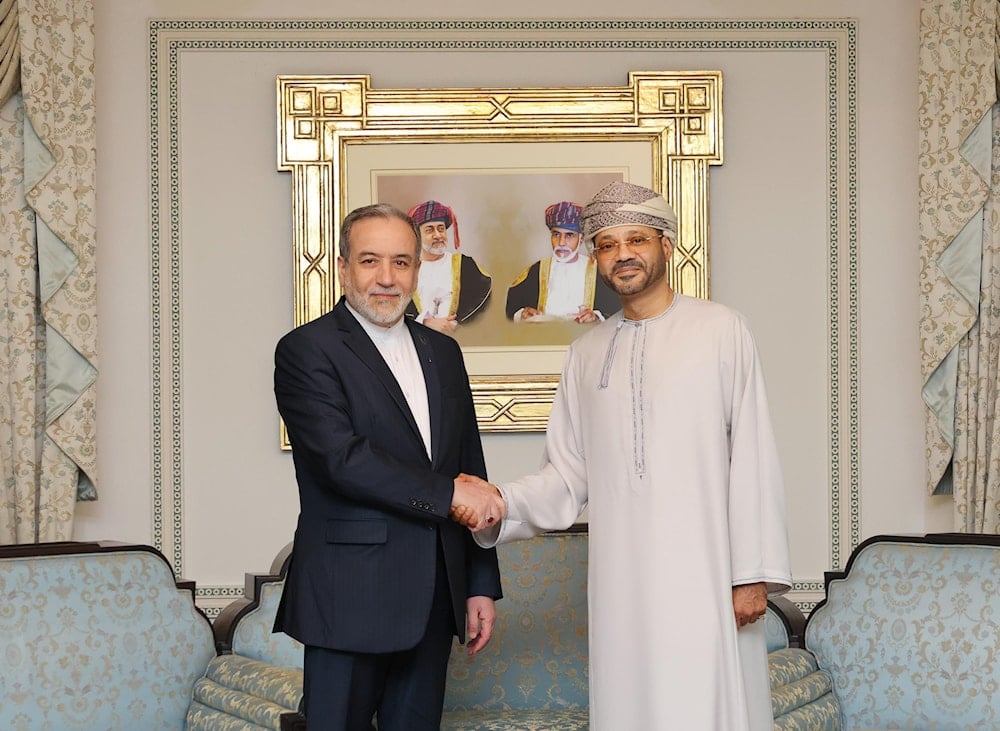
Iranian Foreign Minister Abbas Araghchi, left, shakes hands with his Omani counterpart Sayyid Badr Albusaidi during their meeting prior to Iran and the US negotiations, in Muscat, Oman, Friday, Feb. 6, 2026. (AP)
Iranian Foreign Minister Abbas Araghchi and Omani Foreign Minister Badr Albusaidi discussed the current situation in the Middle East on Sunday, focusing on regional developments and ongoing diplomatic consultations, Iranian media reported.
The talks highlighted Iran’s stance on recent tensions and efforts to address emerging challenges in the Gulf. Araghchi reaffirmed Iran’s position on regional issues and the importance of continued dialogue to manage escalating crises, particularly concerning the Strait of Hormuz.
Earlier, on Thursday, Albusaidi warned that the United States had made a “huge mistake” by allowing itself to be drawn into a war on Iran. He added that neither the US nor "Israel" would benefit from such a confrontation, while global markets are already feeling the impact of disruptions in the Strait of Hormuz and the resulting energy crisis.
'Israel' derailed nuclear agreement with Iran
Previously, Albusaidi had suggested that a negotiated agreement between the United States and Iran to prevent war was within reach, implying that the conflict was not the result of failed diplomacy but a deliberate decision to abandon it.
In a March 19 article for The Economist, Albusaidi, who mediated indirect talks between Tehran and Washington, described the war as a “catastrophe” and said the Trump administration had “lost control of its own foreign policy.”
His comments came amid growing evidence that negotiations had reached an advanced stage just before the outbreak of the US-Israeli war on Iran. Talks resumed on February 6 under Omani mediation and culminated in an intensive round in Geneva on February 26, where both sides exchanged detailed proposals concerning Iran’s nuclear program.
Iran entered the talks with a comprehensive proposal outlining the “key elements of a potential agreement,” signaling Tehran’s willingness to pursue a “fair and equitable deal” while safeguarding its right to peaceful nuclear energy.
“It was a shock but not a surprise when on February 28th -- just a few hours after the latest and most substantive talks -- Israel and America again launched an unlawful military strike against the peace that had briefly appeared really possible,” Albusaidi wrote.


